20 Boho Girls Room Ideas Every Kid Will Love
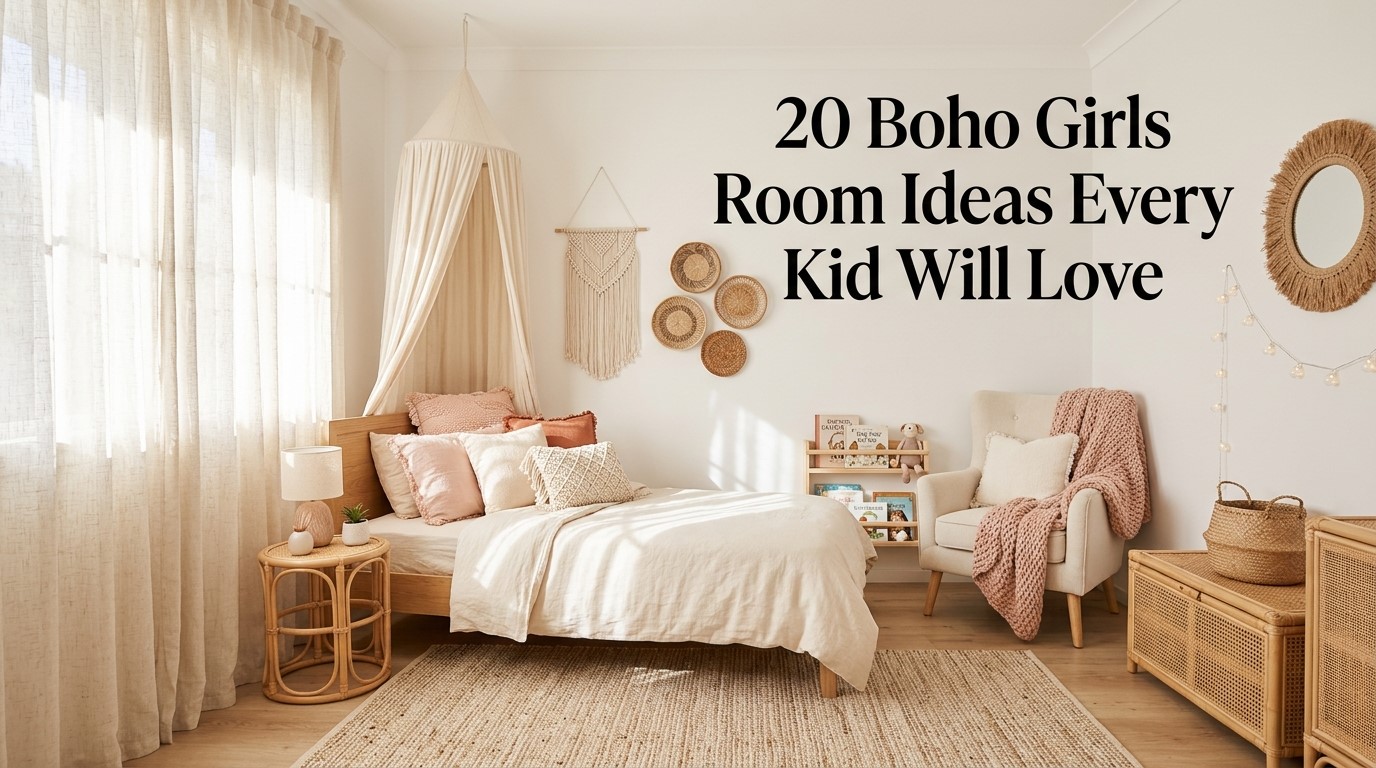
A beautiful girls’ bedroom doesn’t need a huge budget or a complete makeover. Sometimes, a cozy canopy, woven basket, soft rug, or playful wall accent can change the entire feel of the space.
These boho girls room ideas are designed to help you create a bedroom that feels warm, creative, comfortable, and full of personality. From natural textures and earthy colors to cozy reading corners and playful details, you’ll find inspiration for different room sizes, styles, and everyday needs. In my experience, the best children’s bedrooms balance beauty with function, giving kids a space they enjoy while making organization easier for parents. Keep reading to discover simple ideas you can save, mix, and make your own.
1. Woven Bed Canopy
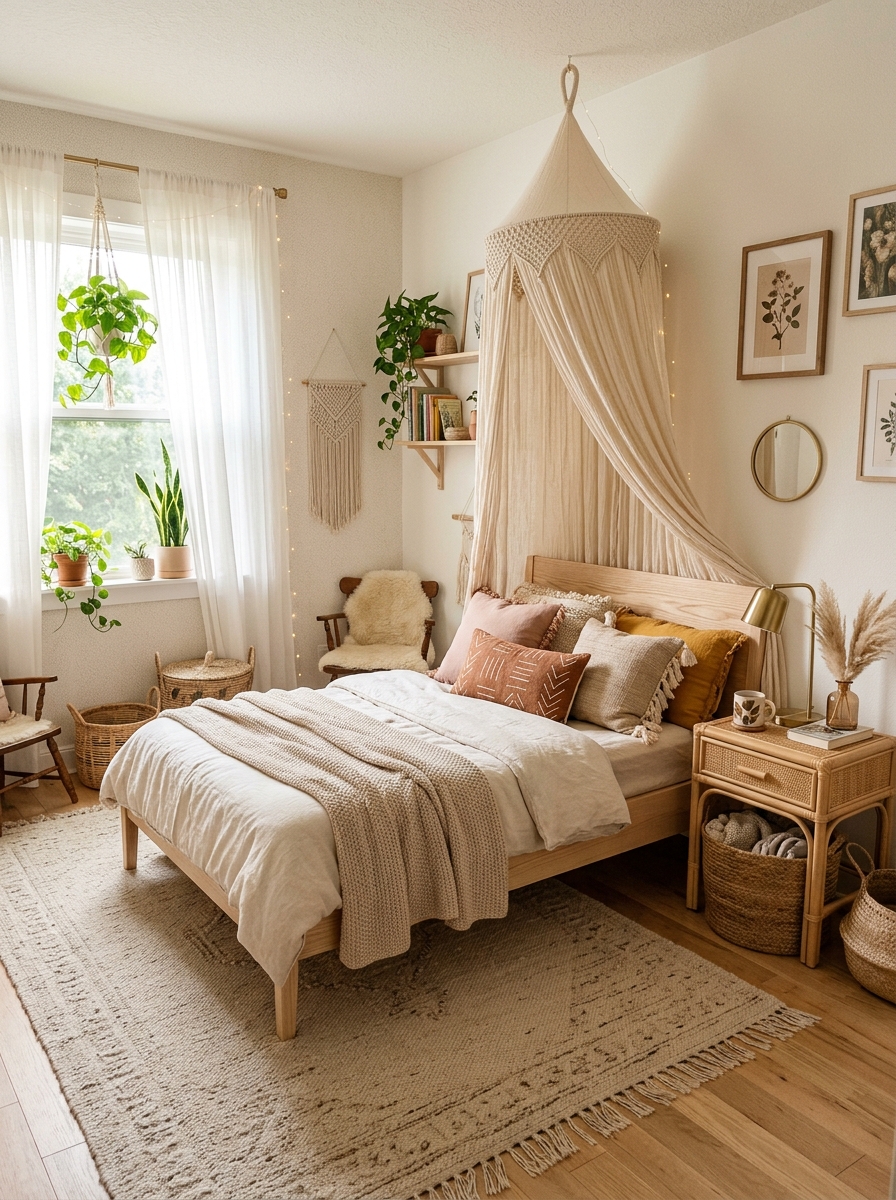
- A lightweight canopy creates an instant focal point above the bed.
- Cream or oatmeal fabric keeps the room soft and airy.
- Blush and terracotta accents add warmth without overwhelming the space.
- A nearby floor cushion creates a cozy reading spot.
- Washable fabrics make everyday maintenance easier.
A woven canopy can instantly make a child’s bedroom feel softer, warmer, and more inviting. Choose lightweight cream or oatmeal fabric and drape it loosely above the bed to create a gentle focal point. Add blush, terracotta, or dusty rose pillows for subtle color, then place a washable cotton rug underneath. In my experience, keeping the canopy simple works best because the natural fabric becomes the main feature. A floor cushion and small basket nearby can also create a cozy reading area, giving this pretty bedroom feature a useful purpose beyond decoration.
The canopy works especially well when the rest of the room uses natural materials and muted colors. Pair it with light wood furniture, woven baskets, rattan accents, and soft linen bedding to create a cohesive bohemian look. Position the bed so the fabric receives gentle natural light without blocking windows or walkways. This arrangement adds height and softness while keeping valuable floor space available for play. A canopy is also easy to update because changing the bedding, cushions, or surrounding accessories can refresh the look as a child’s personality and preferences develop.
2. Rattan Reading Nook
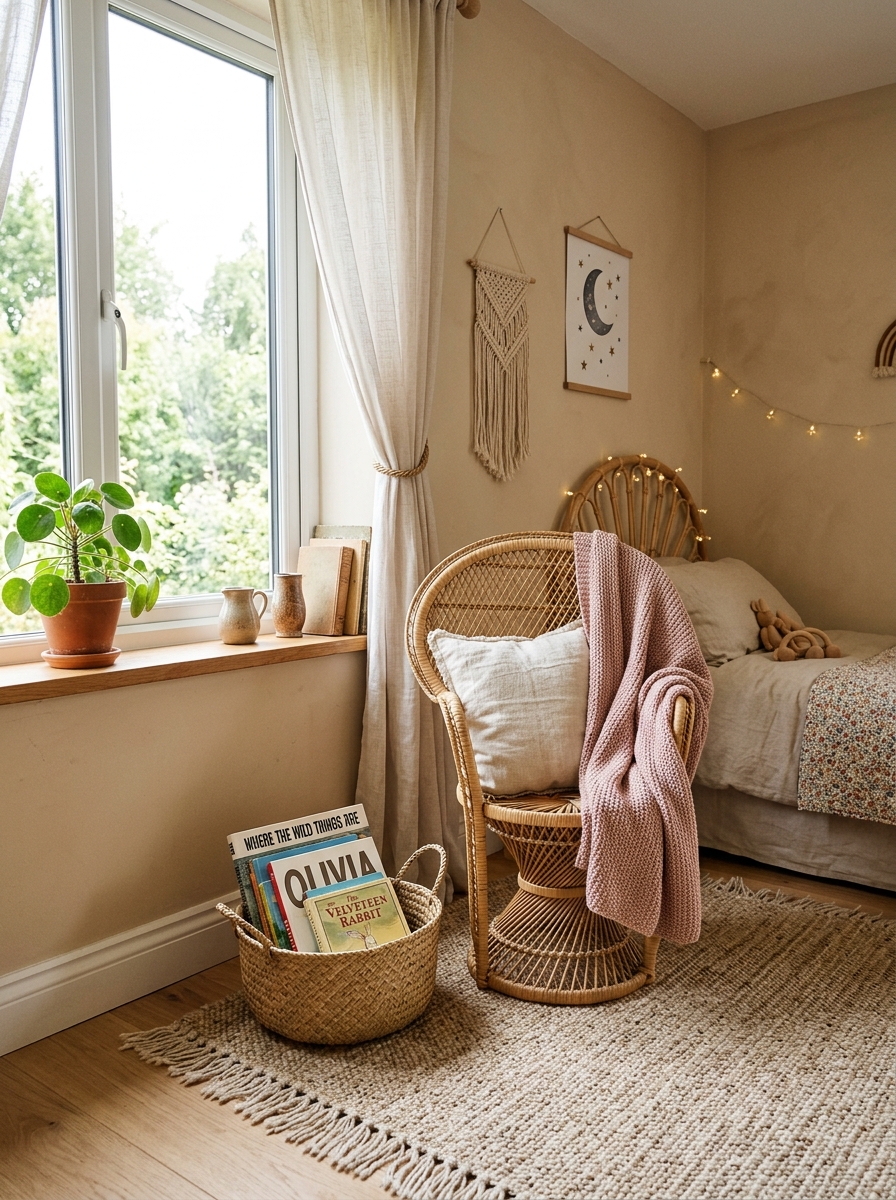
- A small rattan chair adds natural texture without taking over the room.
- Position it beside a window for pleasant daytime reading.
- Use a washable cushion in cream, peach, or dusty pink.
- Keep favorite books inside a nearby woven basket.
- Give an unused corner a clear and practical purpose.
A forgotten corner can become one of the most charming parts of a bedroom with one comfortable chair and a few thoughtful details. Choose a compact rattan seat with a rounded shape, then soften it with a washable cushion in cream, peach, or muted pink. Place a woven basket beside the chair for books, blankets, or stuffed animals. The natural materials bring relaxed character while keeping the setup practical. I’ve noticed that children tend to use small spaces more often when everything they need is within easy reach and the area feels clearly designed for them.
A reading nook also creates visual balance when the bed and larger furniture occupy the main walls. Keep enough open space around the chair for comfortable movement, and let natural daylight become part of the design. A tiny wooden shelf, framed artwork, or leafy plant can finish the corner without creating unnecessary clutter. This arrangement combines comfort, personality, and function within a small footprint. As interests change, the same chair can become a place for drawing, relaxing, listening to music, or looking through picture books, making the corner useful for several years.
3. Macramé Wall Accent
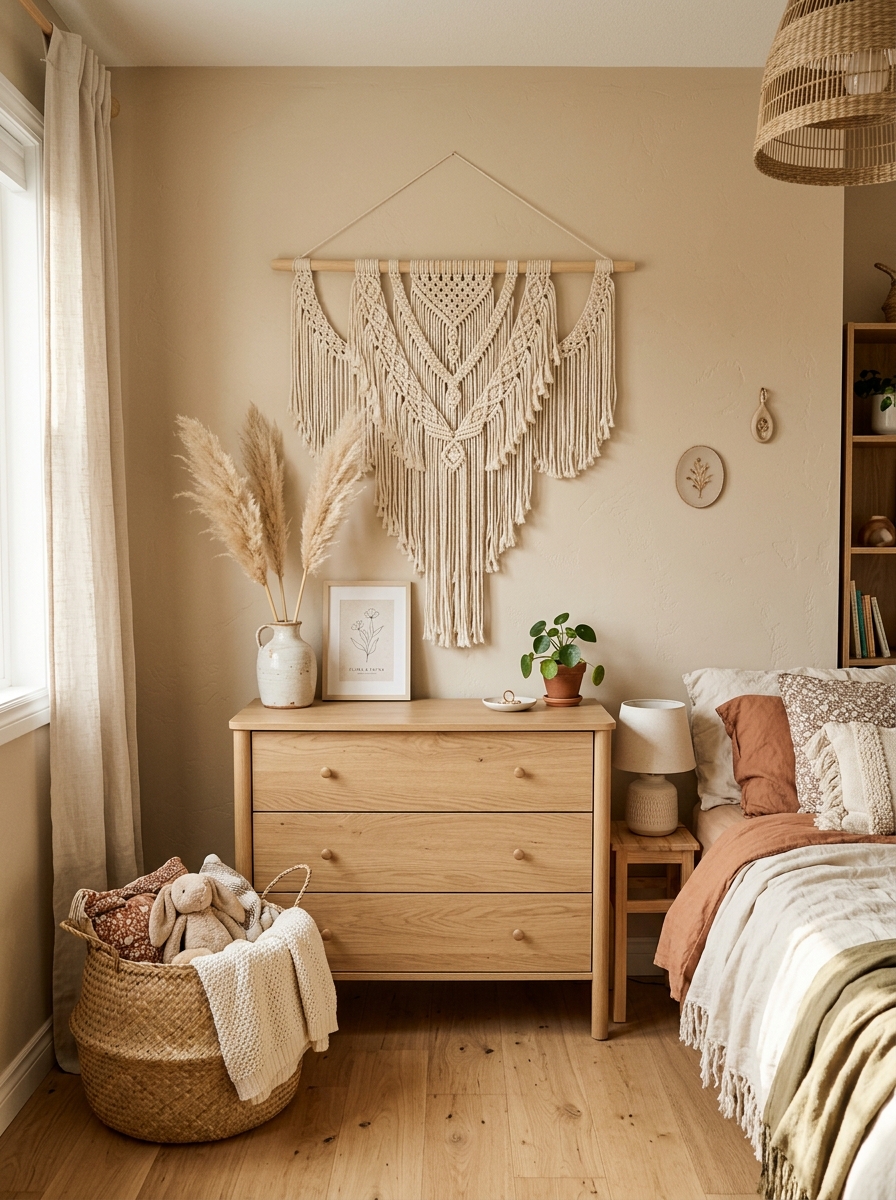
- Macramé brings handmade texture to an otherwise plain wall.
- Natural cotton works beautifully with warm neutral palettes.
- Hang one above a dresser, bed, or reading corner.
- Pair it with minimal artwork for a layered display.
- Keep nearby decorations simple so the woven texture stands out.
A plain wall can become a beautiful focal point when texture takes the place of bold color. A cream macramé hanging works particularly well above a dresser or bed because its woven pattern adds depth without making the room feel visually heavy. Choose natural cotton with an uncomplicated design, then surround it with a few neutral accessories rather than filling the entire wall. The knots and fringe introduce handcrafted character while keeping the palette calm. It is also an easy update when you want more personality without repainting the walls or replacing larger pieces of furniture.
Macramé looks especially effective when paired with materials already used elsewhere in the bedroom. Repeat natural wood, rattan, woven baskets, linen, and cotton in smaller areas so the wall accent feels connected to the overall design. Keep colors within warm white, beige, sand, and muted blush tones. This allows the handmade texture to remain noticeable without making the room feel busy. A simple wall hanging can add interest, warmth, and dimension while preserving the relaxed atmosphere that makes bohemian decorating so appealing for children’s bedrooms.
4. Canopy Fairy Lights
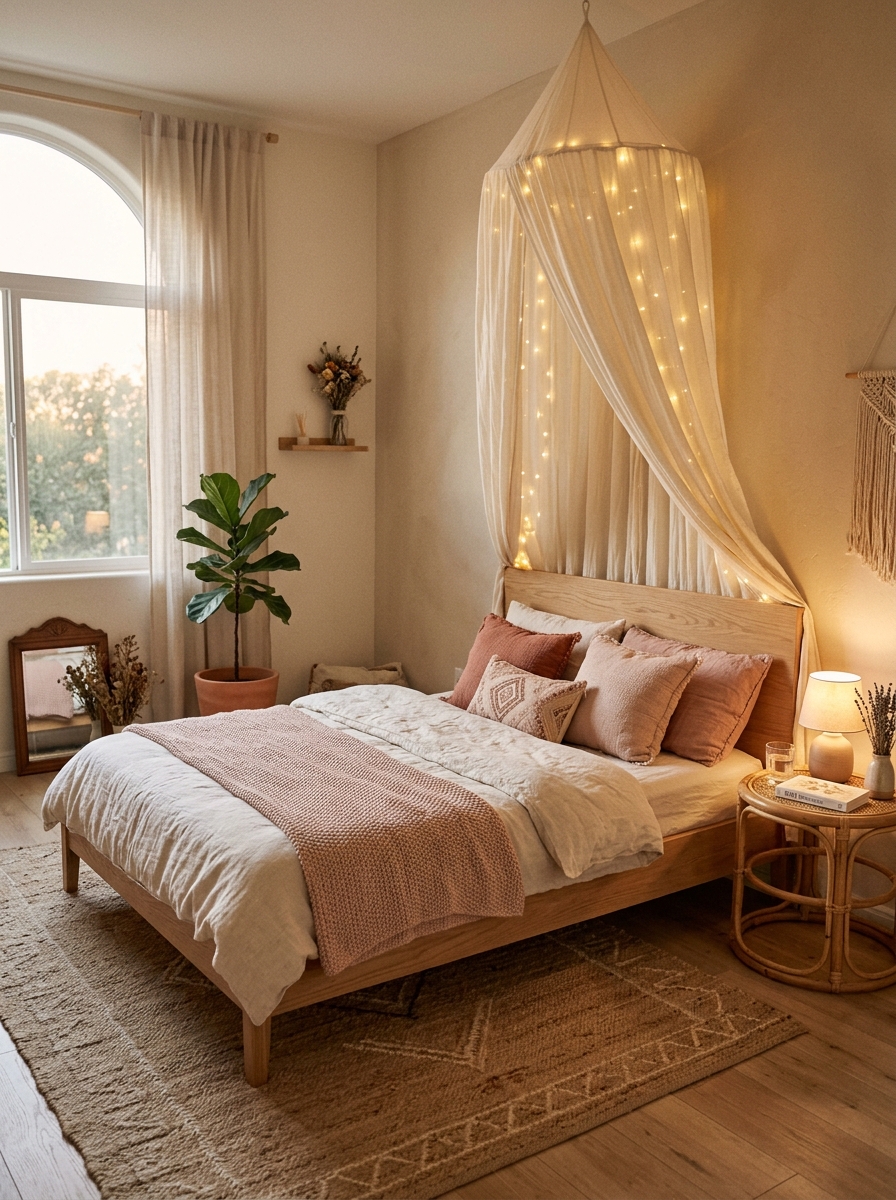
- Warm fairy lights create a gentle evening glow around the bed.
- Soft white bulbs work better than harsh colored lighting.
- Wrap lights loosely around a canopy or wooden headboard.
- Secure cords carefully and keep them away from children’s reach.
- Combine lighting with neutral bedding for a calmer effect.
Few small additions create as much evening atmosphere as a gentle string of warm fairy lights. Drape them loosely around a bed canopy, wooden headboard, or nearby wall without creating a tangled appearance. Warm white bulbs work particularly well because they provide a soft glow that complements cream bedding, woven textures, and muted pink accents. The goal is not to make the room extremely bright but to create a comforting secondary light source. For everyday practicality, choose sturdy, child-appropriate lighting and keep cords secured so the arrangement remains attractive and safe.
During the day, the lights can blend quietly into the room, while at night they become a decorative feature that changes the entire mood. Combine them with natural wood, rattan furniture, and simple textiles so the glow remains the visual highlight. A timer can make evening routines easier by turning the lights on automatically at a preferred time. This setup works particularly well for children who enjoy a comforting bedtime environment because it adds warmth without requiring major decorating changes. It is a simple way to make the sleeping area feel personal and inviting.
5. Earthy Rainbow Mural
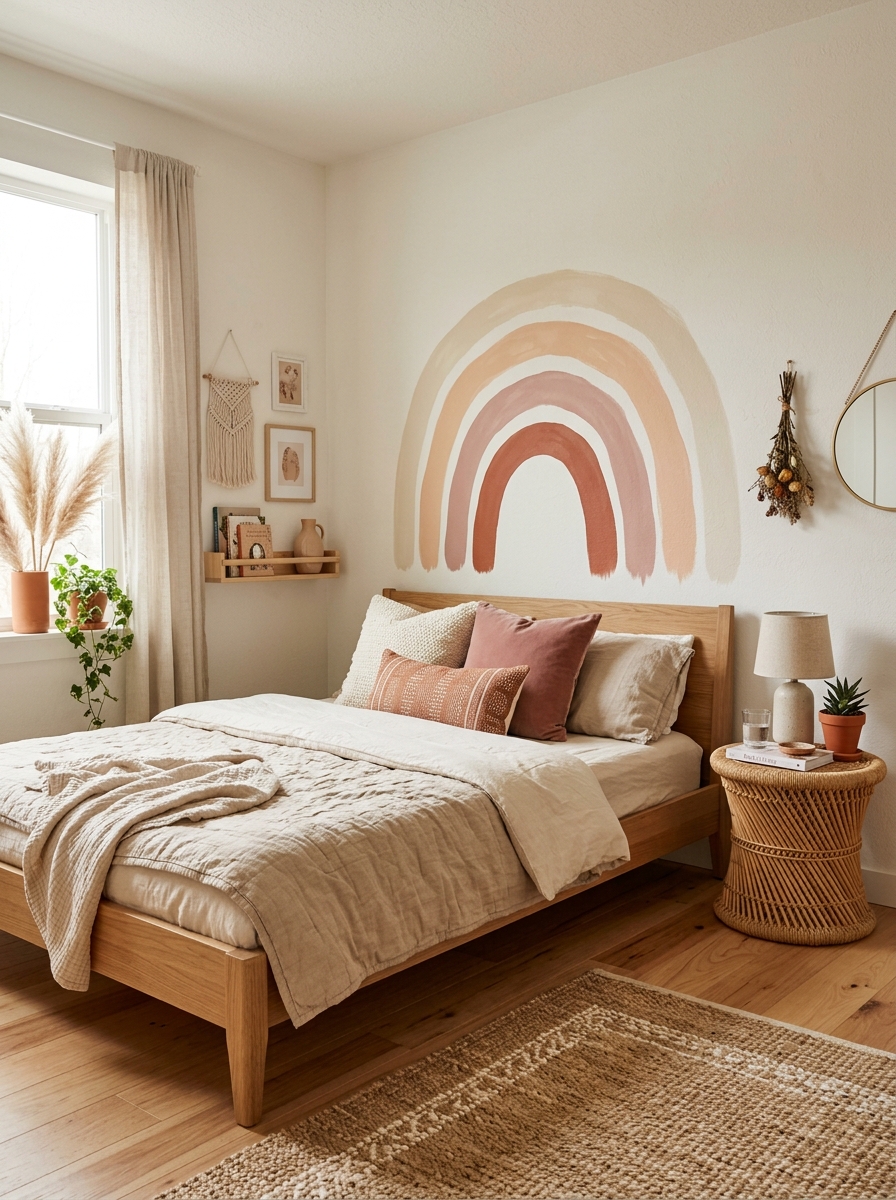
- Muted rainbow arches add color without becoming overly bright.
- Terracotta, beige, peach, and dusty rose create a warm palette.
- Paint the mural behind the bed for maximum visual impact.
- Keep furniture simple so the artwork remains the focal point.
- Washable paint makes future cleaning easier.
A muted rainbow mural can bring personality to a child’s room while keeping the overall look soft and sophisticated. Instead of using intense primary colors, choose earthy shades such as terracotta, warm beige, dusty rose, peach, and creamy white. Paint several simple arches behind the bed or on one feature wall to create a playful backdrop. The curved shapes introduce movement without overwhelming the room. I’ve seen this approach work particularly well when furniture remains neutral, because the mural provides enough visual interest while the rest of the space stays calm and comfortable.
The best part of an earthy rainbow is its flexibility. It can work with wooden furniture, rattan storage, cream bedding, woven rugs, and small colorful accessories without looking disconnected. Keep the mural relatively simple and avoid covering every wall, especially in a smaller bedroom. A single feature wall can make the space feel more organized because it establishes one clear focal point. As the child grows, the muted colors can continue working with changing bedding and accessories, making this a more lasting choice than a highly themed mural.
6. Layered Boho Rugs
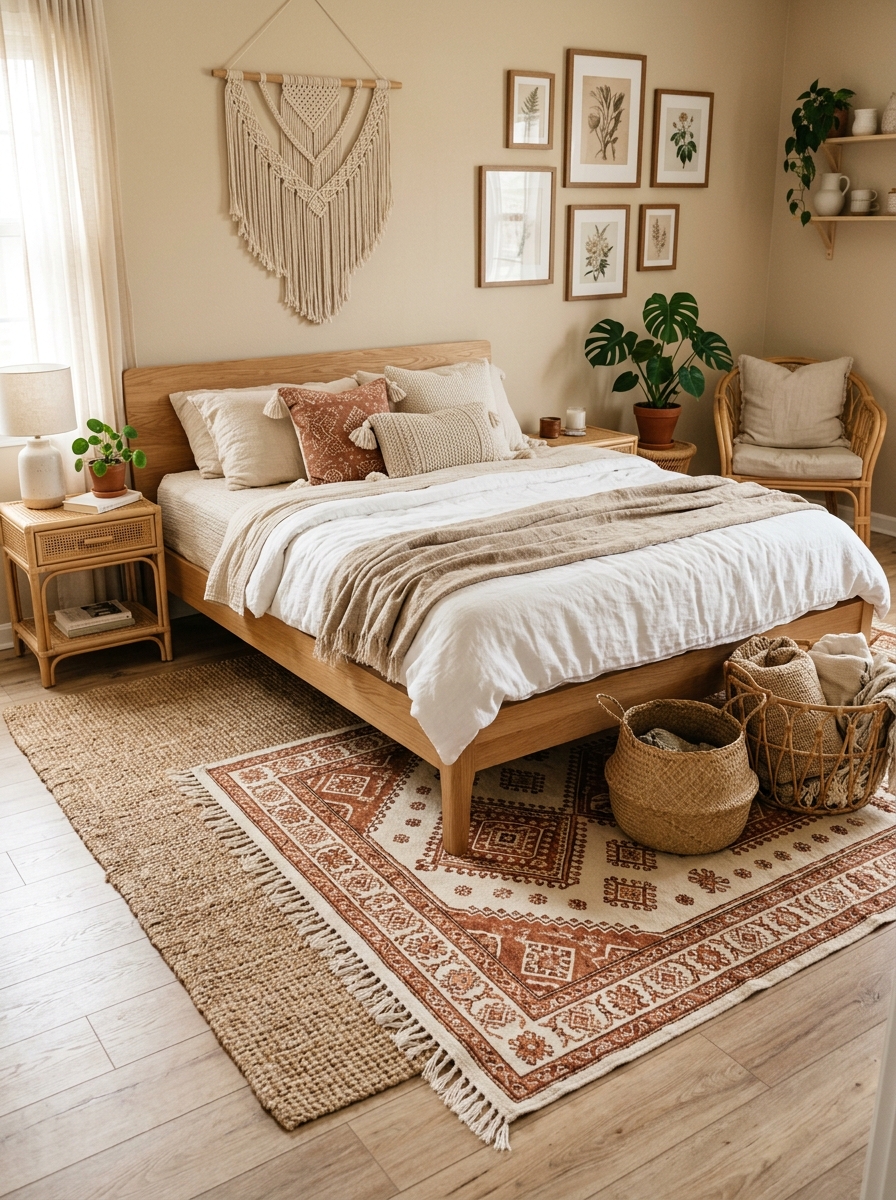
- Layering rugs adds softness and visual depth beneath the furniture.
- Combine a neutral base with a smaller patterned rug.
- Jute and cotton create an appealing natural-material combination.
- Keep patterns subtle when the room already has colorful accents.
- Use non-slip protection underneath to keep rugs securely positioned.
.
Layered rugs can make a bedroom feel instantly warmer, especially when the flooring itself looks plain or cold. Start with a larger neutral jute or woven rug, then place a smaller cotton or vintage-inspired rug partially over it. This creates depth without requiring more furniture or wall decoration. Choose patterns with muted beige, cream, rust, blush, or faded brown tones so the layers feel connected. A soft rug beside the bed also gives children a comfortable place to step onto in the morning, combining visual appeal with a small everyday comfort.
The key to successful rug layering is keeping the proportions intentional. The larger rug should anchor the furniture while the smaller one highlights a particular area, such as the bed, reading nook, or play corner. Avoid using several competing patterns because they can make a small room feel crowded. In my experience, natural textures usually work best when the walls and furniture are simple. Add a few woven baskets and wooden pieces to repeat the rug’s texture throughout the room, creating a cohesive bohemian atmosphere without relying on excessive decoration.
7. Floral Bedding Layers
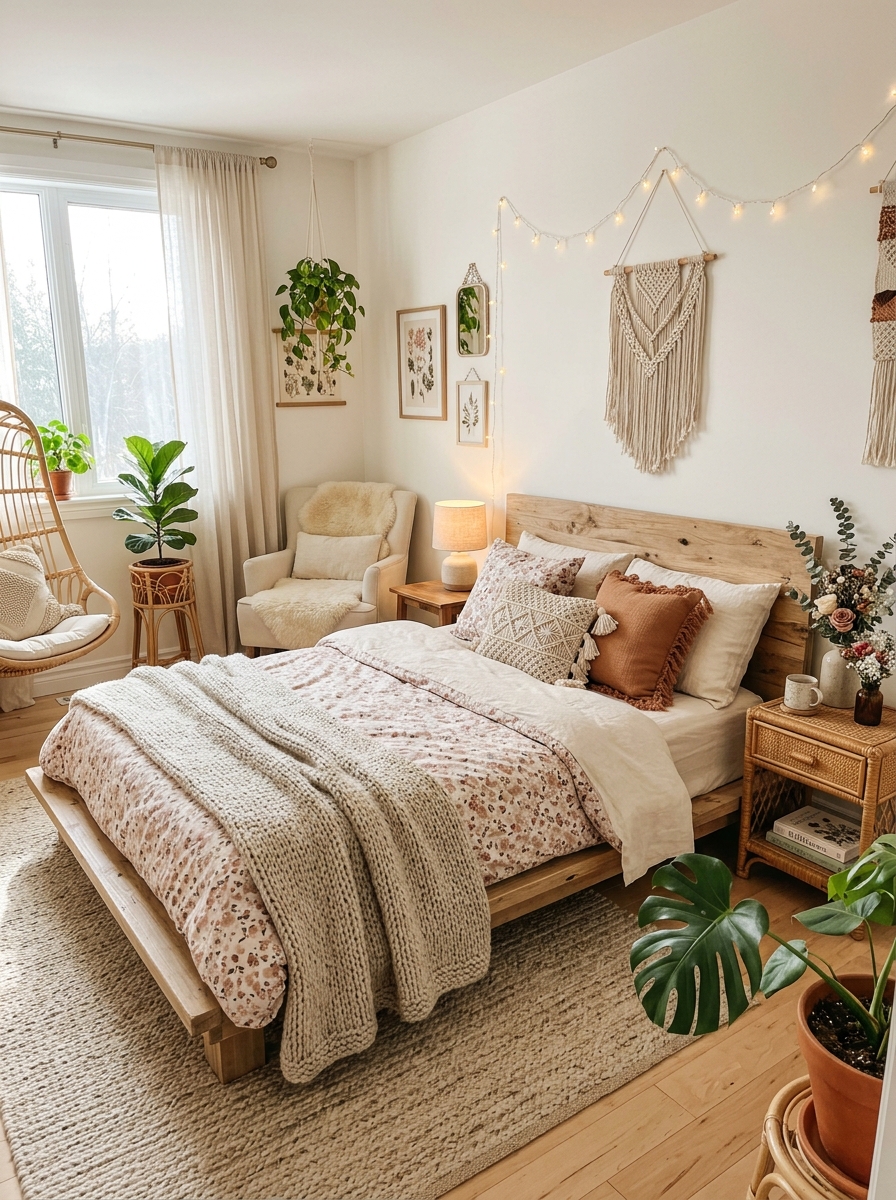
- Floral bedding introduces pattern without requiring permanent changes.
- Choose small-scale prints for a softer visual effect.
- Mix florals with solid cream or blush sheets.
- Add one textured throw for extra dimension.
- Look for washable fabrics suited to everyday use.
Floral bedding is one of the easiest ways to introduce personality without making permanent changes to a child’s bedroom. Choose a small or medium floral print in muted shades such as dusty pink, cream, peach, sage, or warm brown. Layer it with solid-colored sheets and one textured throw to keep the bed from looking overly busy. The mix of patterns and natural fabrics creates a relaxed bohemian feeling while allowing the bedding to remain comfortable. When the child wants a different look later, changing the duvet cover can refresh the entire room.
A layered bed also gives a bedroom more visual depth from across the room. Start with simple sheets, add a printed duvet or quilt, then finish with two or three cushions in complementary colors. Avoid matching every item exactly because slight variations make the arrangement feel more collected and natural. A woven blanket at the foot of the bed can reinforce the earthy character without adding another strong pattern. This approach is especially practical for growing children because the main furniture stays neutral while textiles can easily change with age and preference.
8. Woven Basket Storage
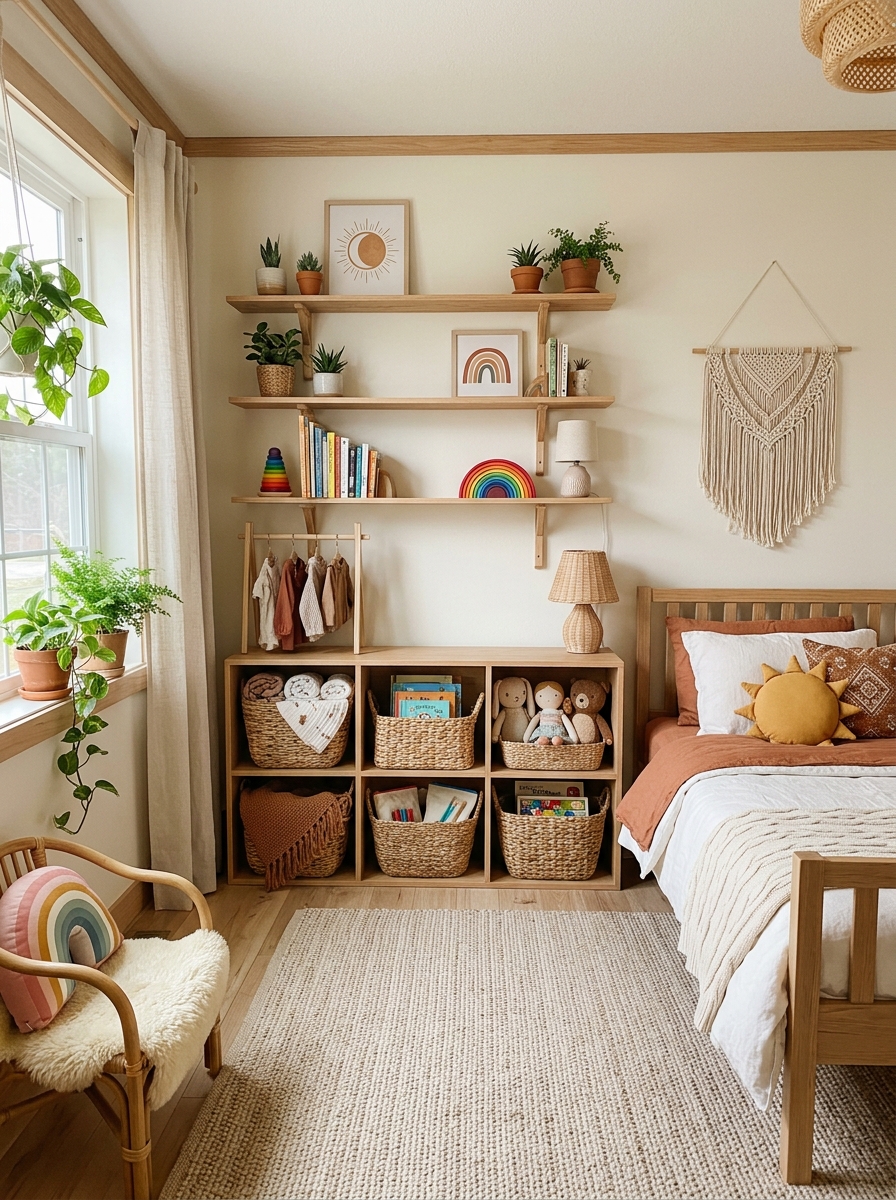
- Woven baskets hide everyday clutter while adding natural texture.
- Use different sizes for toys, blankets, and accessories.
- Place larger baskets beneath open shelving.
- Choose sturdy handles for easier movement around the room.
- Neutral baskets blend naturally with wood and rattan furniture.
Storage does not have to look purely practical when woven baskets become part of the decorating scheme. Use large baskets for stuffed animals and blankets, medium versions for toys, and smaller ones for hair accessories or craft supplies. Natural seagrass, rattan, and woven fiber bring warmth while hiding everyday clutter. Place them under shelves, beside the wardrobe, or near the bed where they are easy to access. This creates a room that looks organized without requiring every small item to have a perfectly hidden storage compartment.
Open baskets are particularly useful in children’s rooms because they make tidying easier. A child can quickly place toys inside rather than carefully arranging everything on a shelf. Choose containers with sturdy construction and handles if they will be moved frequently. Keep the colors natural so the storage blends into the overall design instead of becoming another visual distraction. Pairing baskets with light wood furniture, cream textiles, and simple artwork creates a balanced look. The result feels relaxed and decorative while still addressing one of the most common bedroom challenges: visible clutter.
9. Wooden House Shelf
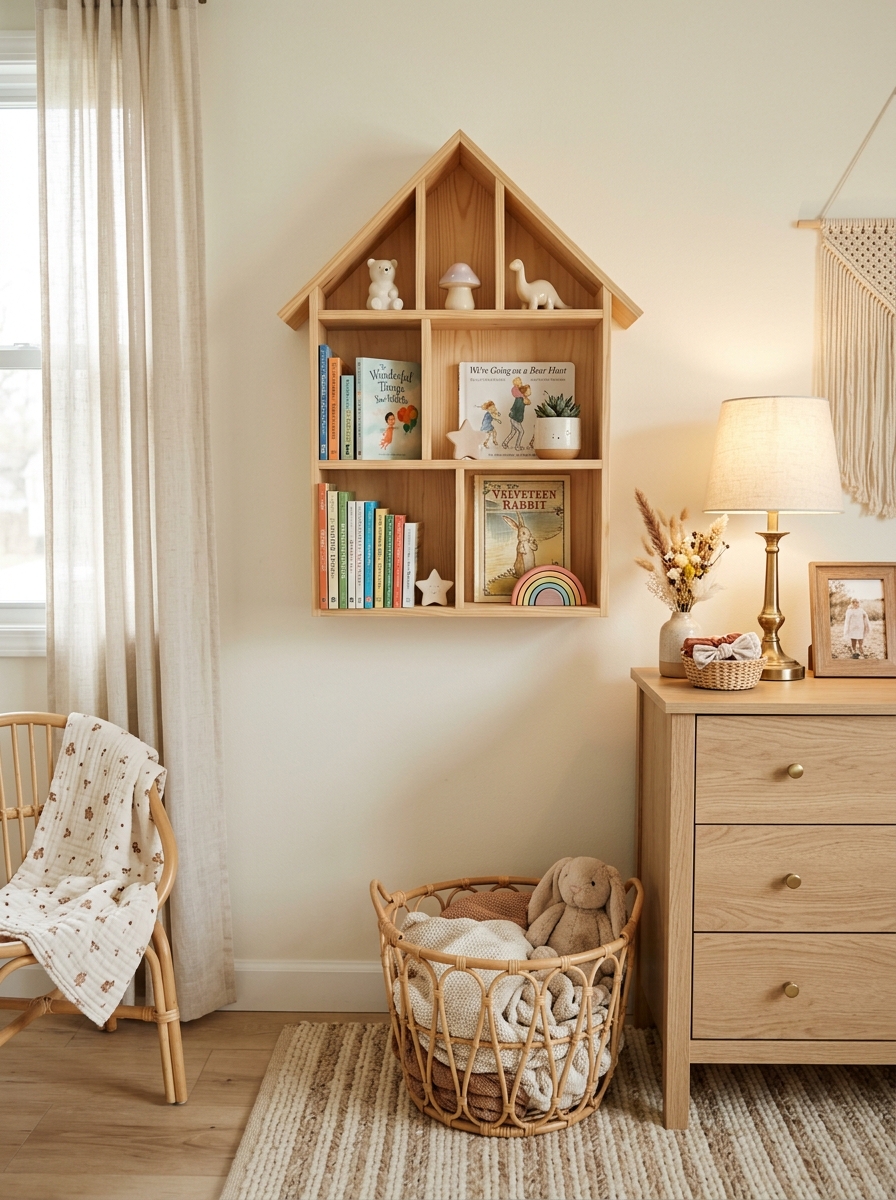
- A house-shaped shelf adds playful architectural detail.
- Natural wood keeps the feature warm and understated.
- Use small compartments for books and favorite objects.
- Avoid overfilling each section to preserve visual breathing room.
- Mount the shelf securely at an appropriate height.
A small house-shaped shelf can turn ordinary wall storage into a playful decorative feature. Choose unfinished or lightly stained wood to maintain the natural character of a bohemian room. Use each compartment for a few carefully selected items, such as tiny books, framed pictures, ceramic decorations, or small toys. Leaving some sections empty is important because negative space keeps the shelf from looking crowded. Place it above a dresser or beside the bed where it can be seen easily without interfering with the room’s main walking path.
This type of shelving combines decoration and organization in a particularly useful way. Rather than adding another large piece of furniture, you can use vertical wall space to display small treasures while keeping surfaces clearer. The simple house shape also introduces a playful element without turning the room into a heavily themed space. Pair the shelf with woven baskets, wooden furniture, and neutral artwork to create visual consistency. For smaller bedrooms, vertical storage like this can be especially helpful because it adds personality and function while preserving valuable floor space for play.
10. Tassel Garland
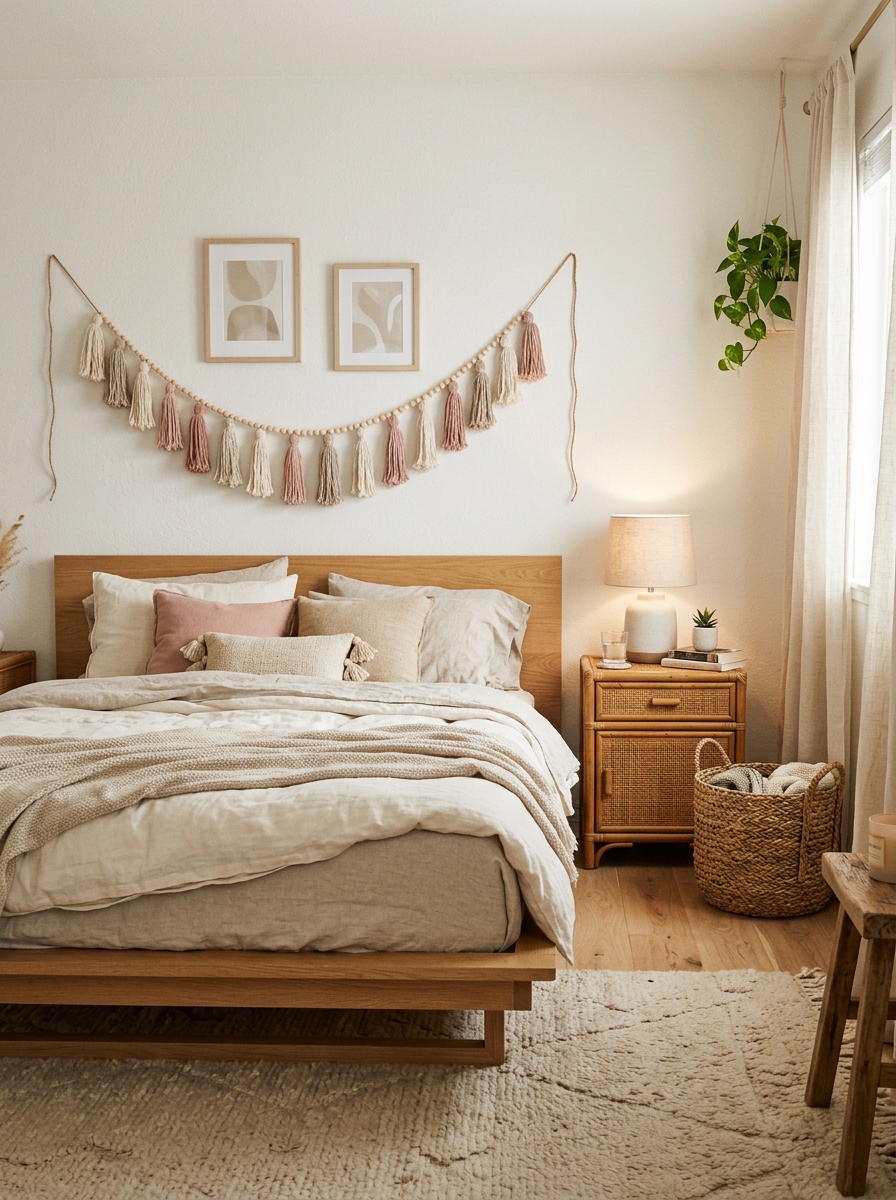
- A fabric tassel garland adds movement above the bed or dresser.
- Choose neutral or muted colors for a sophisticated boho palette.
- Hang it loosely rather than creating a perfectly straight line.
- Repeat one or two colors from the bedding for cohesion.
- Use removable hanging methods when possible for easy updates.
A simple tassel garland can make an empty wall feel finished without adding heavy furniture or complicated artwork. Choose fabric tassels in cream, beige, dusty pink, terracotta, or soft peach, then hang them loosely above the bed, dresser, or reading area. The slight movement of the fabric creates visual softness, while the repeated shapes add rhythm to the wall. Keep the arrangement relaxed rather than perfectly symmetrical. This small detail works particularly well when the room already contains natural textures because the soft fabric connects visually with blankets, cushions, and woven accessories.
Tassel garlands are also useful when decorating a rental or a room that needs frequent updates. They can introduce color and texture without requiring paint or permanent changes to the walls. Choose colors that already appear in the bedding or rug so the garland feels intentionally connected to the rest of the room. Avoid using several decorative strands at once because too many small elements can create visual noise. One carefully placed garland is often enough to make a blank wall feel more playful, finished, and personal.
11. Soft Clay Tones
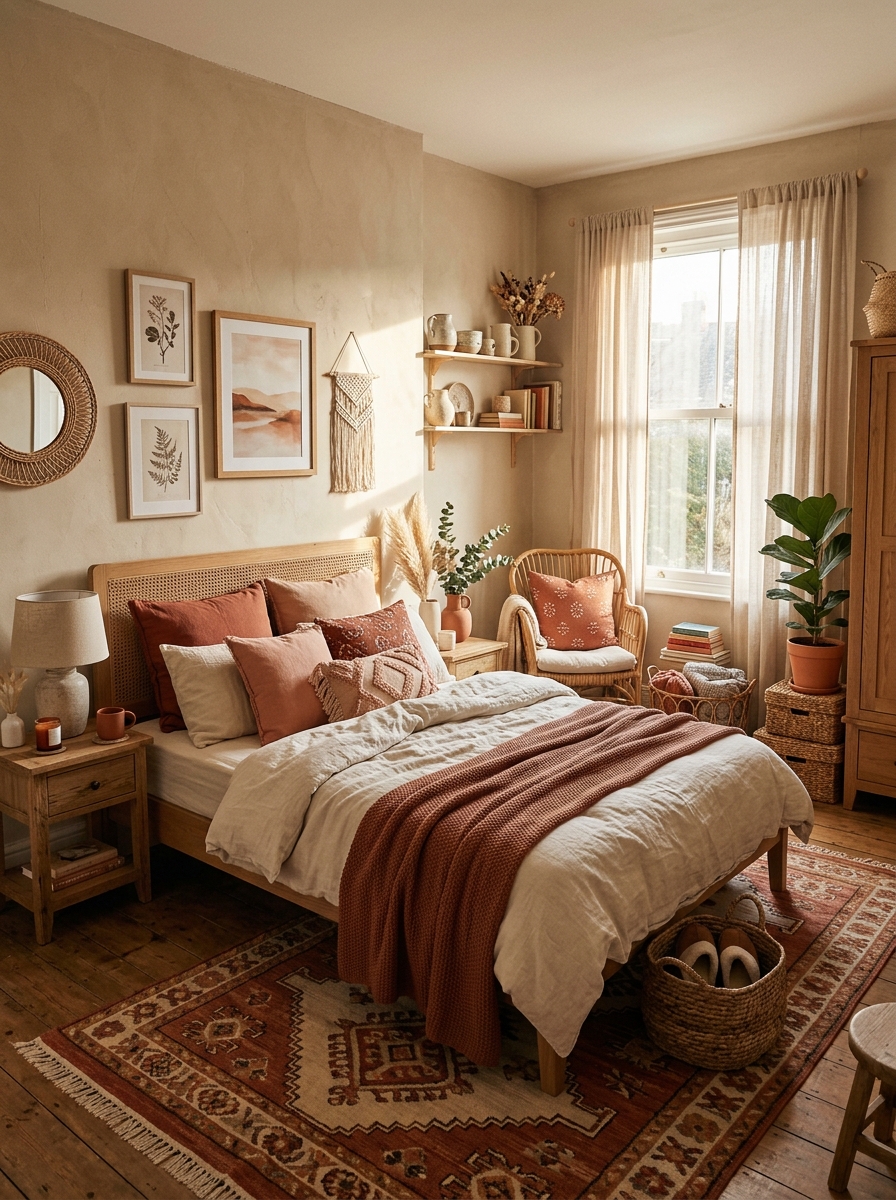
- Terracotta creates warmth without the intensity of bright orange.
- Pair clay shades with cream, beige, and natural wood.
- Use the color through pillows, rugs, artwork, or small furniture.
- Keep larger surfaces neutral for easier future updates.
- Repeat the tone in small areas to create visual balance.
Soft clay tones can give a bohemian bedroom a warm, grounded feeling without making the color palette too strong. Terracotta, muted rust, dusty peach, and warm cinnamon work beautifully with cream walls, light wood, and woven materials. Instead of painting an entire room, introduce these colors through cushions, rugs, artwork, blankets, or small decorative pieces. This makes the palette easier to adjust later. The result feels earthy and welcoming while still maintaining the light, airy quality that works particularly well in children’s bedrooms.
Color repetition is what makes this palette feel intentional rather than random. Choose one main clay shade and repeat it in two or three different areas, such as a cushion, rug detail, and framed print. Keep the remaining colors quiet so the warm tones remain noticeable. This strategy also makes decorating easier because new accessories can be selected around an established palette. When combined with natural materials, soft clay shades add depth and character while avoiding the overly coordinated appearance that can sometimes make children’s rooms feel less relaxed.
12. Neutral Gallery Wall
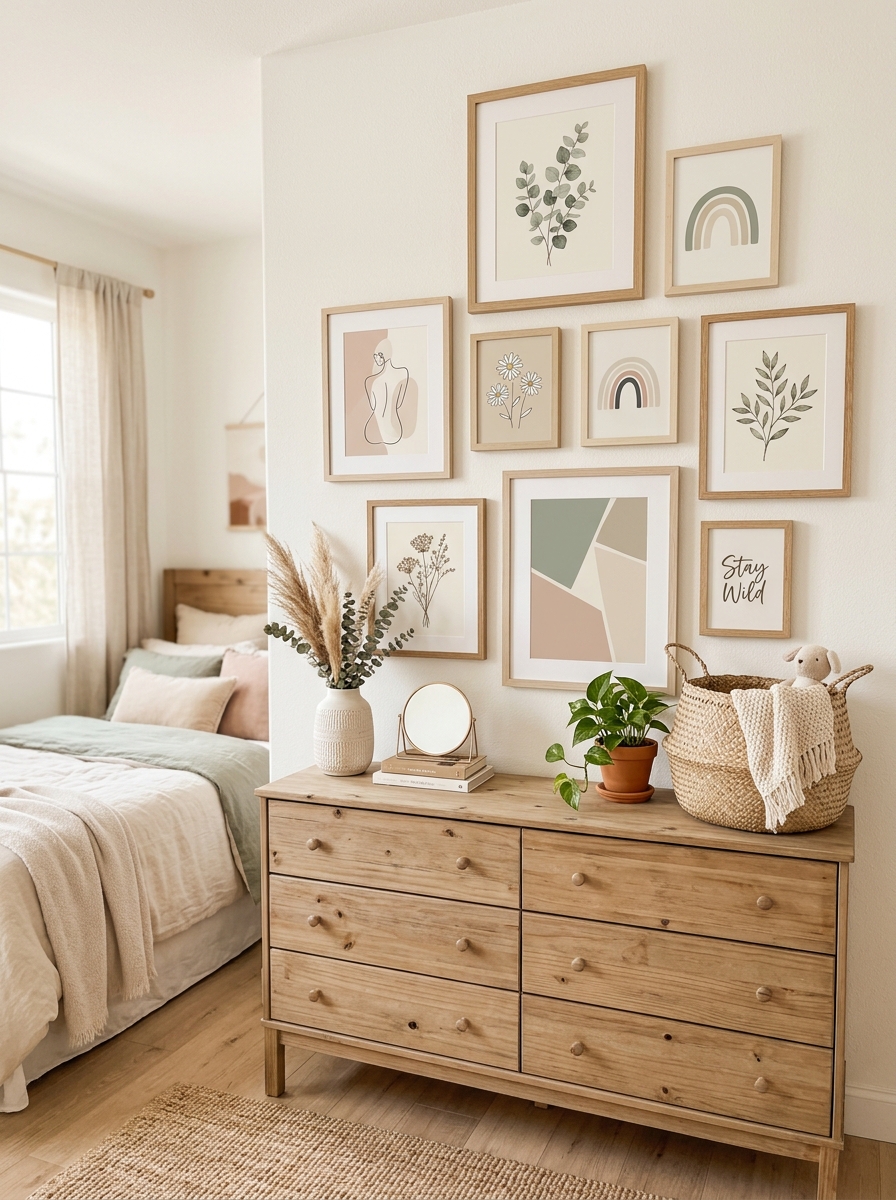
- A gallery wall creates interest without relying on bright colors.
- Mix botanical prints, abstract shapes, and simple illustrations.
- Use wooden frames to reinforce the natural aesthetic.
- Keep artwork within a small coordinated color palette.
- Arrange pieces on the floor before mounting them.
A neutral gallery wall can give a child’s bedroom personality while keeping the overall atmosphere calm. Combine botanical illustrations, simple rainbows, abstract shapes, stars, animals, or line drawings in cream, beige, brown, muted pink, and soft green. Use wooden frames in slightly different finishes to create a collected appearance. Rather than filling an entire wall, create a compact arrangement above the dresser or beside the bed. This makes the display feel intentional and gives the eye one attractive area to explore without making the room feel visually crowded.
The beauty of a neutral gallery wall is that it can change gradually as a child grows. Replace one print when interests change instead of redesigning the entire bedroom. Before hanging anything, arrange the frames on the floor and experiment with spacing until the composition feels balanced. Keep heavier pieces toward the center or lower portion of the arrangement for a grounded appearance. This flexible approach adds personality while preserving the natural, relaxed character associated with bohemian decorating. It is decorative enough for Pinterest inspiration but practical enough for everyday family life.
13. Hanging Plant Corner
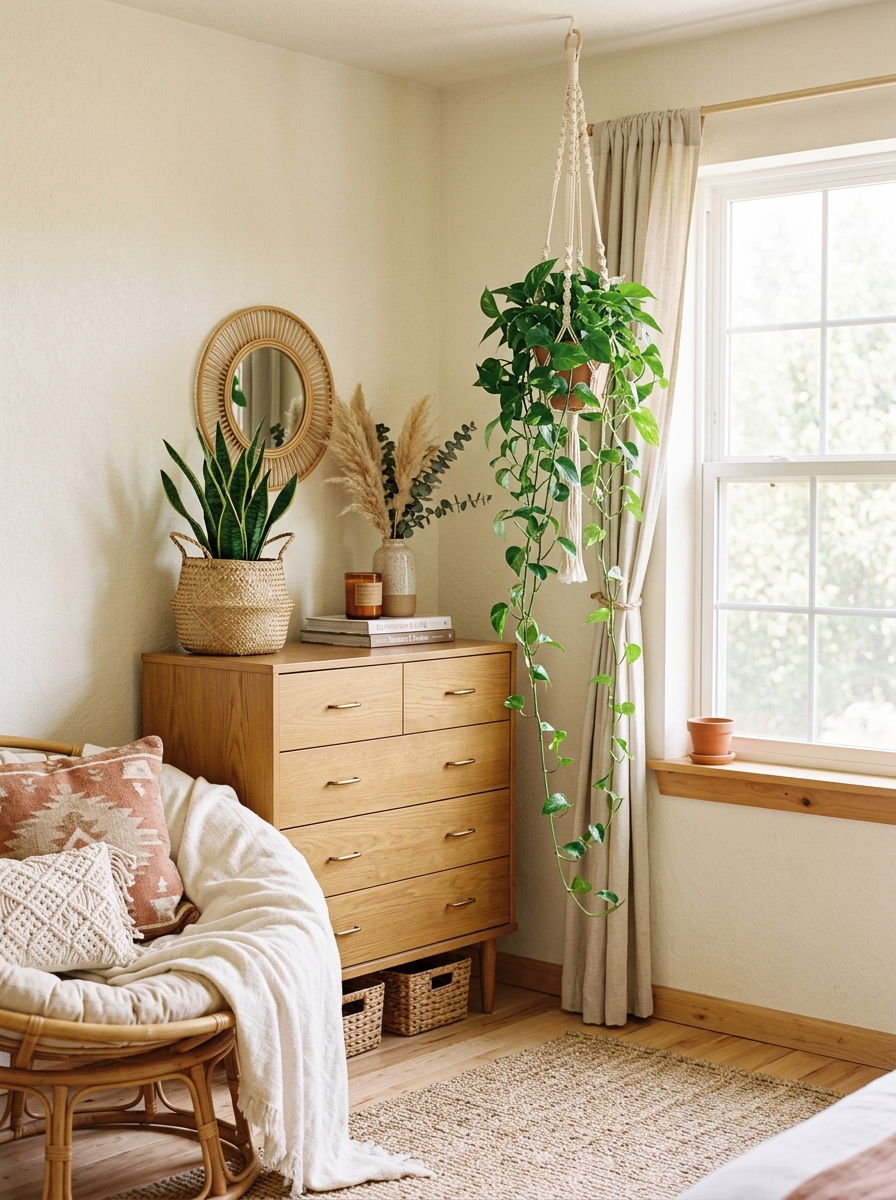
- A hanging plant introduces natural greenery without using floor space.
- Choose child-friendly plants when adding real greenery.
- Use a simple woven or ceramic planter.
- Position greenery where it receives suitable indirect light.
- Artificial plants can work when maintenance is difficult.
A small hanging plant can bring life into a bedroom while making use of vertical space that might otherwise remain empty. Choose a simple woven basket planter or understated ceramic pot, then position it near a window where the plant receives suitable indirect light. Trailing greenery creates gentle movement and pairs naturally with rattan, wood, cotton, and other earthy materials. If real plants are not practical, a realistic artificial option can provide a similar visual effect without watering or maintenance. Keep the arrangement simple so the greenery feels like part of the room rather than a separate display.
Plants can also soften the harder lines of furniture and shelves, making the overall room feel more organic. When choosing a real plant for a child’s bedroom, check that it is appropriate for the household and place it securely out of reach when necessary. Repeat small touches of green through artwork, bedding, or accessories to create visual connection. One hanging plant can be enough to make a corner feel finished. This is especially helpful in rooms with neutral walls because greenery provides natural contrast without introducing a strong or distracting color.
14. Vintage Trunk Bench
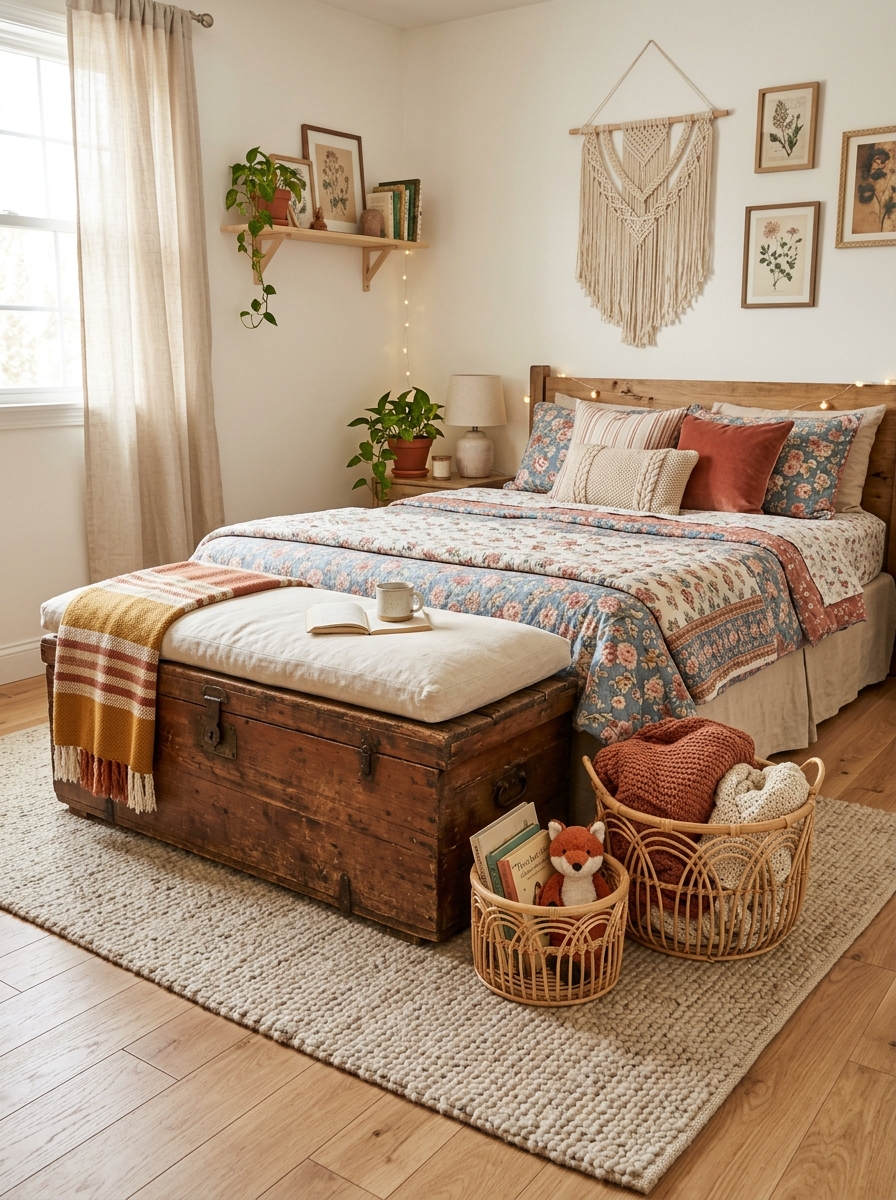
- A vintage trunk adds storage and character at the foot of the bed.
- Use it for blankets, seasonal clothing, or larger toys.
- Choose aged wood or muted finishes for authentic character.
- Add a soft cushion if the trunk will be used as seating.
- Leave enough space around it for comfortable movement.
A vintage trunk placed at the foot of the bed can solve a storage problem while becoming one of the room’s most distinctive pieces. Look for an aged wooden trunk, woven chest, or softly distressed storage box in a warm neutral finish. Use the inside for blankets, costumes, stuffed animals, or seasonal items that need to stay nearby but out of sight. A cushion on top can turn it into occasional seating. This approach gives the room personality without adding another purely decorative object that takes up valuable floor space.
The strongest look comes from mixing the trunk with simpler modern pieces rather than making everything appear vintage. Pair it with a light wooden bed, neutral bedding, woven baskets, and soft textiles so the older-looking storage piece becomes a character detail. Make sure there is enough clearance around the trunk for opening the lid and walking comfortably. This arrangement is particularly useful for bedrooms where storage is limited because one piece can provide seating, organization, and visual interest at the same time.
15. Fringe Floor Cushion
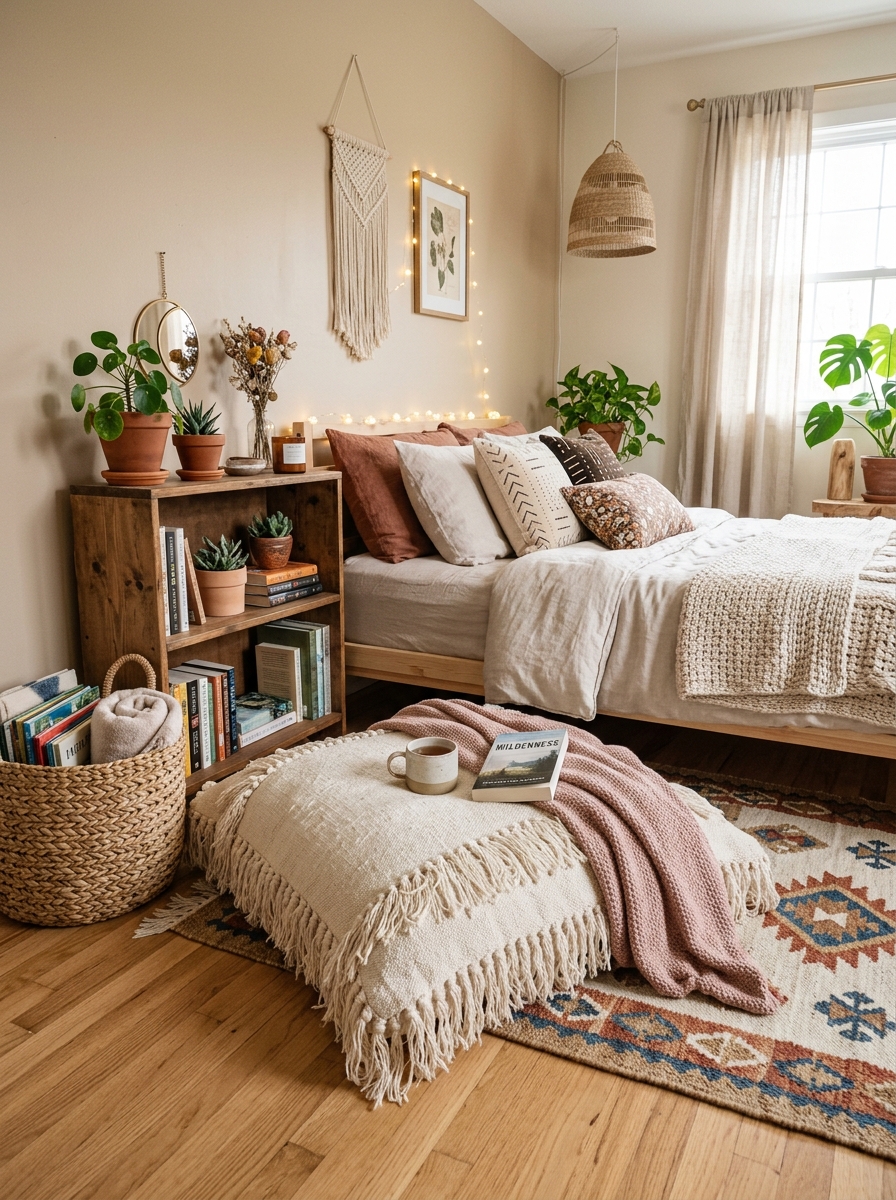
- Oversized floor cushions create flexible seating for children.
- Fringe details add texture and relaxed bohemian character.
- Use washable covers for everyday practicality.
- Place cushions beside a rug or reading basket.
- Choose muted colors that complement the bedding.
A large fringe floor cushion can instantly make a bedroom feel more relaxed and ready for everyday activities. Choose an oversized cotton or woven cushion in cream, oatmeal, dusty rose, or muted terracotta, then place it beside a rug or reading basket. The fringe adds texture while the low profile keeps the room open for play. Children can use the cushion for reading, drawing, relaxing, or chatting with friends. Choose a removable, washable cover whenever possible because soft floor seating naturally becomes part of everyday bedroom life.
Floor cushions are especially useful when a room does not have enough space for a traditional armchair. They can be moved easily when the floor needs to become a play area, then returned to the reading corner afterward. Keep the cushion near other soft textures, such as a woven rug or knitted blanket, to create a comfortable layered arrangement. One or two cushions are usually enough; adding too many can make the floor feel crowded. The result is casual, flexible, and visually inviting without sacrificing valuable space.
16. Beaded Chandelier
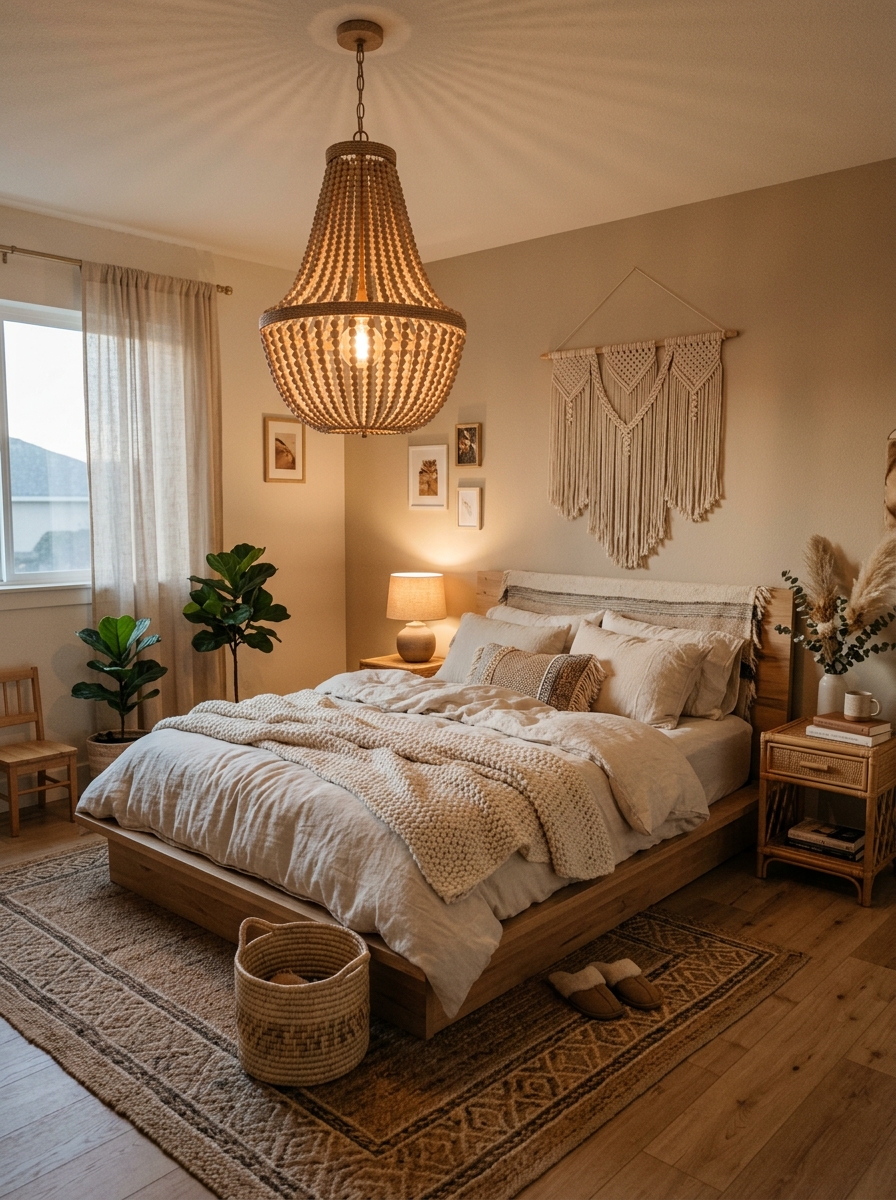
- A wooden or beaded chandelier creates an eye-catching ceiling feature.
- Natural finishes keep the fixture connected to the bohemian palette.
- Use warm bulbs for a softer evening atmosphere.
- Keep the rest of the lighting visually simple.
- Ensure the fixture is professionally installed and appropriately secured.
A beaded chandelier can transform an ordinary bedroom ceiling into a striking decorative feature. Look for a fixture made with natural wood beads, woven fibers, or warm neutral materials that complement the room’s existing textures. A soft cream or warm white finish keeps the fixture visually light while still giving the ceiling plenty of character. Pair it with simple bedside lighting rather than several competing fixtures. When switched on in the evening, a warm bulb can create a gentle glow that makes the entire room feel more comfortable.
Ceiling fixtures are particularly effective because they add personality without using floor or wall space. Keep the surrounding ceiling and walls relatively simple so the chandelier remains the main visual feature overhead. A natural wood bed, cream bedding, and woven rug can provide enough supporting texture without competing with the fixture. For a child’s room, prioritize appropriate installation, secure mounting, and safe bulb choices. This balance allows the lighting to function as both practical illumination and an attractive design element that gives the room a finished appearance.
17. Sage Green Accents
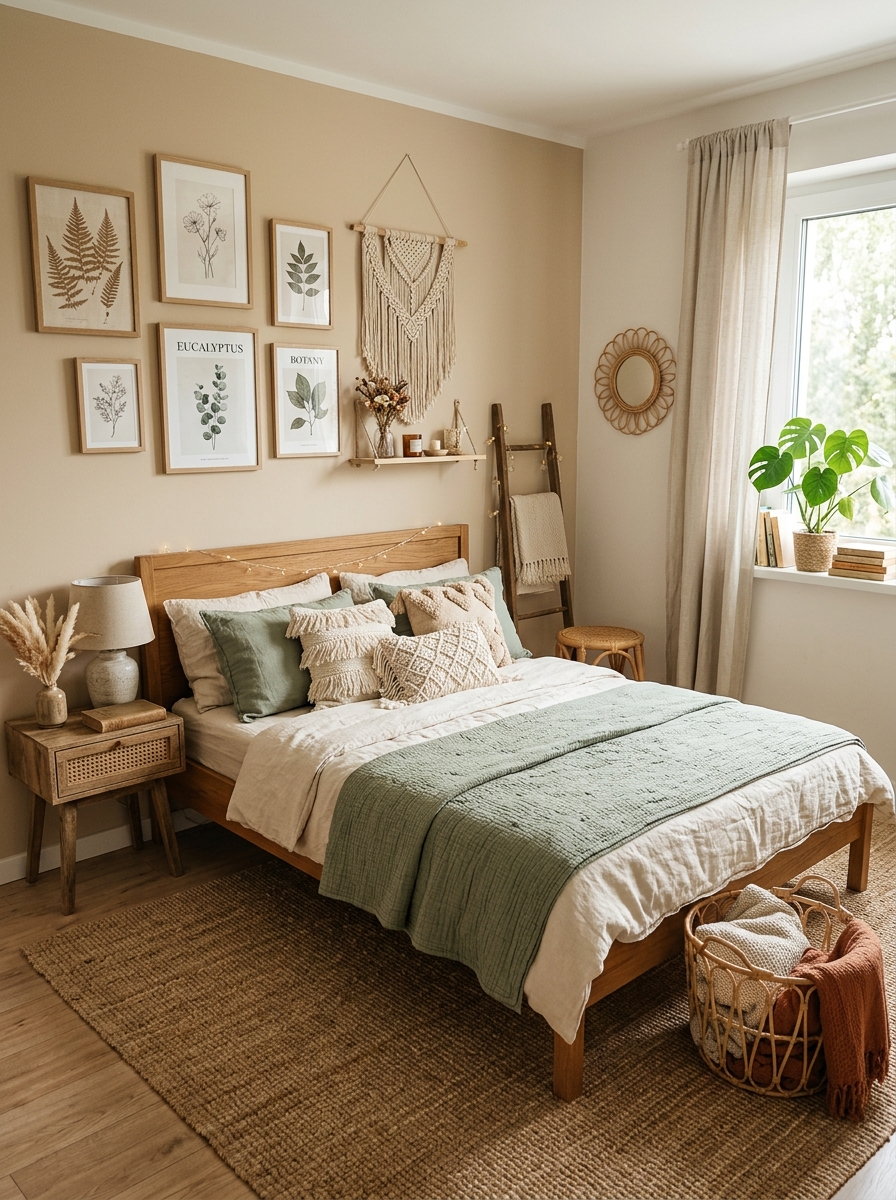
- Sage green adds a gentle connection to nature.
- Combine it with cream, beige, and warm wood.
- Introduce the color through bedding, cushions, or artwork.
- Avoid using too many green shades in one room.
- Repeat sage in small details for a cohesive palette.
Sage green brings a quiet natural quality to a bohemian bedroom without feeling overly bright or childish. Use it through a quilt, cushion, framed botanical print, rug detail, or small storage piece rather than covering every surface. Pair the muted green with cream walls, beige textiles, warm wood, and natural woven materials. The combination creates a soft palette that feels fresh during the day and cozy in the evening. Sage is also versatile enough to work with blush, terracotta, or mustard accents when the room needs a little more personality.
The easiest way to make sage accents look intentional is to repeat the same tone in several small places. For example, a sage cushion can connect with a botanical print and a small detail in the rug. Avoid mixing too many different greens because subtle variations can make the palette feel less coordinated. Natural textures help soften the color and prevent it from looking too modern or clinical. This approach works especially well for children who want color but whose parents prefer a bedroom that remains calm, flexible, and easy to update.
18. Boho Play Tent
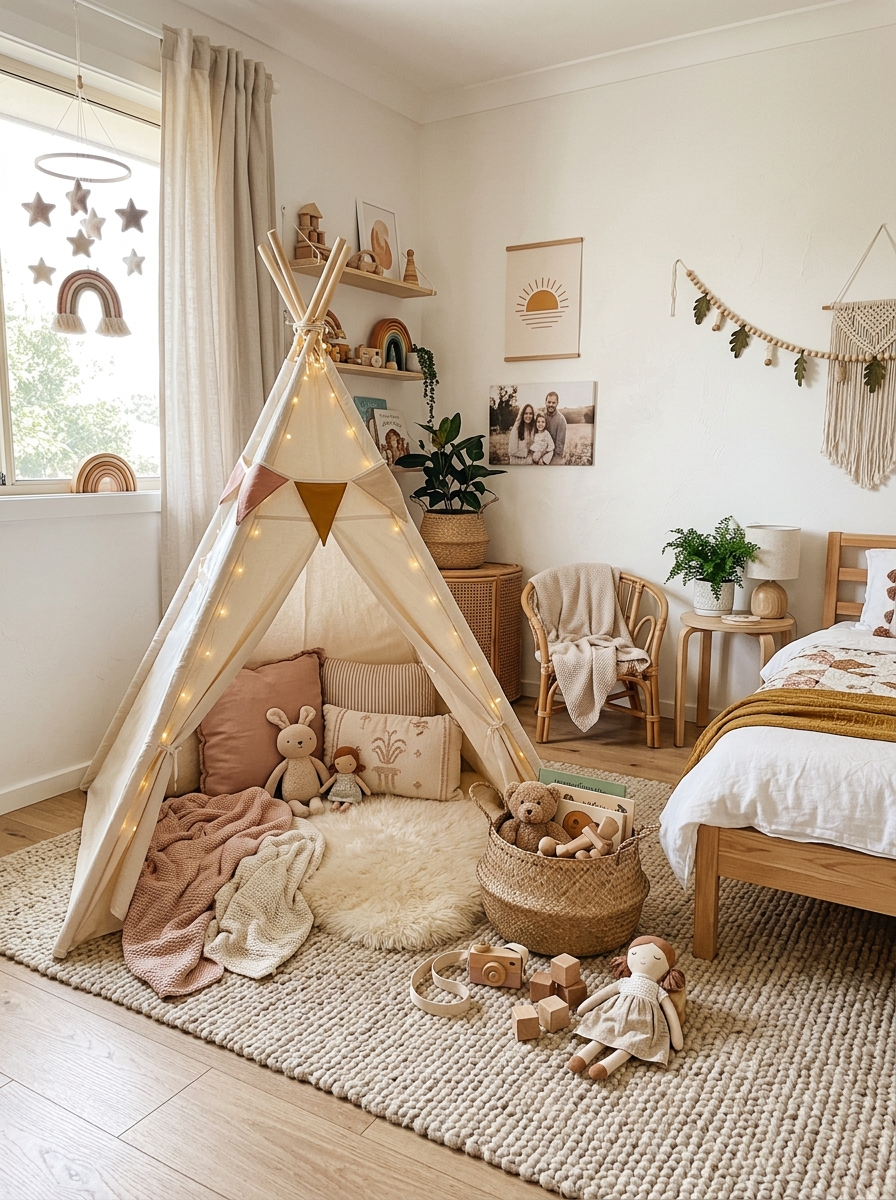
- A small fabric tent creates a dedicated imaginative play area.
- Neutral canvas keeps the structure visually calm.
- Add cushions, blankets, and one small basket inside.
- Place the tent on a soft rug for comfort.
- Choose a size that leaves clear walking space around it.
A small fabric play tent can become a favorite part of a child’s bedroom while adding an unmistakable sense of personality. Choose a neutral canvas or cotton design in cream, beige, or soft oatmeal, then place it on a textured rug. Add two cushions and a lightweight blanket inside to create a comfortable little retreat. Keep the surrounding area simple so the tent remains the main feature. Children can use the space for reading, imaginative play, quiet time, or storing a few favorite toys during the day.
The tent works best when it has enough surrounding space to feel like a separate little zone. Avoid placing it directly in front of wardrobes, doors, or frequently used pathways. A nearby woven basket can hold books and toys, making the setup easier to tidy. Natural wood, rattan, and neutral textiles help connect the play area with the rest of the bedroom. Because the tent is not permanently attached to the room, it can also be moved or removed later as interests change, making it a flexible decorating choice.
19. Handcrafted Clay Decor
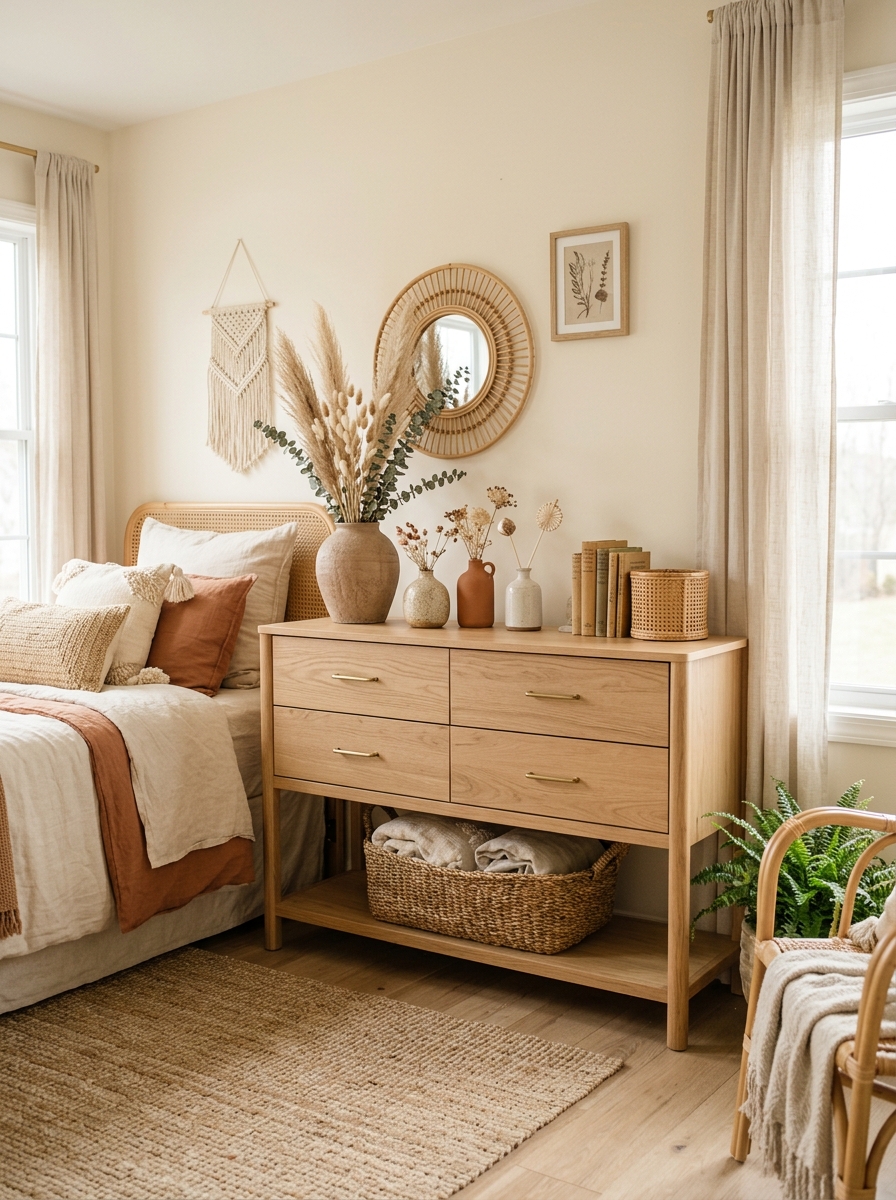
- Small clay pieces add handmade character to shelves and dressers.
- Choose earthy neutral finishes for a natural appearance.
- Use simple shapes rather than excessive decorative objects.
- Display only a few pieces to avoid visual clutter.
- Mix ceramics with wood and woven materials.
Handcrafted clay decor can add subtle character to a bedroom without requiring bright colors or large decorative pieces. Choose small ceramic bowls, handmade-looking vases, simple figurines, or textured clay ornaments in beige, cream, terracotta, or soft brown. Place a few pieces on a dresser, shelf, or bedside table and leave enough empty space around them. The slightly imperfect appearance of handmade ceramics adds warmth and makes the room feel more personal. Mixing clay with wood and woven materials also creates a pleasing contrast between smooth, rough, and natural textures.
Small decorative pieces are most effective when they support the room’s overall design rather than compete with it. Choose objects that repeat existing colors or materials so they feel connected to the bedding, rug, or furniture. Avoid placing fragile pieces within easy reach if younger children use the room independently. A few carefully selected ceramics can provide the handcrafted quality associated with bohemian interiors without turning the space into a collection of unrelated objects. This approach keeps the bedroom visually interesting while preserving the open, comfortable feeling children need.
20. Cozy Floor Bed
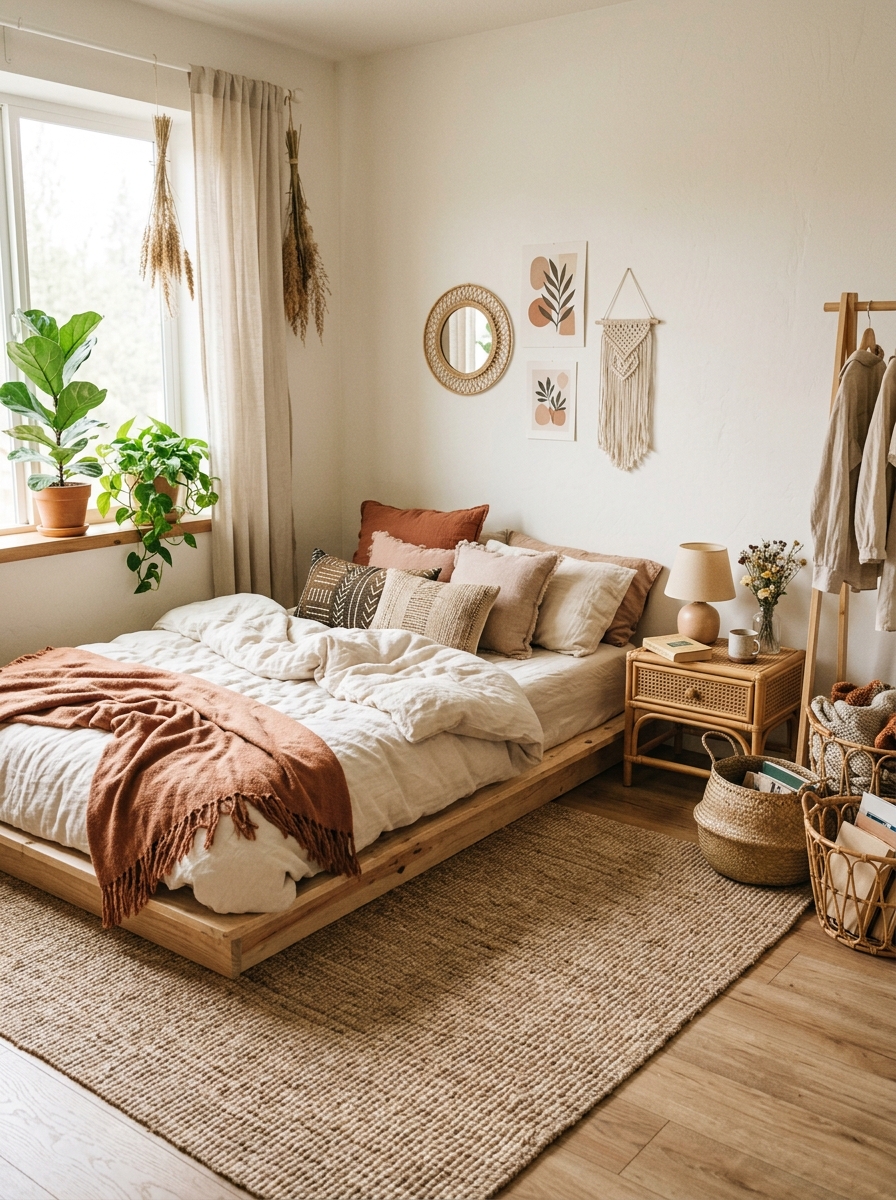
- A low floor bed creates an inviting, relaxed sleeping area.
- Layer neutral bedding with textured blankets and cushions.
- Add a soft rug around the sleeping zone.
- Keep nearby furniture low to maintain visual balance.
- Make sure the chosen bed setup suits the child’s needs and room.
A cozy floor bed can give a child’s bedroom a relaxed, grounded appearance while making the sleeping area feel especially inviting. Choose a low wooden frame or suitable floor-level setup, then layer it with cream bedding, textured blankets, and a few cushions in muted earthy colors. Place a soft rug around the bed to create warmth underfoot and visually define the sleeping zone. Keep nearby furniture low and simple so the room maintains an open appearance. The combination of natural materials and layered textiles creates a comfortable focal point without needing excessive decoration.
The biggest advantage of a low sleeping arrangement is how naturally it fits with relaxed bohemian styling. A low bed works beautifully alongside woven baskets, floor cushions, wooden furniture, and simple wall art because the entire room feels visually connected to the floor. Keep pathways clear and consider the child’s age, mobility, and practical needs when choosing the setup. As a finishing touch, add one soft throw and a small bedside basket rather than filling the area with accessories. This creates a calm, flexible bedroom that feels personal without becoming overly themed.
Creating Her Dream Space
Creating a beautiful bohemian bedroom doesn’t mean changing everything at once. The right combination of natural textures, cozy textiles, warm colors, playful accents, and practical storage can completely transform the space. These boho girls room ideas give you plenty of ways to start small and build a room that feels personal and inviting. I’ve seen how simple changes can make a bedroom feel noticeably more comfortable and special. Save this post on Pinterest for your next decorating project, try one idea that fits your space, and share it with someone looking for fresh bedroom inspiration. Your perfect cozy room can start today.