21 Fence Landscaping Ideas to Boost Curb Appeal
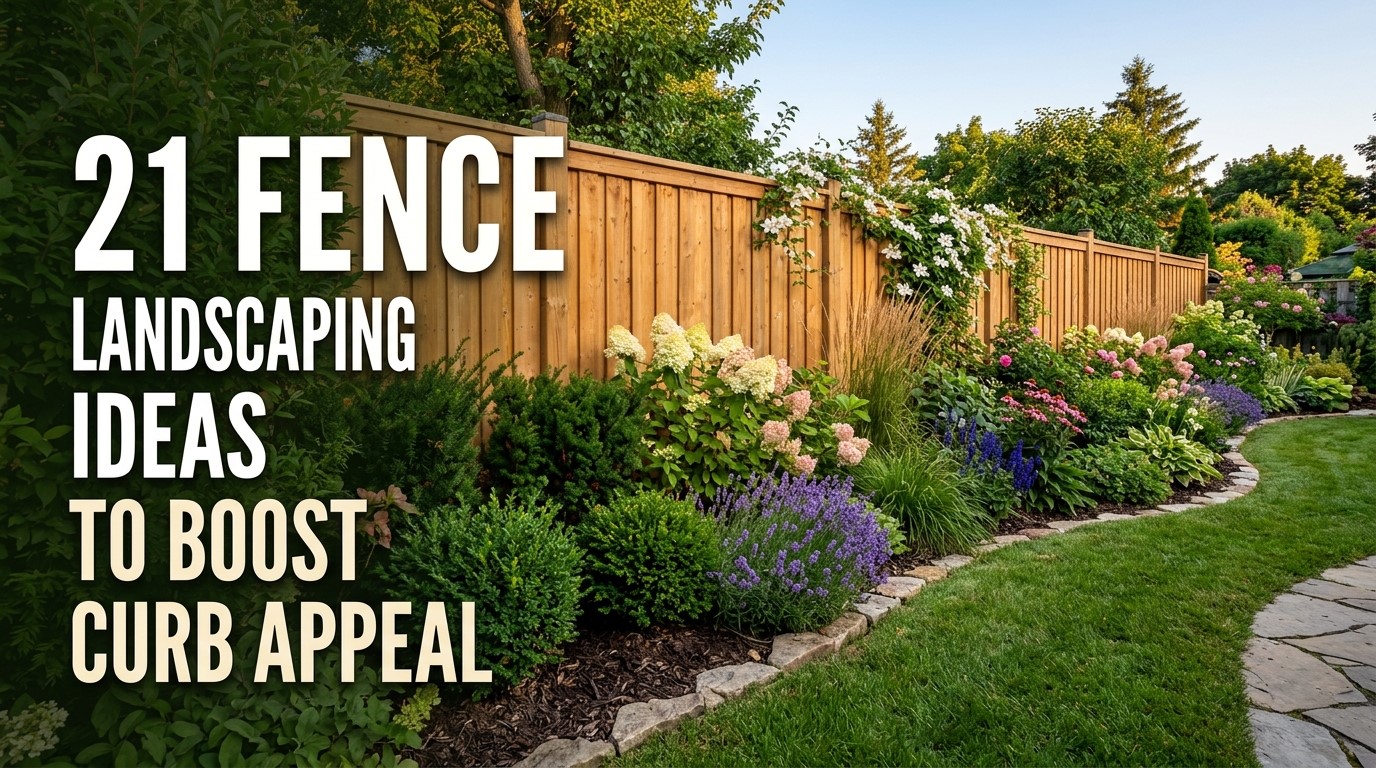
A plain fence can make a beautiful yard feel unfinished. The right plants, textures, and simple details can change that fast.
These fence landscaping ideas show how to turn an overlooked boundary into a beautiful part of your outdoor space. Whether your fence is tall, plain, weathered, or surrounded by a small yard, there are easy ways to add colour, softness, texture, privacy, and structure. You’ll find ideas ranging from flowering borders and climbing vines to gravel strips, shrubs, raised beds, and modern container displays. In my experience, even a narrow planting area can make a noticeable difference when the plants are chosen and positioned thoughtfully. Use these ideas as inspiration, then adapt your favourites to your space, sunlight, and maintenance style.
1. Evergreen Shrub Border
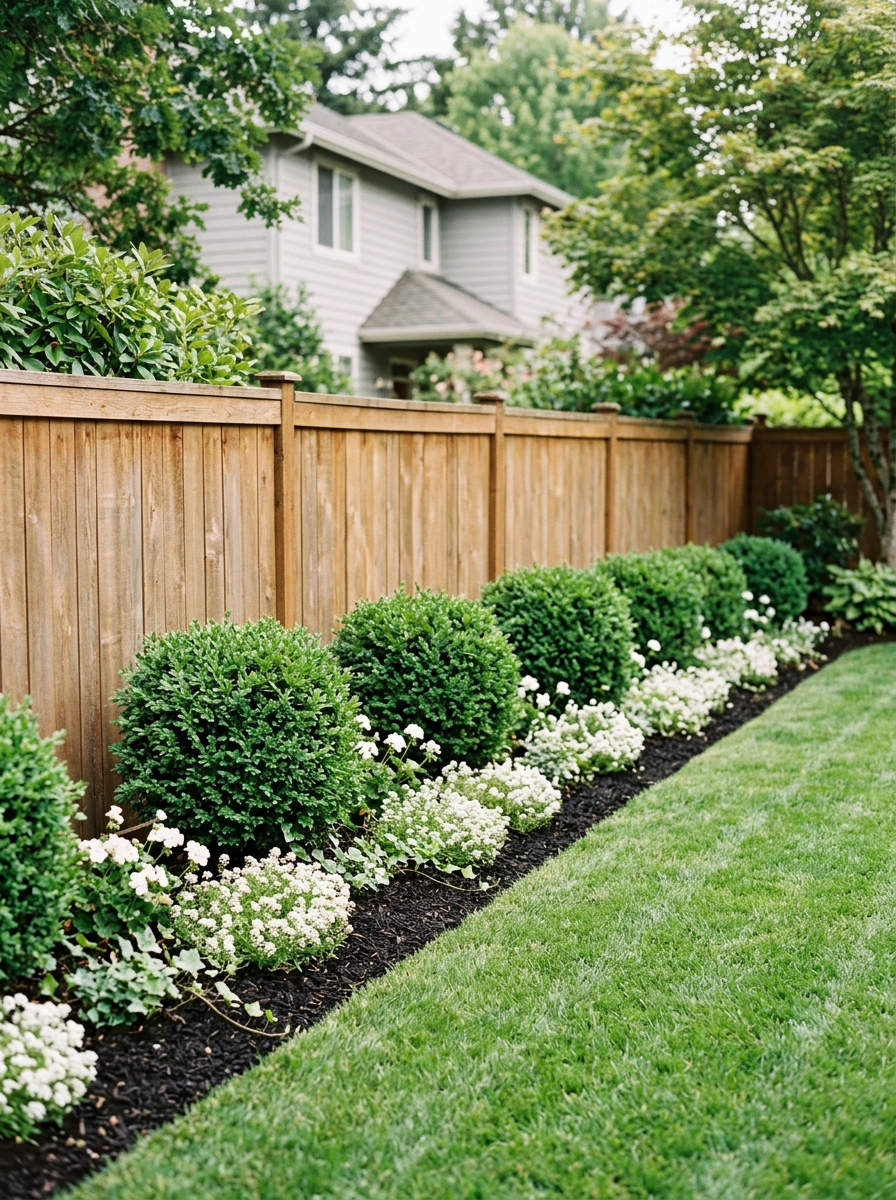
- Adds softness and year-round greenery along a hard fence line.
- Creates a neat transition between the lawn and boundary.
- Repeated shrubs make the planting feel organised and intentional.
- A narrow mulch bed gives the border a polished finish.
- Compact varieties keep the fence visible and easier to maintain.
A simple row of shrubs can make a plain fence feel intentional instead of forgotten. Choose compact evergreen plants that stay neat against the fence without covering its structure completely. Their green foliage softens hard wood, vinyl, or metal surfaces while adding year-round colour. In my experience, repeating the same shrub at even intervals creates a cleaner look than mixing too many varieties. Leave enough breathing room between plants for airflow and maintenance. A narrow mulch bed also helps define the planting line, keeps weeds down, and gives the entire border a finished, cared-for appearance.
This approach works especially well when the fence is visually dominant or the yard feels too exposed. Plant shrubs in a straight or gently curved line, depending on the shape of your garden, then repeat their spacing for a balanced effect. Layering a few low flowers in front can add seasonal colour without making the border feel crowded. Choose plants suited to your sunlight and soil conditions rather than copying a look blindly. The result is a softer boundary that feels connected to the rest of the landscape. It also creates a reliable foundation for adding flowers or grasses later.
2. Climbing Flower Trellis
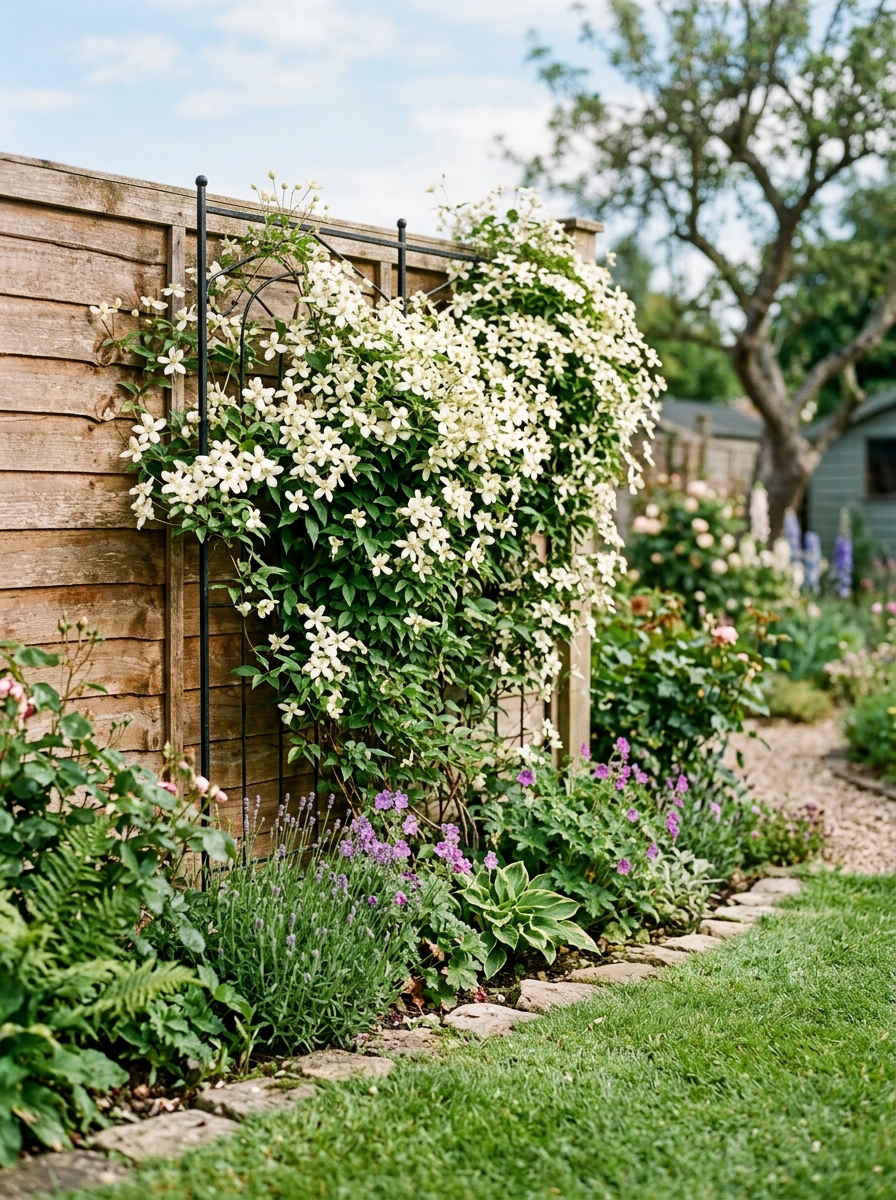
- Adds vertical colour without taking up much ground space.
- Helps soften tall or visually heavy fence panels.
- A trellis gives climbing plants clear support as they grow.
- Flowering vines can introduce seasonal colour and fragrance.
- Keep the structure slightly away from the fence for airflow..
A trellis instantly turns a flat boundary into a vertical garden feature. Choose a sturdy structure that complements the fence material, then train flowering vines through it as they grow. White, pink, or purple blooms can brighten dark fencing, while green foliage keeps the display attractive between flowering periods. This setup is especially useful in narrow yards where there is little room for wide planting beds. In my experience, giving vines a defined support makes the garden look more deliberate and easier to manage. Leave a small gap behind the trellis when possible to improve airflow and simplify maintenance.
This planting arrangement can also make a basic boundary feel more established without completely hiding the fence. Position the trellis near an entrance, patio, or otherwise empty stretch where vertical interest is needed most. Select climbers according to your local conditions, checking their mature size before planting. A shallow bed of mulch or gravel can frame the base and keep the area tidy. As the vines fill the structure, the combination of foliage, flowers, and repeating lines creates depth. The finished look feels lush but organised, making the fence part of the garden rather than a separate background element.
3. Ornamental Grass Border
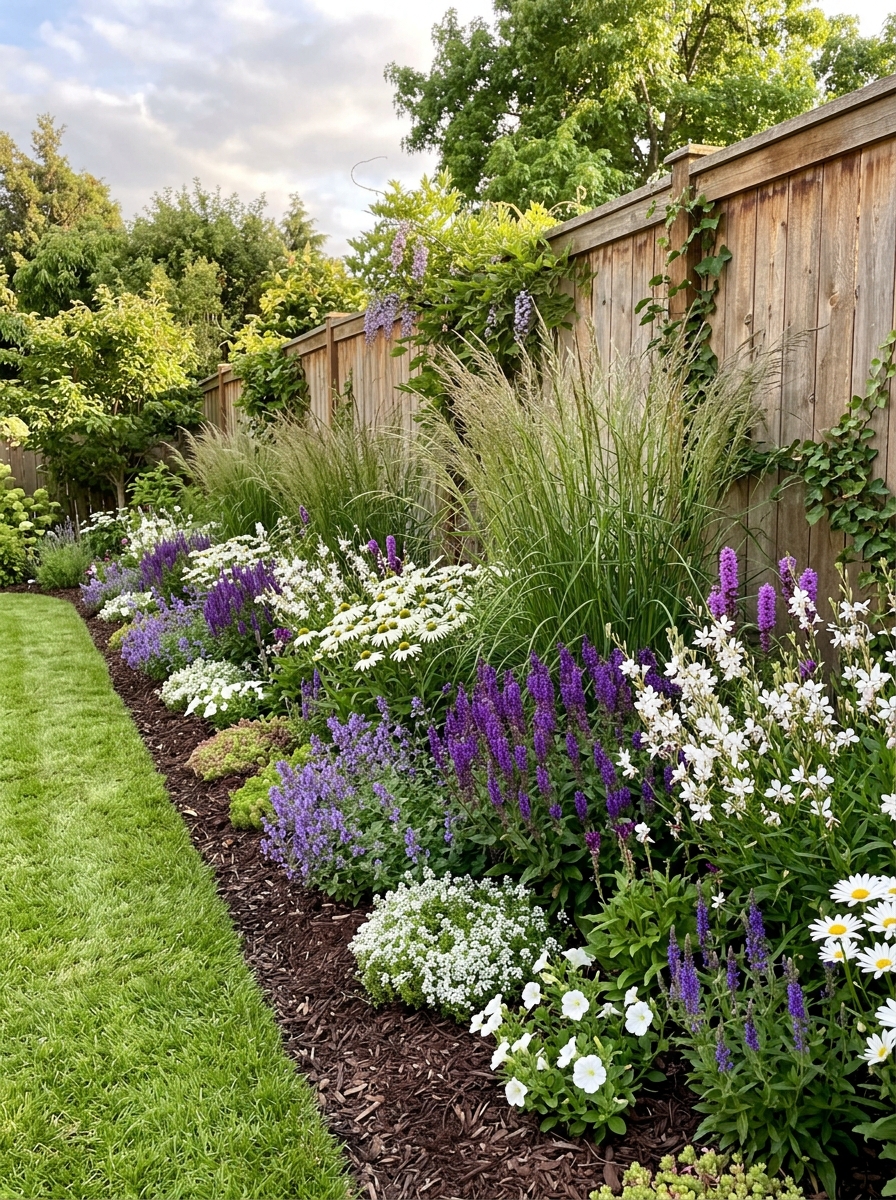
- Adds movement and texture along a straight fence line.
- Creates soft layers without completely covering the boundary.
- Tall grasses work well behind shorter flowering plants.
- Repeated varieties make the planting feel cohesive.
- Mulch keeps the narrow border cleaner and easier to manage.
A low planting strip can completely change how a plain fence meets the ground. Combine ornamental grasses with a few compact flowering plants to create soft layers that move naturally in the breeze. The grasses add height and texture, while flowers bring small bursts of colour near the front edge. Keep taller plants closer to the fence and shorter varieties toward the lawn for a stepped appearance. I’ve noticed this arrangement works particularly well when the fence looks stark or overly straight. A simple mulch layer between plants can also reduce visual clutter and make the border easier to maintain.
This layered border is flexible enough for modern, cottage, and relaxed backyard styles. Choose grasses with foliage that suits your climate, then repeat two or three plant types rather than filling the bed with unrelated varieties. Silver, green, cream, and soft purple tones can create a calm palette that complements natural fencing. Leave enough space around each plant to account for mature growth and seasonal spread. The finished planting should look full without becoming crowded. With the right spacing, the fence gains depth, movement, and texture while the lawn still has a clean visual edge.
4. Modern Gravel Strip
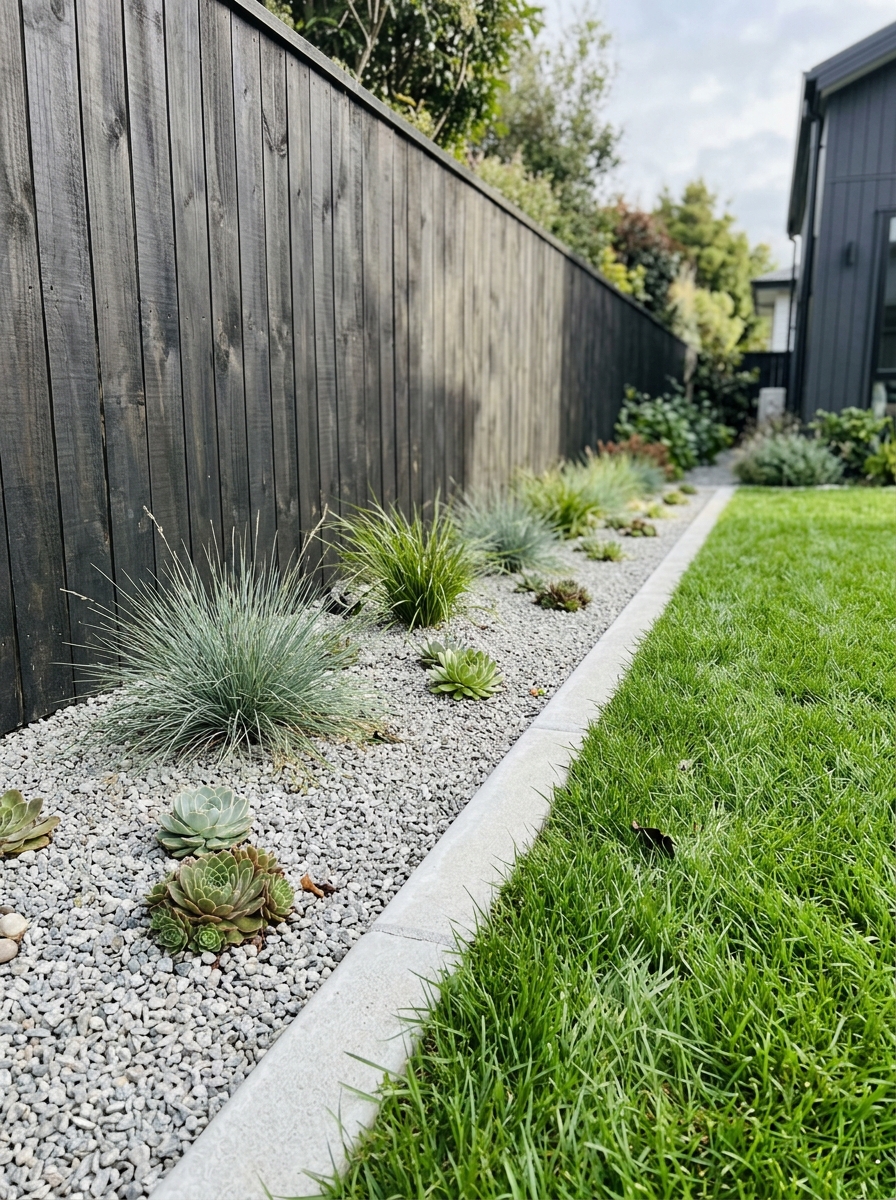
- Creates a crisp transition between the fence and lawn.
- Works well in narrow spaces with limited planting room.
- Gravel adds texture without requiring heavy maintenance.
- Architectural plants provide simple vertical interest.
- Metal or stone edging keeps the border neat.
A narrow gravel bed can give an ordinary fence a crisp, modern foundation. Use light or medium-toned gravel against darker fencing for contrast, or choose warm stone shades to complement cedar and other natural wood finishes. Add a few architectural plants, such as ornamental grasses or compact succulents, for height without creating a dense border. In my experience, the key is restraint: too many decorative elements can make a small strip look busy. A clean metal, stone, or concrete edging can keep gravel contained and create a sharp transition between the planting area and lawn.
This setup is especially useful for homeowners who want attractive fence landscaping with relatively simple upkeep. Gravel improves drainage and keeps soil from splashing onto lower fence boards during rain, while carefully selected plants provide structure without needing a large planting bed. Repeat the same stone and plant combinations along the fence for a cohesive appearance. You can also add a few larger rocks as subtle focal points rather than filling every gap with decorations. The finished border looks tidy from a distance and detailed up close, giving the fence a contemporary landscape treatment without overwhelming the surrounding yard.
5. Raised Flower Bed
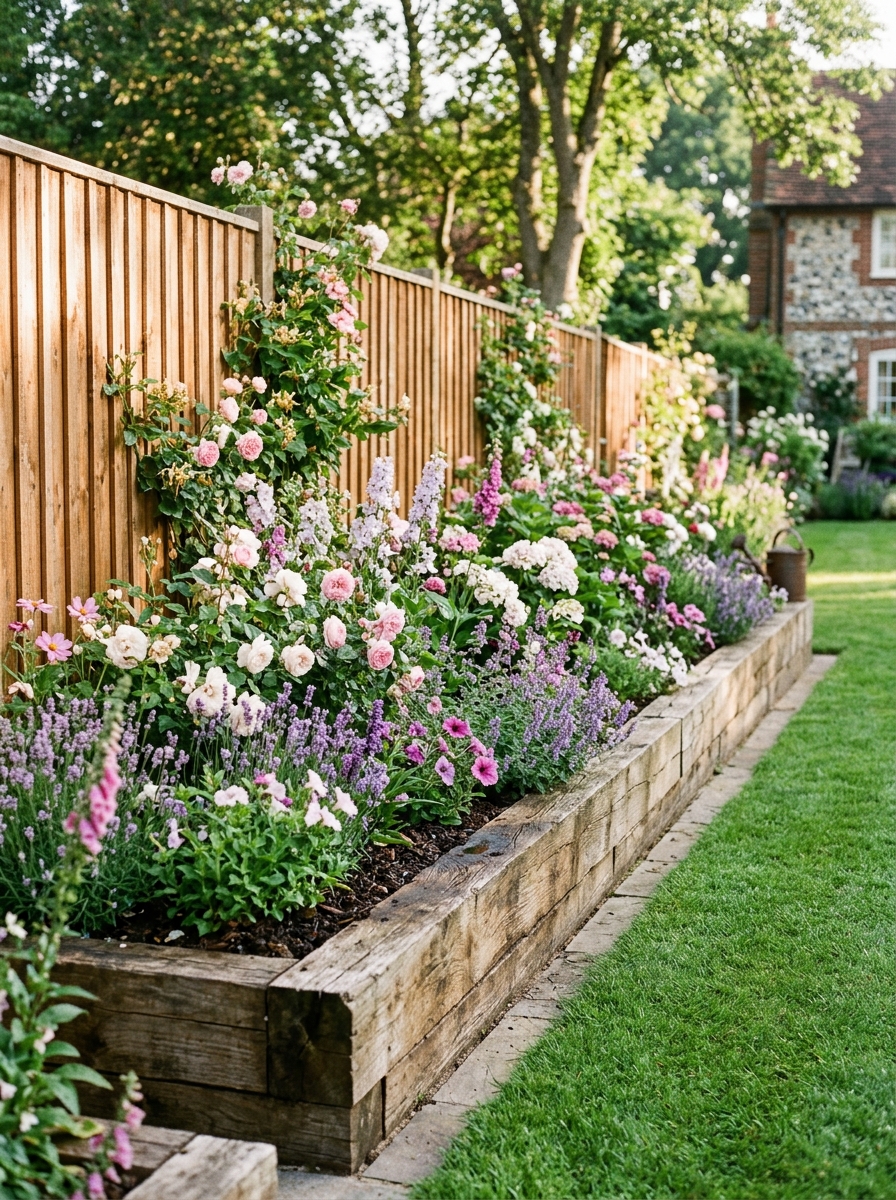
- Adds height and colour along a plain fence.
- Makes a narrow yard feel more layered and finished.
- Raised edges visually separate plants from the lawn.
- Mixed flowers and greenery create longer seasonal interest.
- Durable materials can complement the existing fence.
A raised flower bed gives a plain fence an instant sense of structure and colour. The extra height brings plants closer to eye level, making even a narrow planting area feel more substantial. Use flowering plants in complementary shades, then add compact foliage around them to keep the display attractive between blooms. Choose timber, stone, or brick for the raised edge based on the materials already used around your home. In my experience, matching the bed with existing garden features makes the whole space feel more intentional. Keep the planting dense enough for impact without blocking access.
This setup can work especially well when the ground near the fence is uneven, tired, or difficult to plant directly. A raised bed gives you more control over the soil while creating a defined garden zone. Position taller plants toward the back and shorter flowers near the front so the fence remains visible as a backdrop. Add a thin mulch layer to reduce weeds and help retain moisture. The result is a layered border that feels colourful, organised, and welcoming. It can also become a seasonal focal point, allowing you to refresh the look with new flowers throughout the year.
6. Flowering Hydrangeas
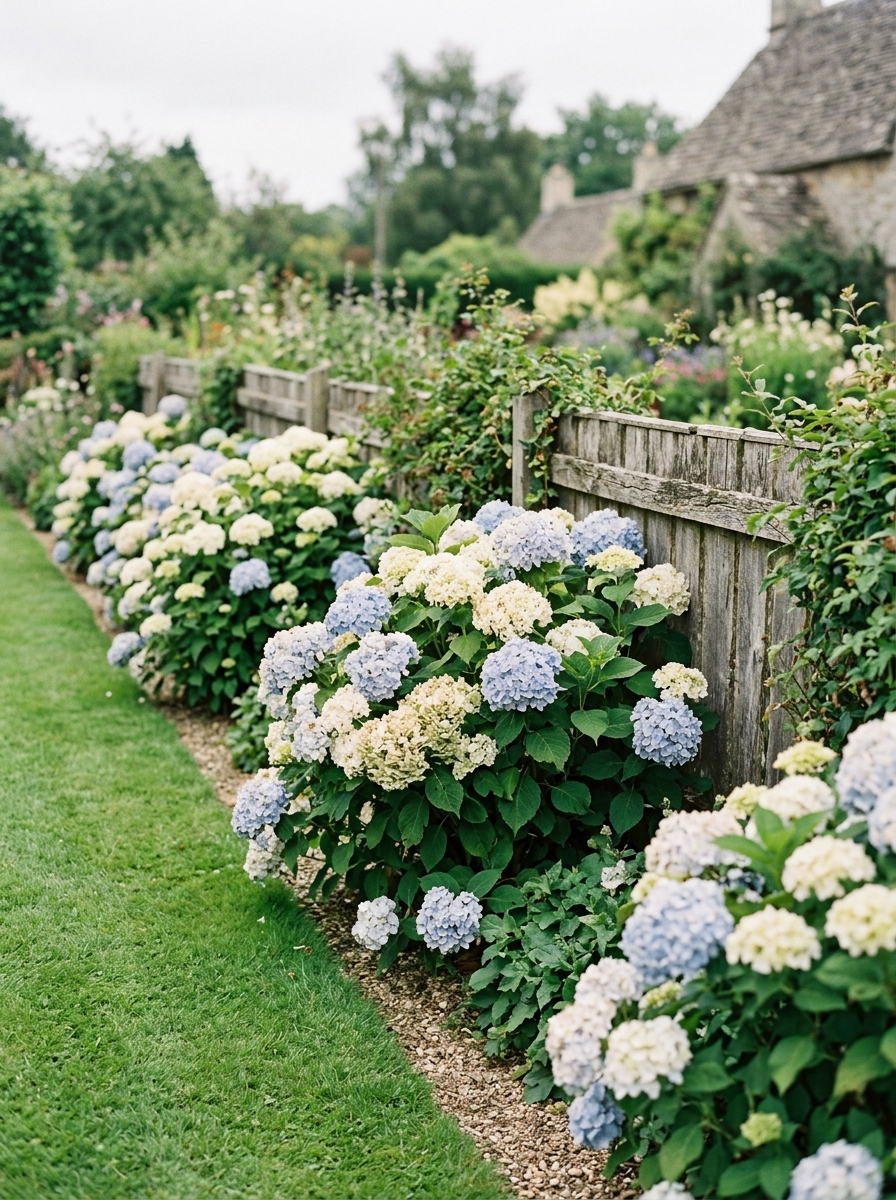
- Large blooms create a strong focal point along the boundary.
- Broad foliage softens hard fence surfaces.
- Repeated shrubs create a cohesive garden-style appearance.
- Varieties can be selected for different light conditions.
- Proper spacing prevents the border from feeling overcrowded.
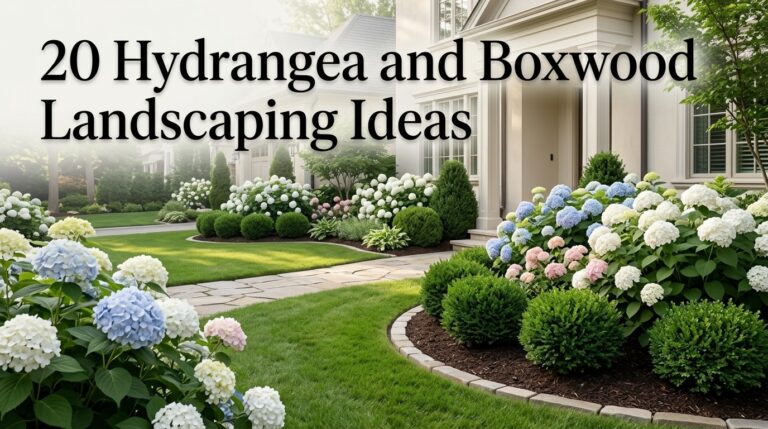
Big flower clusters can turn a simple boundary into one of the most noticeable features in the yard. Hydrangeas are particularly effective because their broad leaves soften rigid fence lines while their large blooms provide seasonal colour and texture. Planting several shrubs in a loose row creates repetition without looking overly formal. I’ve noticed that pale flowers work beautifully against darker wood because the contrast makes both the planting and fence more visible. Before planting, check the variety’s mature width and preferred light conditions so each shrub has enough room to grow naturally.
Use these flowering shrubs as the main layer, then keep the ground around them simple with mulch, low greenery, or a few small companion plants. This prevents the large blooms from competing with too many other colours. Their rounded shape also helps balance fences made from straight boards or panels. If the boundary is long, repeat the same shrub group at regular intervals instead of planting one continuous wall. That rhythm makes the garden easier to read visually. With thoughtful spacing and suitable growing conditions, the result is a lush border that feels established without looking overcrowded.
7. Natural Stone Edging
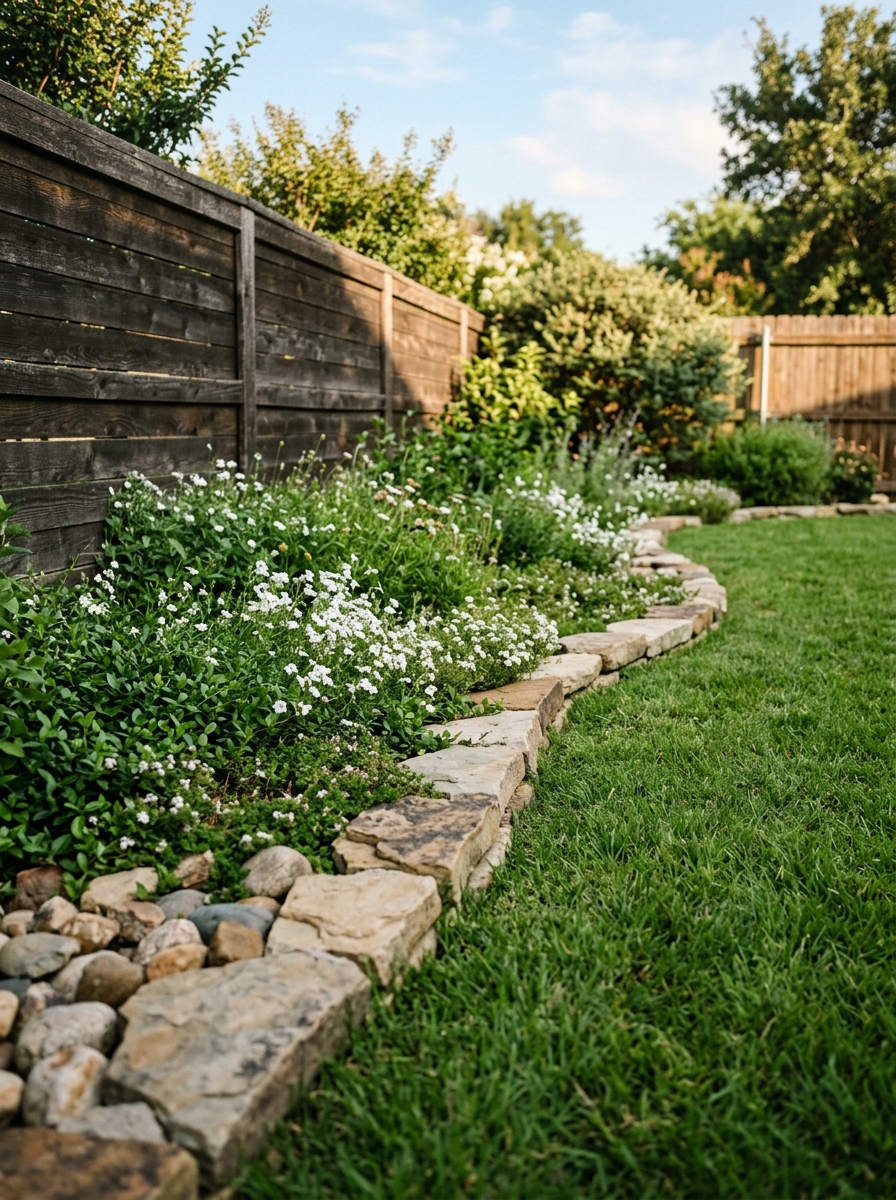
- Defines the planting area with a clean, permanent border.
- Adds earthy texture beside timber or painted fencing.
- Separates mulch, soil, and lawn visually.
- Irregular stones create a relaxed natural appearance.
- Larger stones can become subtle landscape accents.
Natural stone edging can make even simple planting look thoughtfully designed. Arrange irregular stones along the base of the fence to create a clear transition between lawn and garden bed. Their earthy colours work naturally with timber, brick, gravel, and other outdoor materials. Instead of making every stone perfectly even, allow slight variation in size and shape for a relaxed finish. That small detail can make the landscape feel more organic. In my experience, a defined edge is one of the easiest upgrades when a fence line looks messy because it immediately separates the planting area from surrounding grass.
Keep the planting behind the stones relatively simple so the edging remains visible. Low groundcovers, small flowering plants, or ornamental grasses can fill the bed without hiding the natural texture. A layer of mulch can further emphasise the stone border while helping reduce weeds. For a more structured yard, use stones with similar tones and consistent placement. For a casual garden, mix shapes and sizes more freely. Either way, the finished boundary gains definition and depth, making the fence feel integrated into the overall landscape rather than simply placed behind it.
8. Potted Plant Row
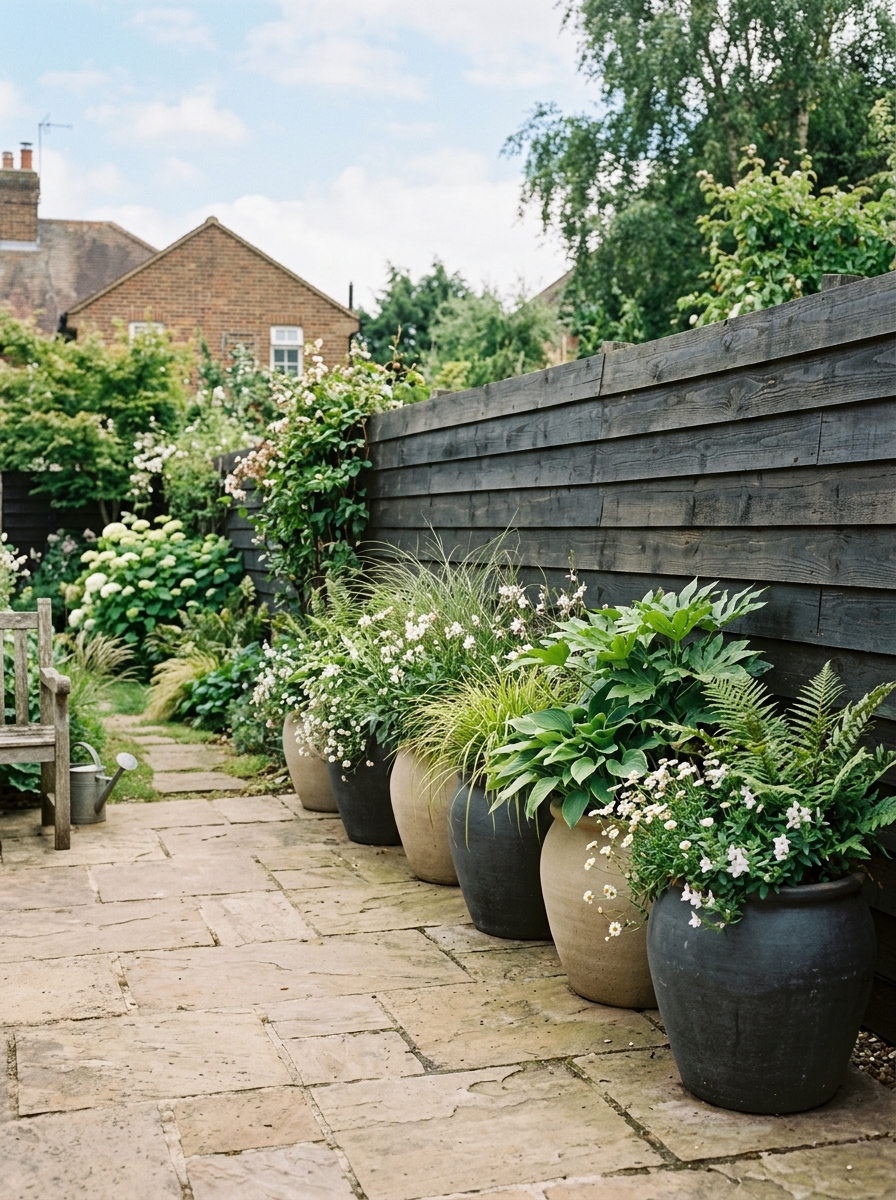
- Adds greenery without permanently changing the planting bed.
- Works well for patios, rentals, and compact yards.
- Matching pots create a clean repeated visual rhythm.
- Different plant heights add depth along the fence.
- Weather-resistant containers make long-term use easier.
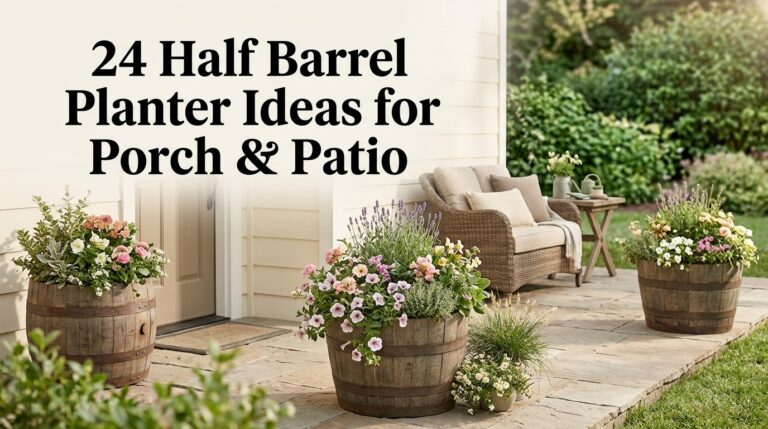
A row of large planters can turn an empty fence into a flexible garden feature. Choose containers in one material or colour family, then vary the plants slightly to create natural depth. Tall grasses, leafy shrubs, and small flowering plants can work together without requiring a permanent garden bed. This is especially useful when the ground is paved, compacted, or unsuitable for planting. I’ve seen this approach work well around patios because the containers can be repositioned whenever the layout changes. Keep similar spacing between pots so the fence looks framed rather than randomly decorated.
For the strongest visual effect, place larger containers toward important areas such as a gate, patio entrance, or seating zone. Use smaller pots between them if you want more detail, but avoid filling every available space. Plants with different leaf shapes can create interest even when the colour palette stays simple. Choose containers with drainage holes and weather-resistant finishes so they remain practical outdoors. The finished arrangement gives you greenery, texture, and colour while keeping the fence visible behind it. It is also easy to refresh seasonally by replacing individual plants instead of redesigning the entire border.
9. Lavender Border
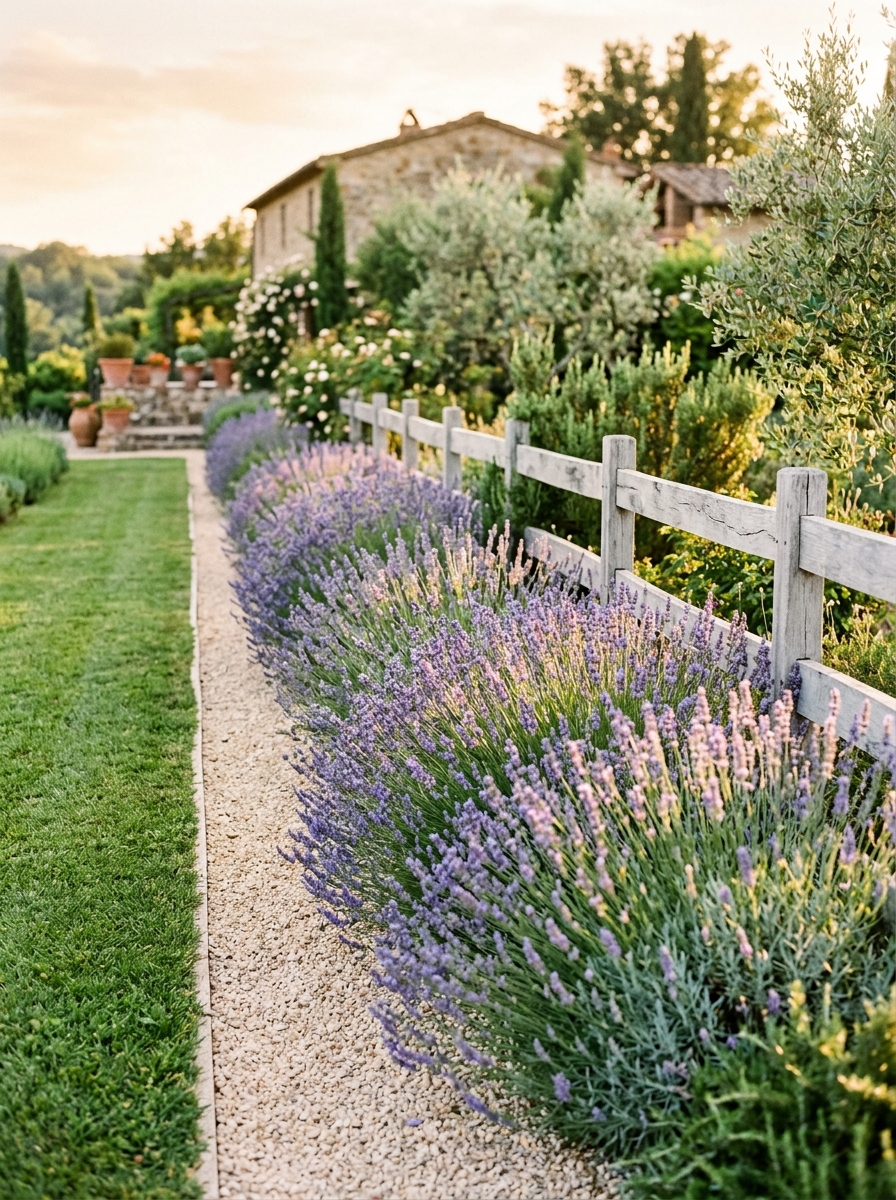
- Adds soft purple colour beside plain fencing.
- Creates a tidy, repeated planting pattern.
- Fine foliage contrasts nicely with solid fence panels.
- Compact forms suit narrow landscape borders.
- Gravel or pale stone can brighten the planting base.
Lavender brings colour, texture, and a distinctly tidy shape to a fence border without making the space feel crowded. Its silvery foliage looks especially striking against warm wood, white panels, or darker painted fencing. Plant several plants at similar intervals to create a continuous rhythm, then surround them with gravel or a simple mulch layer. The purple flowers become a natural accent while the foliage keeps the border attractive beyond peak bloom. In my experience, repeating one strong plant throughout a narrow bed often looks more polished than combining many unrelated flowers in limited space.
This type of border suits gardens where you want a clean appearance with a relaxed Mediterranean feel. Keep the plants positioned where they receive the amount of sunlight they require, and allow enough space for their mature size. Pale gravel can make the purple blooms stand out while also helping the area feel brighter. If the fence is already visually busy, keep the surrounding planting minimal. The finished effect is simple but detailed: a soft line of foliage and flowers breaks up the fence while adding colour at ground level. It also creates an inviting transition between the boundary and lawn.
10. Layered Evergreen Bed
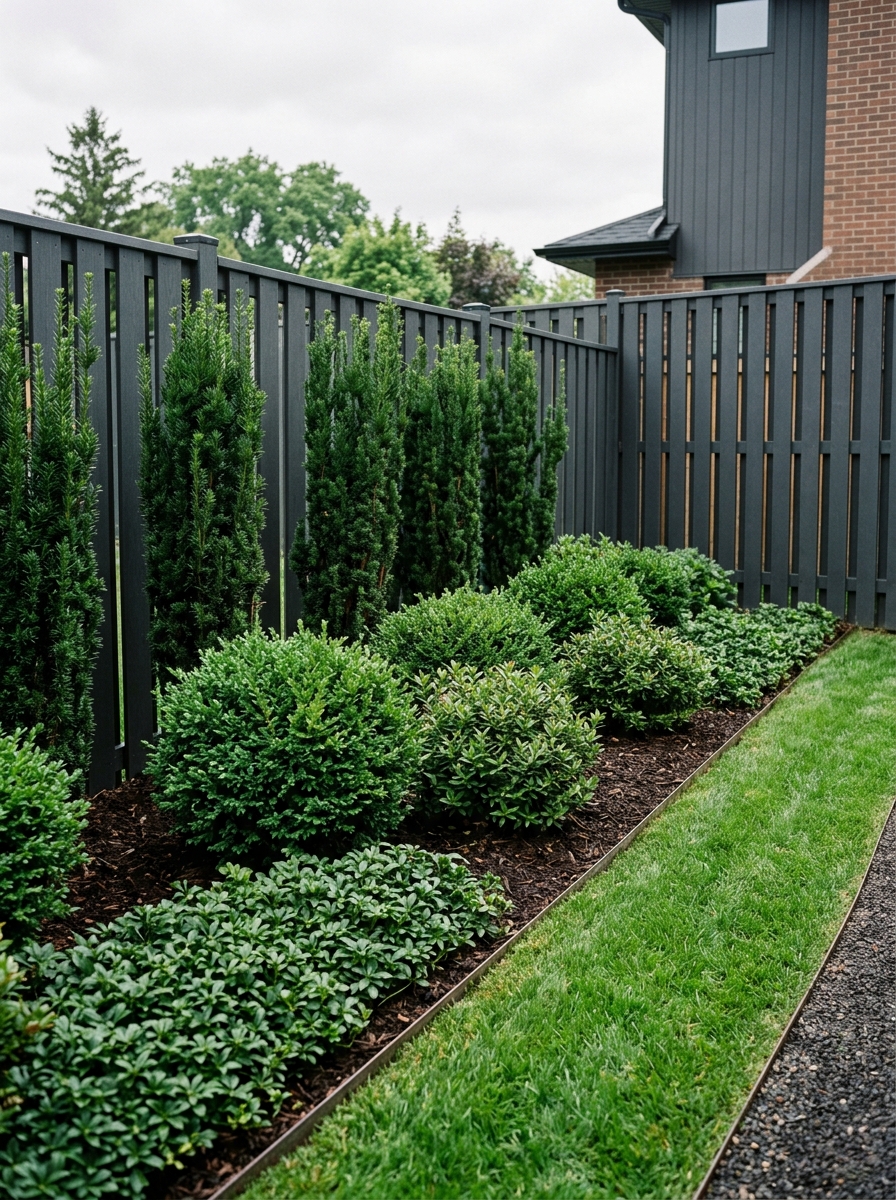
- Combines different plant heights for stronger visual depth.
- Keeps the fence softened throughout multiple seasons.
- Taller shrubs provide a structured background layer.
- Medium and low plants fill gaps near the lawn.
- Repeating foliage colours keeps the composition cohesive.
.
Layering evergreen plants creates depth along a fence while keeping the landscape visually interesting throughout the year. Start with taller shrubs near the boundary, add rounded medium-sized plants in front, and finish with low groundcover along the lawn. This stepped arrangement prevents the fence from looking like a flat backdrop and gives the planting bed a fuller appearance. I’ve noticed that using different leaf shapes within a restrained green palette can create plenty of interest without relying on lots of flowers. The key is choosing plants with compatible mature sizes so the layers remain visible over time.
This arrangement is particularly useful for long fences because repeating the same three plant heights creates a consistent rhythm. Leave enough space between groups to prevent overcrowding as the plants mature. You can add seasonal flowers in small pockets if you want extra colour, but they are not necessary for the design to work. Dark mulch can visually connect the layers and make green foliage stand out. The result is a balanced boundary with texture from ground level to the top of the fence. It feels established, structured, and natural while still being practical to maintain.
11. Boxwood Garden Border
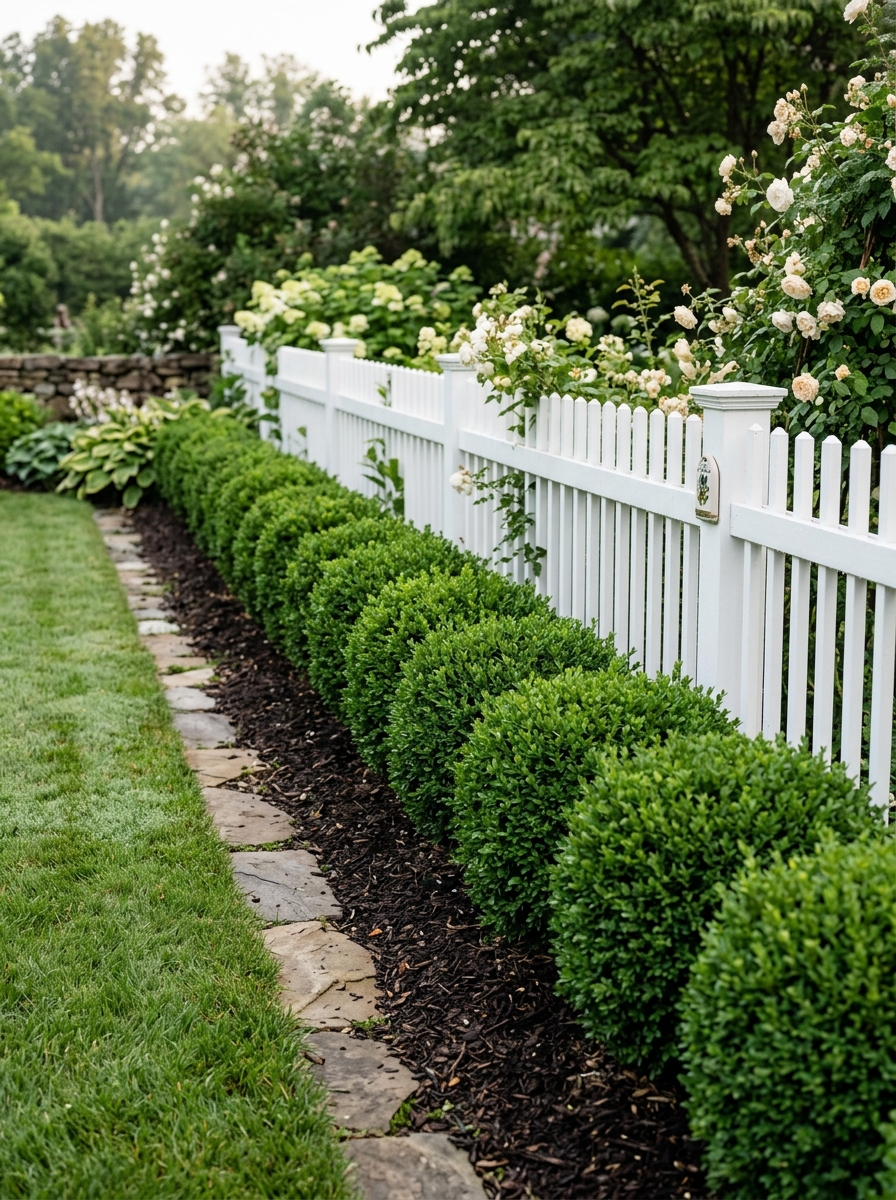
- Creates a crisp, structured line beside the fence.
- Evergreen foliage keeps the border looking finished year-round.
- Compact shrubs work well around pathways and entrances.
- Repeated shapes make long fence lines feel organised.
- Regular trimming keeps the plants neat and proportional.
A row of neatly shaped boxwoods can give a fence line a polished, timeless appearance. Their dense evergreen foliage creates a strong visual edge without requiring colourful flowers to make an impact. Plant them at consistent intervals so the shapes form a continuous rhythm along the boundary. This works especially well beside white, charcoal, or natural wood fencing because the rich green leaves provide a clear contrast. In my experience, keeping the shrubs slightly lower than the fence creates better balance and prevents the planting from feeling like an overgrown wall.
Use boxwoods to frame entrances, pathways, patios, or longer stretches of fencing that need stronger structure. Before planting, consider the mature width of your chosen variety and leave enough room for air circulation and maintenance. A simple mulch layer can make the foliage look even cleaner while reducing weeds around the roots. If you prefer a softer garden style, allow the surrounding planting to be slightly informal while keeping the boxwoods gently shaped. The finished border adds order and definition, making the entire outdoor space feel more carefully planned without requiring elaborate landscaping.
12. Cottage Flower Border
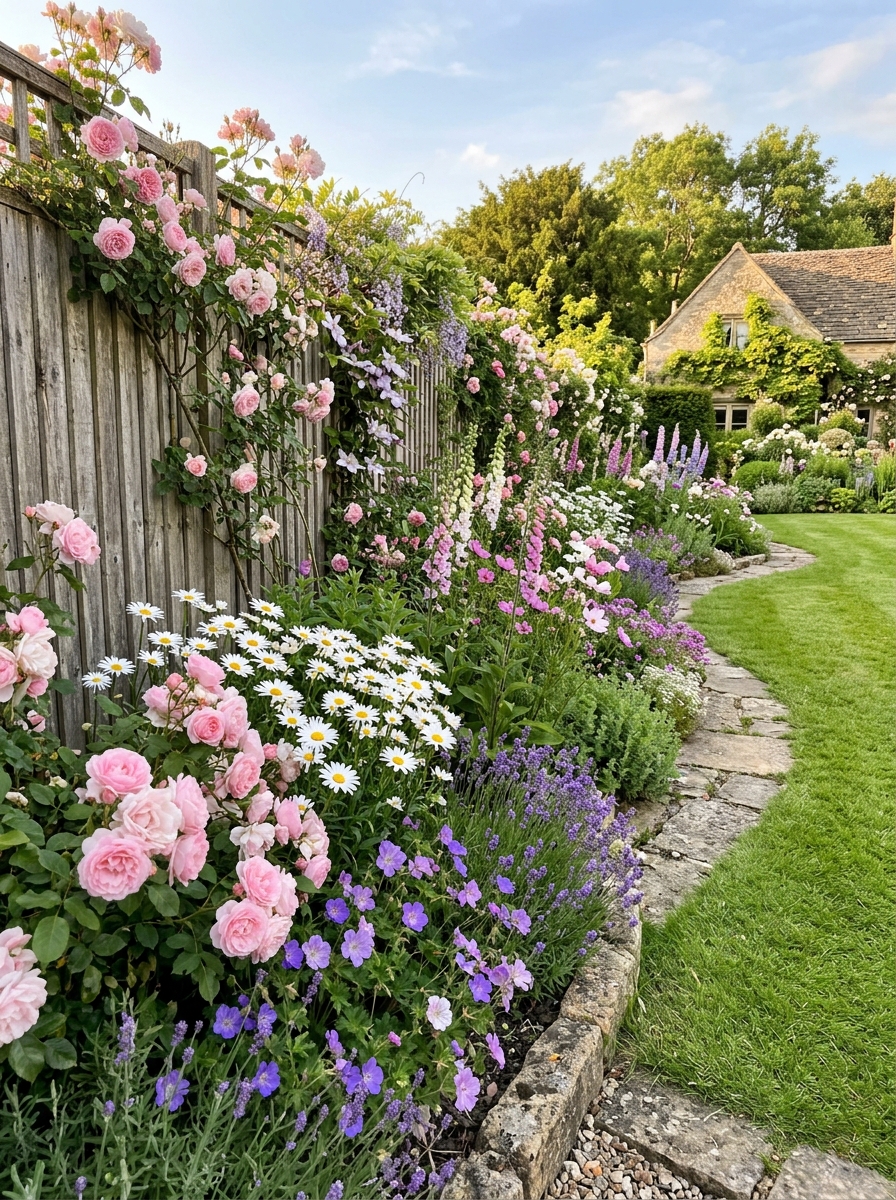
- Mixes colourful blooms for a relaxed layered appearance.
- Softens rigid fence lines with varied plant shapes.
- Works beautifully with weathered wood or painted fencing.
- Combining bloom times keeps the border interesting longer.
- Small gaps prevent the planting from feeling crowded.
A loose cottage-style flower border can make a fence feel like part of a lived-in garden rather than a hard boundary. Mix flowers with different heights, shapes, and bloom periods to create a relaxed display that changes throughout the season. Place taller plants near the fence and shorter varieties toward the front, allowing some flowers to gently overlap. That natural variation keeps the border from looking overly formal. I’ve seen this work especially well with weathered wood because the soft colours and organic shapes complement the fence instead of competing with its texture.
Choose a limited colour family if you want the arrangement to feel intentional rather than chaotic. Soft pinks, whites, purples, and greens create a classic cottage palette that works across many garden styles. Add a simple stone or brick edge to separate the flowers from the lawn, then use mulch between plants to keep the soil visually tidy. The finished border should feel abundant without becoming difficult to walk around or maintain. With thoughtful spacing and a mix of flowering heights, the fence becomes a charming backdrop that adds colour, softness, and seasonal personality.
13. Vertical Herb Garden
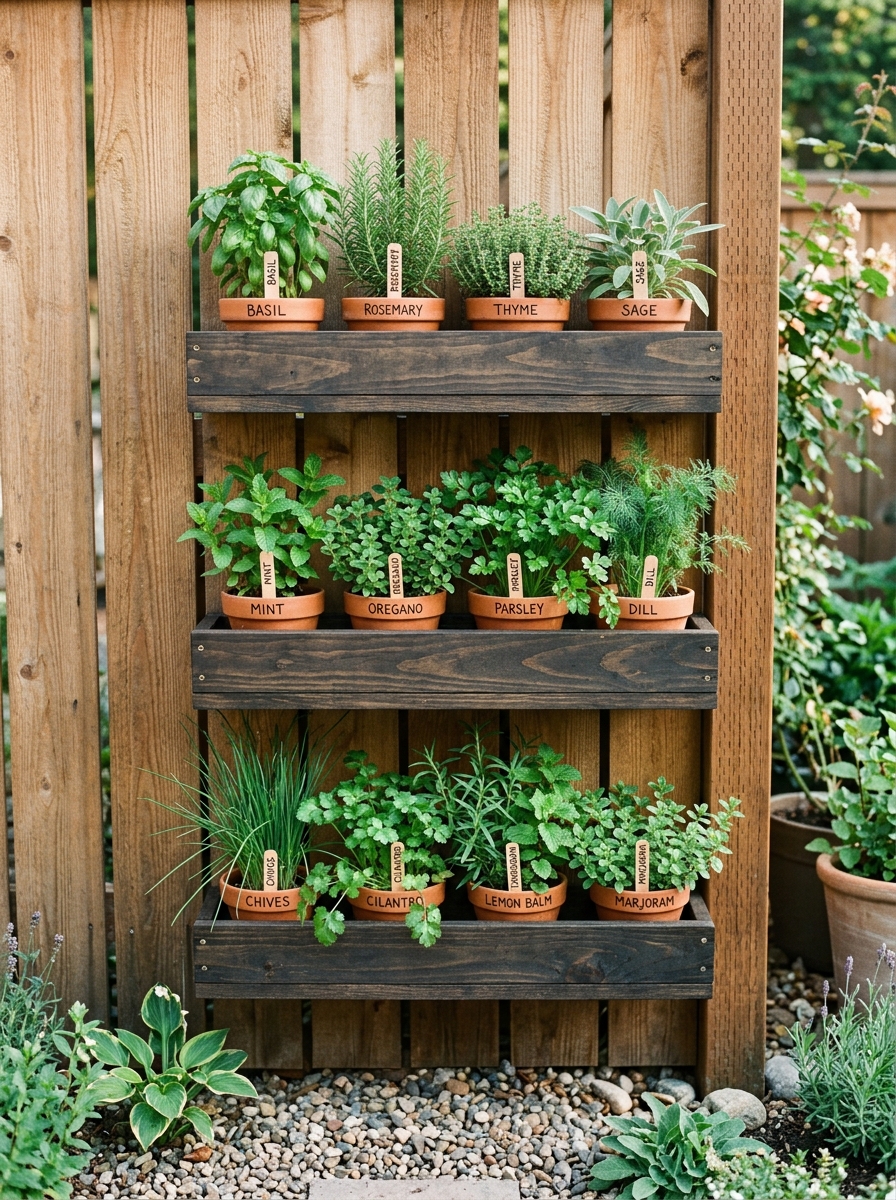
- Makes productive use of narrow fence space.
- Adds useful greenery while creating visual interest.
- Wooden planters complement natural fencing beautifully.
- Labels make the arrangement practical and decorative.
- Herbs should be positioned according to sunlight needs.
A vertical herb garden turns an otherwise unused fence surface into something attractive and practical. Mount narrow wooden planters, wall pockets, or small containers onto a suitable structure, keeping the arrangement organised rather than filling the entire fence. Herbs such as rosemary, thyme, basil, and parsley provide different leaf textures while creating a useful garden feature. This idea works particularly well in small yards where there is little room for traditional beds. In my experience, placing frequently used herbs close to a kitchen entrance makes the setup much more convenient while keeping the outdoor space visually interesting.
Keep the planters at comfortable heights so watering, trimming, and harvesting are easy. Use containers with proper drainage and choose herbs according to the available sunlight rather than appearance alone. Wooden planters pair naturally with timber fencing, while terracotta containers can add warmth to darker surfaces. A few small labels can make the arrangement feel finished without adding clutter. The result combines greenery and function in one compact feature. Instead of leaving a large fence surface empty, you create a useful vertical garden that adds texture, personality, and a practical reason to spend more time outdoors.
14. Rose Garden Border
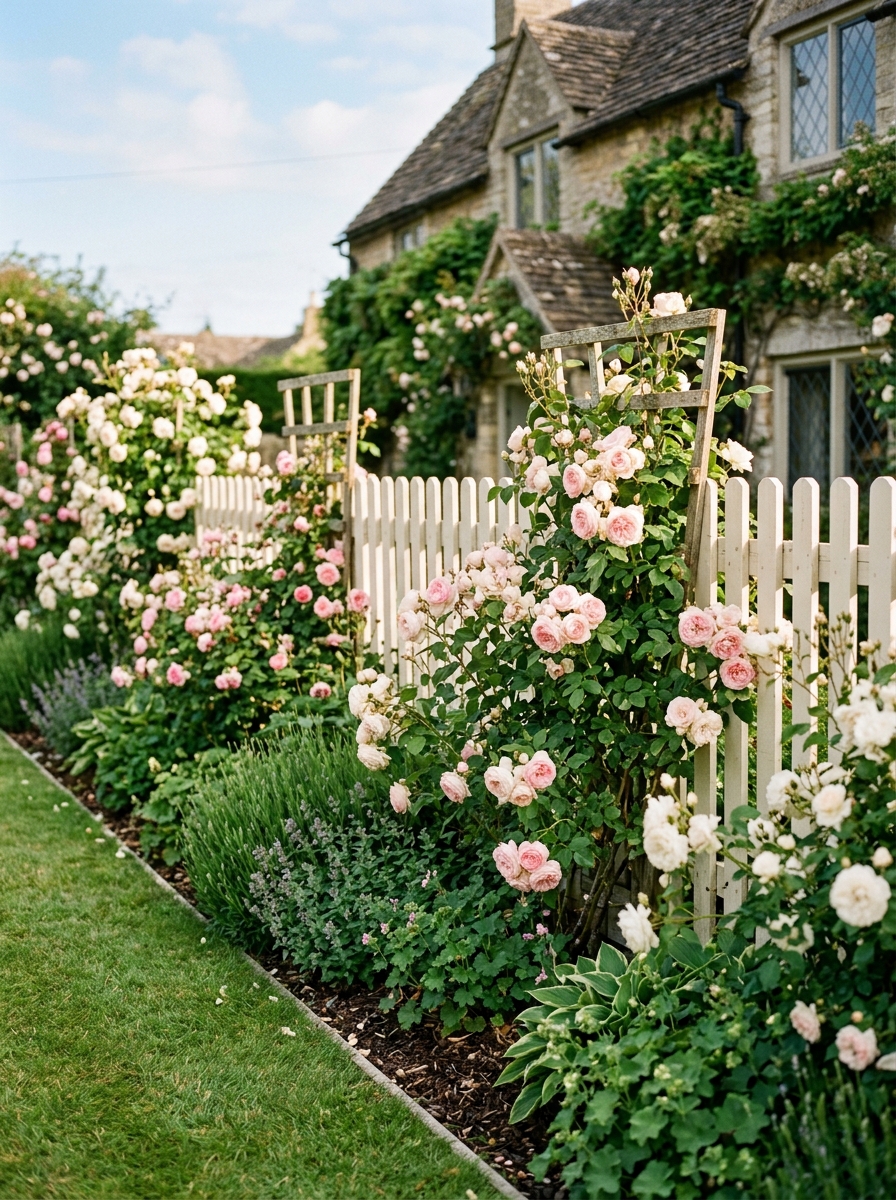
- Adds romantic colour and softness beside a plain fence.
- Climbing or shrub roses can create different heights.
- Repeating bloom colours keeps the border visually connected.
- Low greenery can hide bare soil around the plants.
- Suitable varieties should match local growing conditions.
.
Roses can turn an ordinary fence into a colourful garden backdrop almost instantly. Use shrub roses for a fuller border or climbing varieties when you want to draw the eye upward. Soft pink, white, peach, or red blooms can create very different moods, so choose colours that complement the fence and surrounding plants. Place taller varieties toward the back and lower greenery near the lawn to create layers. I’ve noticed that repeating one or two rose colours usually looks more intentional than mixing every shade available, especially along a long boundary.
Give rose plants enough room for mature growth and make sure the location provides suitable light and airflow. A simple mulch bed can keep the soil looking neat while helping reduce competition from weeds. If the fence is tall, climbing roses on a sturdy support can add height without requiring a wide planting area. For shorter boundaries, compact shrub roses can provide a softer horizontal line. The finished garden feels colourful and established, while the fence provides a clean backdrop that makes every bloom more noticeable. Regular pruning and seasonal care will help maintain the shape.
15. Woodland Planting
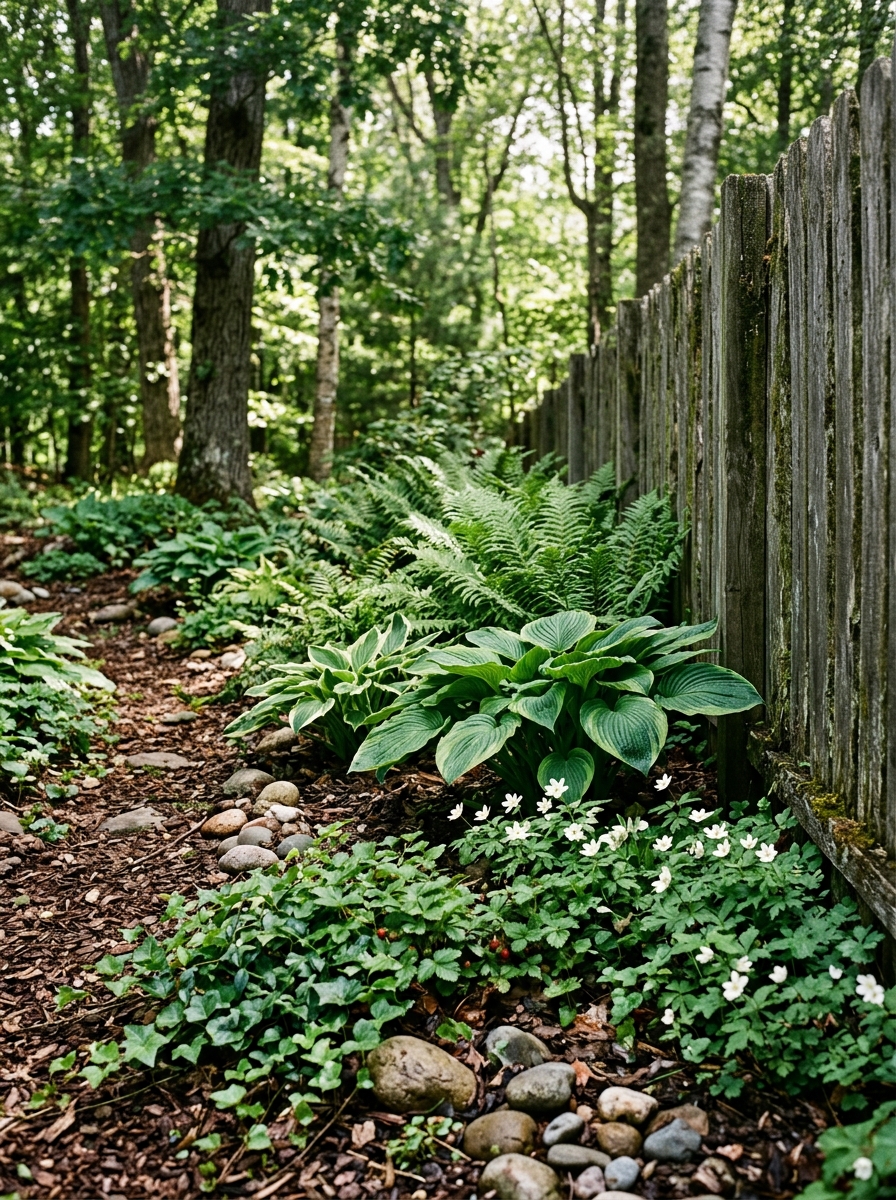
- Creates a natural layered look beside timber fencing.
- Shade-tolerant plants can brighten darker garden corners.
- Ferns and groundcovers add varied leaf textures.
- Natural mulch helps connect the plants visually.
- Irregular spacing creates a relaxed woodland character.
A shaded fence can become an advantage when you treat it as the backdrop for woodland-style planting. Ferns, hostas, groundcovers, and other shade-friendly plants can create a lush border filled with different leaf shapes and textures. Rather than arranging everything in straight lines, group plants in natural-looking clusters with varied spacing. This gives the garden a softer appearance and helps the fence blend into its surroundings. In my experience, darker fence panels can work especially well here because they recede behind the foliage and make lighter leaves and flowers stand out.
Keep the colour palette mostly green, then introduce small touches of white, cream, or pale purple if the space needs brightness. Bark mulch, fallen-leaf textures, and a few natural stones can reinforce the woodland feel without adding unnecessary decoration. Check each plant’s mature size and moisture requirements before combining them, especially in areas where the fence creates a rain shadow. The result should feel layered but not crowded. This type of planting is particularly effective for backyards with mature trees, shaded paths, or naturally cool areas where sun-loving flowers may struggle.
16. Fence-Side Flower Pots
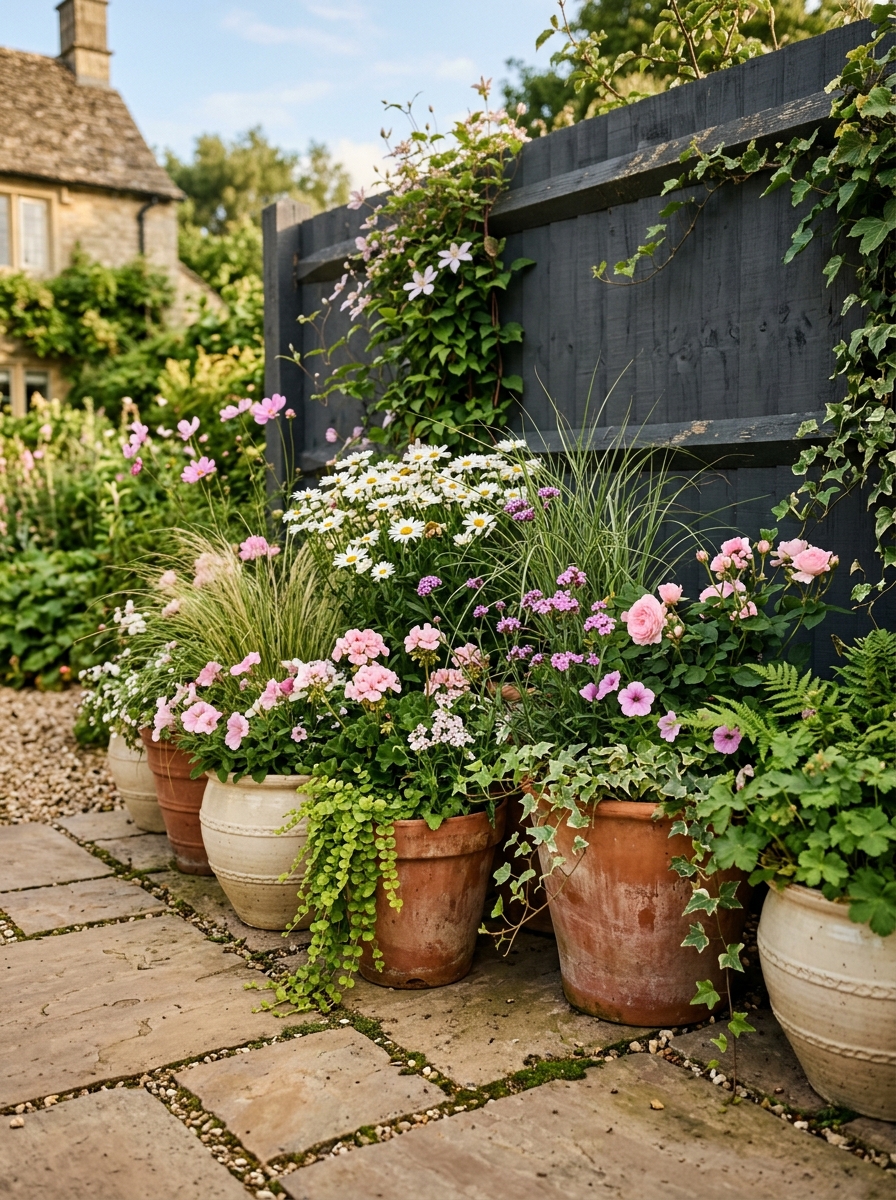
- Adds colour without requiring a permanent garden bed.
- Makes paved areas feel greener and more inviting.
- Large containers can anchor empty fence sections.
- Coordinated pots create a stronger visual rhythm.
- Seasonal plants make the arrangement easy to refresh.
Large flower pots can bring an instant burst of colour to fence lines where planting directly into the ground is difficult. Place containers at measured intervals rather than clustering them randomly, then use a few different plant heights to create visual depth. Flowering plants can provide seasonal colour while trailing greenery softens the edges of each container. This is one of the easiest ways to improve a fence line in paved yards, patios, and compact spaces because the layout can change whenever needed. Choose containers that complement your fence colour so the plants remain the main visual focus.
For a cohesive arrangement, repeat the same pot finish or keep different containers within a similar colour family. Terracotta works beautifully with warm wood, while matte black, cream, or stone-coloured pots can suit contemporary fencing. Make sure every container has drainage and is large enough for the plant’s mature root system. Position taller pots near empty corners or gates, then use shorter containers to fill the spaces between them. The finished setup adds colour, texture, and flexibility without permanently altering the landscape. It also makes seasonal decorating much easier when you want a fresh look.
17. Rock Garden Border
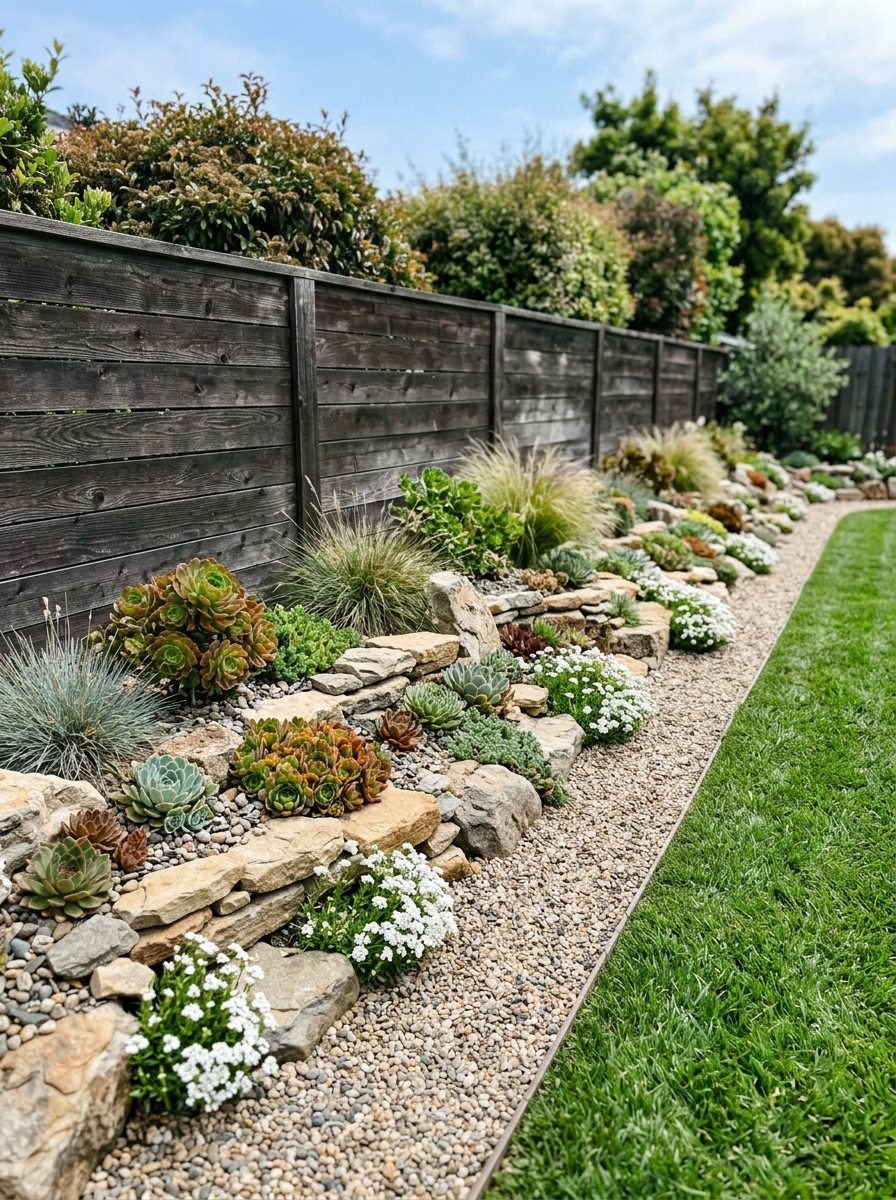
- Adds texture and structure where traditional planting feels too busy.
- Works especially well along sunny, dry fence lines.
- Different stone sizes create natural visual layers.
- Small drought-tolerant plants add colour between rocks.
- Gravel helps connect the border with nearby paths.
A rock garden can give a plain fence a clean, textural foundation without requiring a dense planting bed. Start with several larger stones, then fill the spaces with smaller gravel and compact plants that suit the available sunlight. Succulents, ornamental grasses, and low flowering varieties can add colour while keeping the overall composition simple. This works particularly well when the fence borders a dry or sunny part of the yard. In my experience, using only a few stone colours keeps the arrangement looking intentional and prevents the border from becoming visually cluttered.
Think about the relationship between the rocks, plants, and fence before placing everything permanently. Larger stones can anchor corners or mark transitions, while smaller pieces fill open areas and help suppress weeds. Choose plants according to local growing conditions, especially if the fence receives strong afternoon sun. Keep the lawn edge clearly defined so the rock garden looks finished rather than scattered. The final result combines natural texture with low planting, giving the boundary more depth and character. It can also be a practical choice for homeowners who prefer a landscape that needs less frequent watering and trimming.
18. Flowering Vine Wall
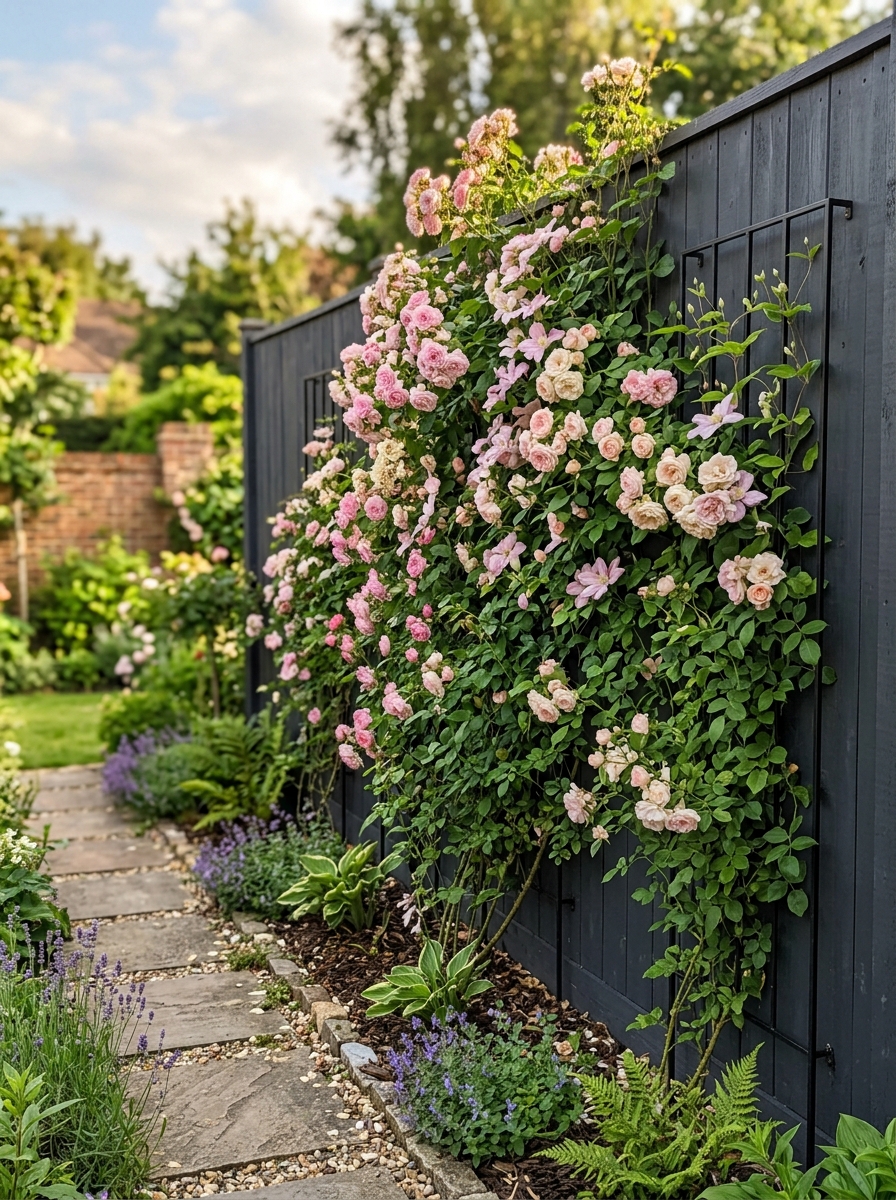
- Creates a lush vertical layer against a plain boundary.
- Uses upward growth when ground space is limited.
- Dense foliage can soften tall or stark fencing.
- Seasonal flowers provide changing colour throughout the year.
- Strong support keeps vigorous vines easier to manage.
A flowering vine can transform a flat fence into a living vertical backdrop. Train the plant across a sturdy trellis or support system so it grows upward and outward in a controlled way rather than attaching directly where it could cause maintenance problems. Green foliage creates a softer surface, while seasonal flowers add colour and visual movement. This is especially useful in narrow gardens because the planting grows vertically instead of taking up a large amount of ground space. I’ve noticed that even covering one section of a long fence can create enough contrast to make the entire boundary feel more designed.
Choose the vine carefully based on its mature size, growth speed, and support requirements. Fast-growing varieties may need regular trimming to keep paths, gates, and neighbouring plants clear. Leave adequate space around the support for airflow and access when maintenance is needed. A narrow mulch bed beneath the vine can visually connect it with the rest of the garden. The result is a layered boundary that feels greener and more established. Rather than hiding every part of the fence, allowing some panels to remain visible can create a balanced mix of architecture and planting.
19. Curved Planting Bed
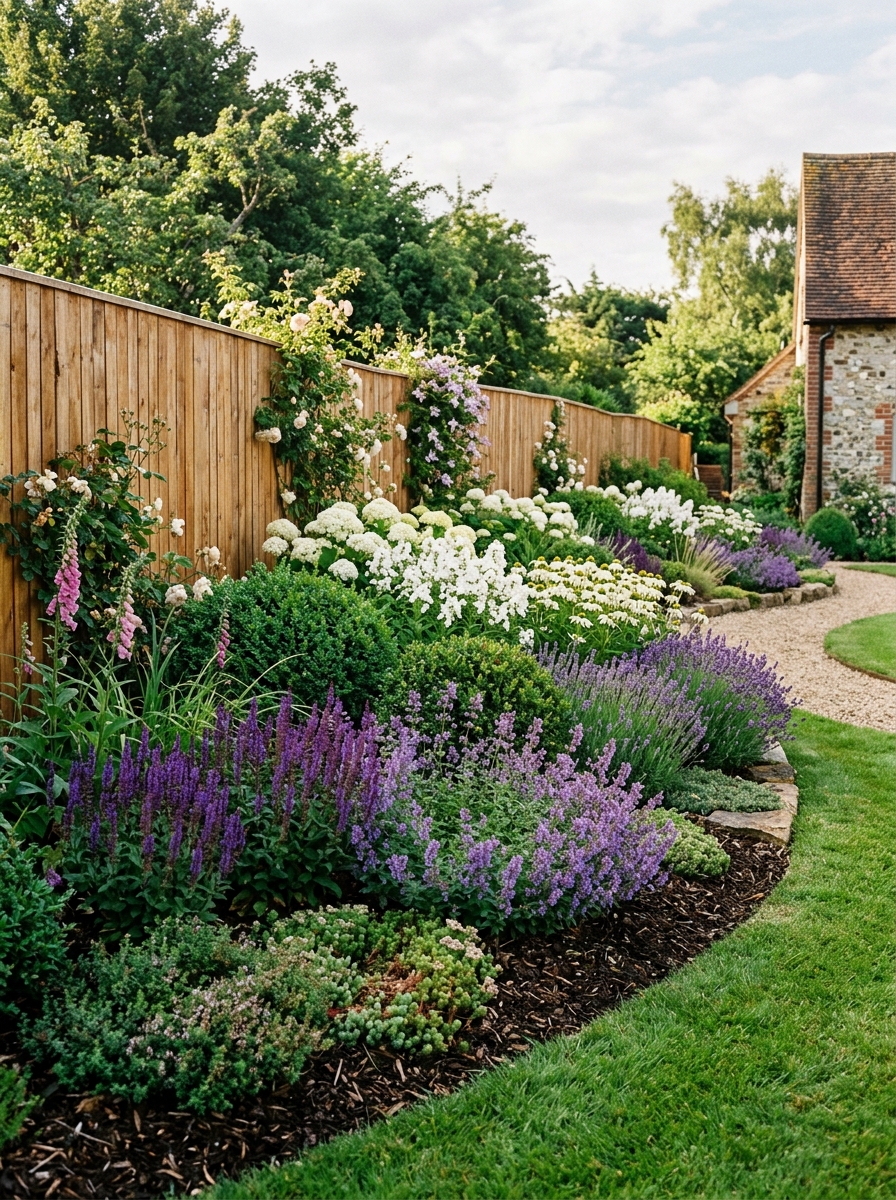
- Breaks up rigid fence lines with a softer landscape shape.
- Makes straight boundaries feel more natural and inviting.
- Creates space for layered flowers and low greenery.
- A curved edge can guide the eye through the garden.
- Repeating plants keep the organic shape visually organised.
A curved planting bed can soften the strong horizontal line of a fence while making the surrounding lawn feel more thoughtfully shaped. Instead of following the boundary in a perfectly straight strip, gently bring the planting area outward at selected points to create movement. Fill the curve with low shrubs, flowers, or ornamental grasses arranged in layers. This approach works particularly well when a fence feels too rigid or when the yard needs a stronger visual transition. In my experience, a gentle curve usually looks more natural than several sharp bends, especially in smaller gardens.
Keep the curve broad enough to maintain easily and avoid creating narrow corners that are difficult to mow or weed. Place taller plants closer to the fence and gradually reduce their height toward the lawn edge. A consistent mulch layer can emphasise the shape while keeping the planting area neat. You can repeat the same plants at several points along the curve to create continuity without making the bed overly formal. The finished landscape feels softer and more spacious, while the fence remains an important backdrop rather than dominating the entire garden.
20. Privacy Hedge Border
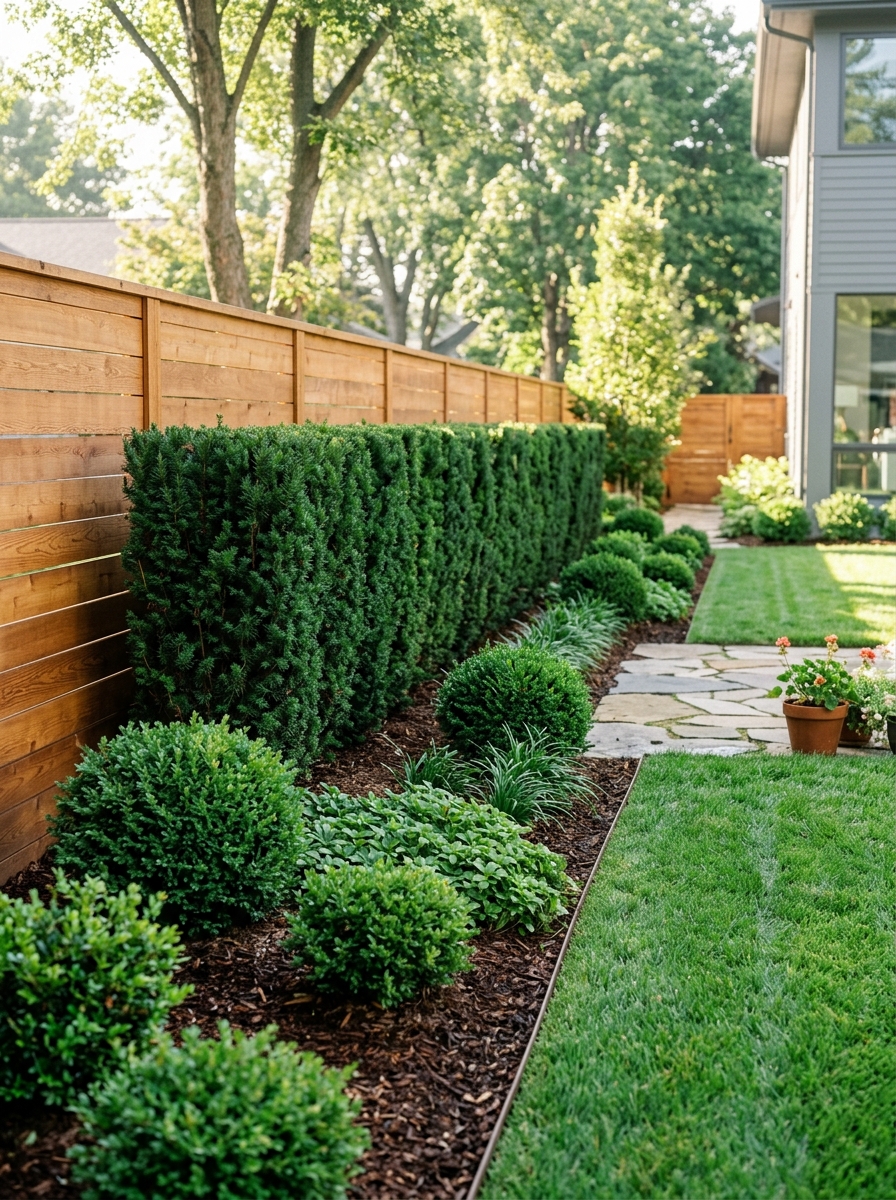
- Adds greenery while creating a softer privacy screen.
- Helps break up the hard appearance of tall fencing.
- Evergreen varieties provide structure through every season.
- Layered heights make the boundary feel fuller.
- Leave enough room for mature growth and trimming.
A privacy hedge can make a tall fence feel softer, greener, and more connected to the rest of the yard. Instead of creating a solid wall of plants, use shrubs that provide partial screening while allowing some of the fence to remain visible. This creates depth rather than a single heavy boundary. Evergreen varieties are useful when you want consistent structure throughout the year. In my experience, planting the hedge slightly forward from the fence gives the landscape a more layered appearance and makes future trimming easier. Leave adequate space between plants according to their mature width.
Choose shrubs based on sunlight, soil, climate, and the amount of maintenance you are comfortable with. A narrow strip of mulch between the hedge and fence can make the planting look more finished while keeping the base tidy. You can also place lower plants in front of the shrubs to create three distinct levels. This combination helps the boundary feel fuller without overwhelming the yard. The finished result offers greenery, texture, and added privacy while reducing the visual dominance of a tall fence. It is a practical foundation for many different fence landscaping ideas.
21. Sculptural Succulent Bed
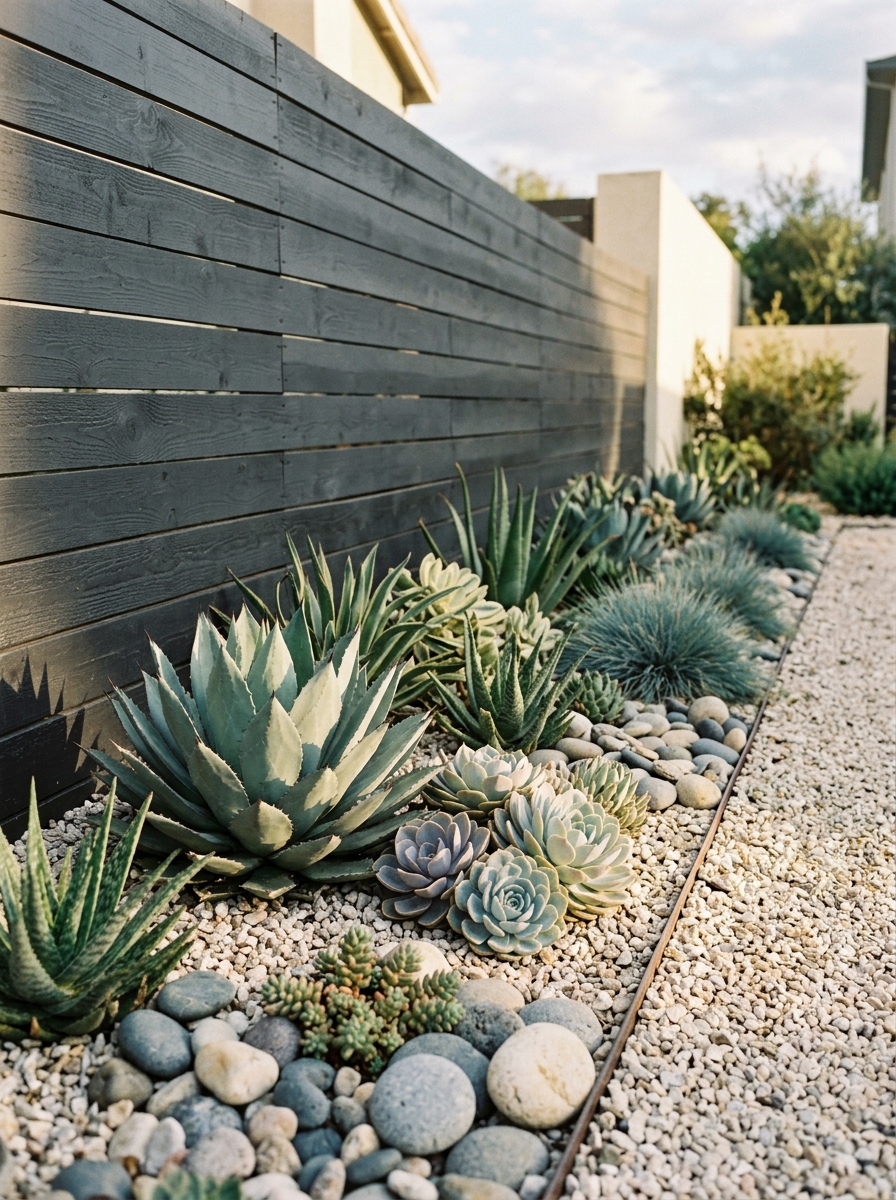
- Adds strong shapes and texture beside simple fencing.
- Works well in sunny areas with limited planting space.
- Low-growing plants keep the fence visually exposed.
- Gravel creates a clean contemporary foundation.
- Repeated forms make the arrangement feel intentional.
Sculptural succulents can give a fence line a modern look without creating a dense wall of greenery. Their geometric leaves, rounded forms, and varied heights add visual interest even when the colour palette stays simple. Plant them in a narrow gravel bed with enough space between each specimen to showcase individual shapes. This works especially well against dark fencing, where pale green and blue-green foliage becomes more noticeable. I’ve noticed that repeating a few strong plant forms often creates a more sophisticated result than filling the entire border with many different varieties.
Use well-draining soil and choose plants suited to the amount of sun the fence receives. A gravel surface can help maintain the clean appearance while visually separating the planting from the lawn. Add a few larger decorative stones to anchor the arrangement, but keep the number limited so the plants remain the focus. This setup is especially useful for homeowners who prefer structured landscapes with lower water needs. The finished border feels crisp, architectural, and uncluttered while still bringing natural texture to the fence. It can also complement concrete paths and contemporary outdoor furniture beautifully.
A Beautiful Fence Starts Here
A fence doesn’t have to disappear into the background. With thoughtful planting, attractive textures, and a few well-chosen details, it can become one of the most inviting features in your yard. These fence landscaping ideas offer options for small spaces, modern gardens, cottage-style yards, and everything between. Start with one simple upgrade, such as a shrub border, flower bed, or row of planters, and build from there. I’ve seen how small changes can completely transform an outdoor space. Save this post on Pinterest for your next garden project, try an idea that fits your home, and share it with someone who needs inspiration.