20 Hydrangea and Boxwood Landscaping Ideas
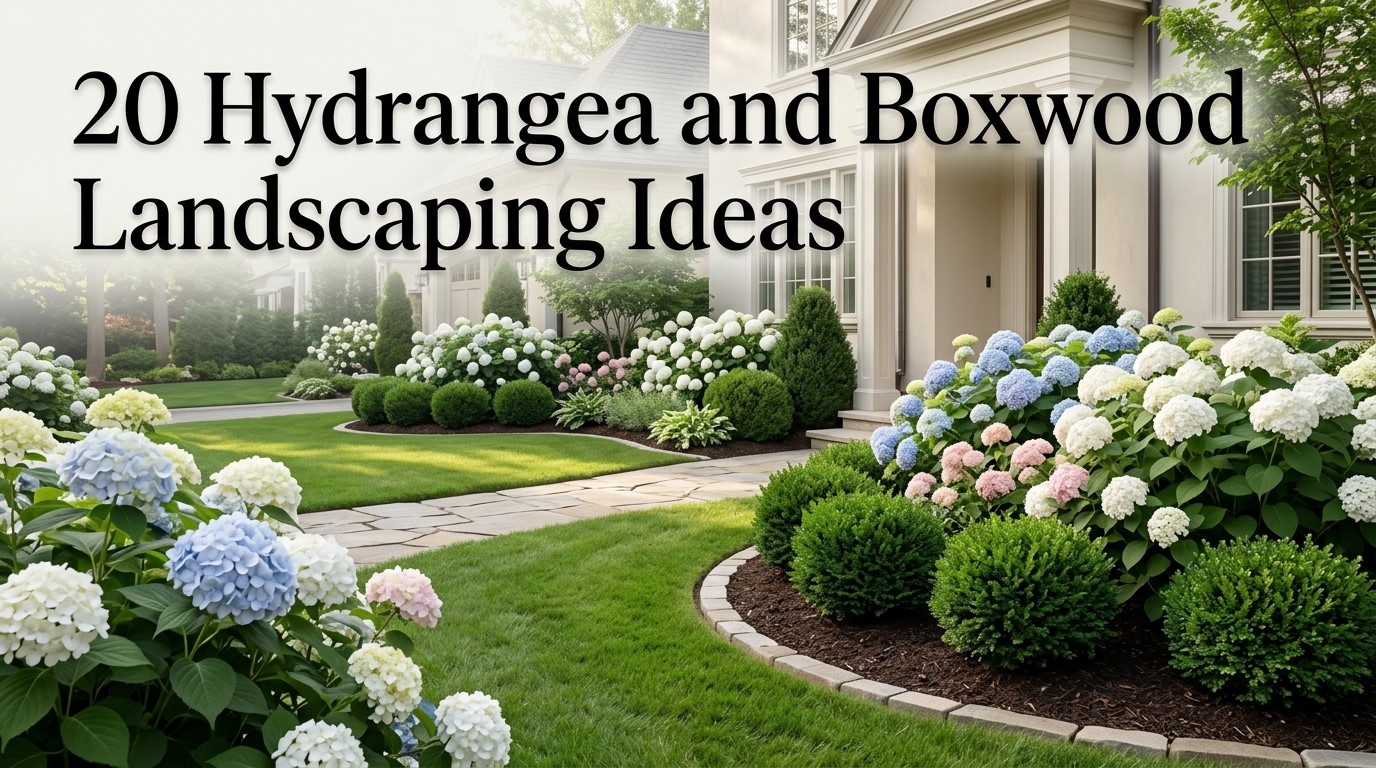
A beautiful yard does not need to feel complicated or expensive. Sometimes, the right combination of lush greenery and full blooms can completely change the way a space looks and feels.
These hydrangea and boxwood landscaping ideas show how two classic plants can work together to create polished borders, welcoming entrances, colorful garden beds, and relaxing outdoor spaces. Whether your yard feels plain, unfinished, or difficult to organize, these ideas can help you add structure, color, and visual depth without overwhelming the space. I’ve noticed that repeating a few dependable plants often creates a more cohesive landscape than using too many different varieties. From curved borders to layered foundation beds, you’ll find practical inspiration you can adapt to your own home, style, and available space.
1. Boxwood Backdrop
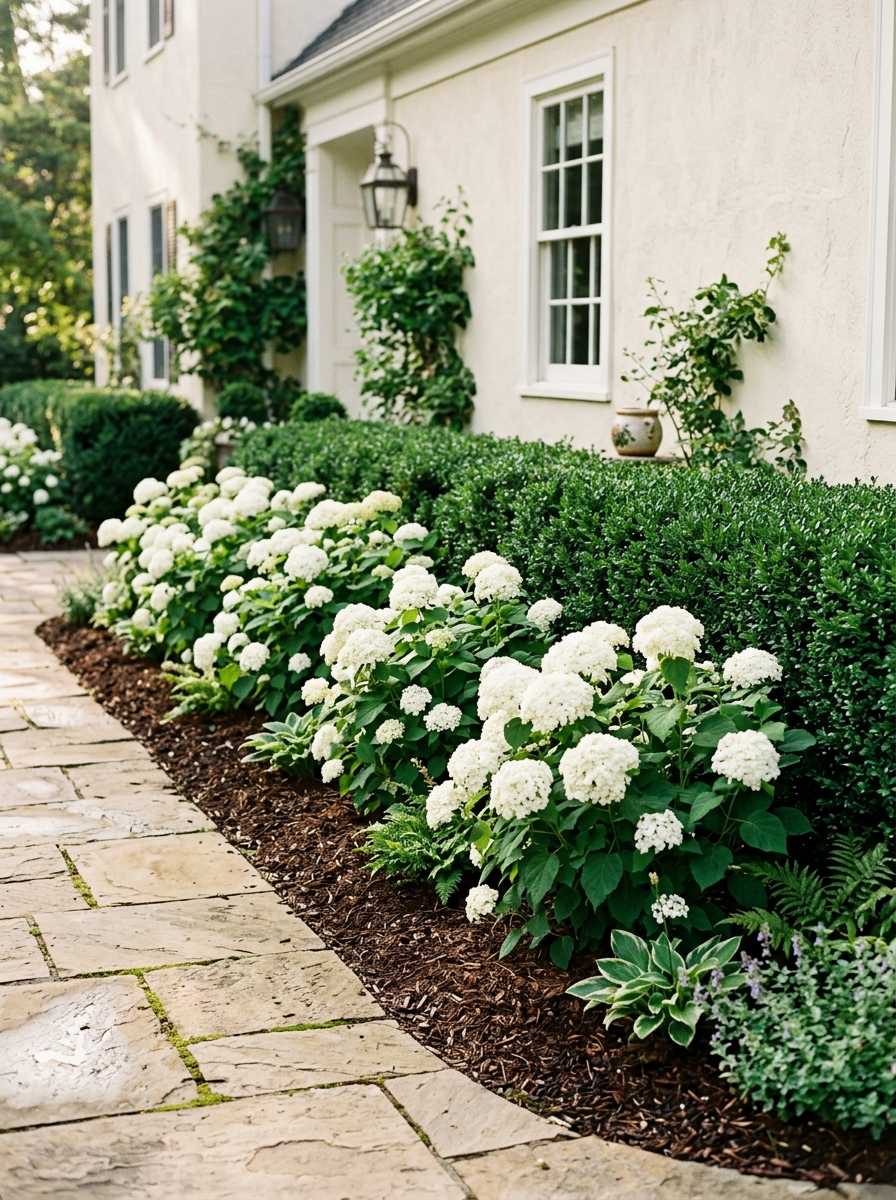
- Dense boxwood creates a rich green backdrop for colorful hydrangea blooms.
- White flowers look especially striking against deep evergreen foliage.
- This setup adds structure while keeping the planting bed soft and inviting.
- It works beautifully beside entrances, patios, and foundation beds.
A dark green boxwood backdrop gives hydrangeas an instant visual boost. The dense foliage creates a clean canvas that makes rounded blooms look fuller, brighter, and more noticeable from a distance. Plant the boxwoods in a consistent row behind the flowering shrubs, allowing enough room for mature growth and airflow. White, blue, and pink hydrangeas all work beautifully here, depending on the mood you want. In my experience, repeating the same spacing between shrubs makes even a modest planting bed look professionally planned. This combination also keeps the garden attractive when hydrangeas are not blooming.
For a balanced result, keep the boxwood slightly lower or equal in height to the hydrangeas rather than allowing the hedge to completely hide them. A simple mulch layer can visually connect the plants while keeping exposed soil under control. This arrangement works especially well along foundation walls because the evergreen foliage provides structure throughout the year. If the home has light-colored siding or brick, the dark greenery creates appealing contrast. The finished look feels polished without being overly complicated, making it a practical choice for homeowners who want seasonal flowers with dependable evergreen structure.
2. Curved Garden Border
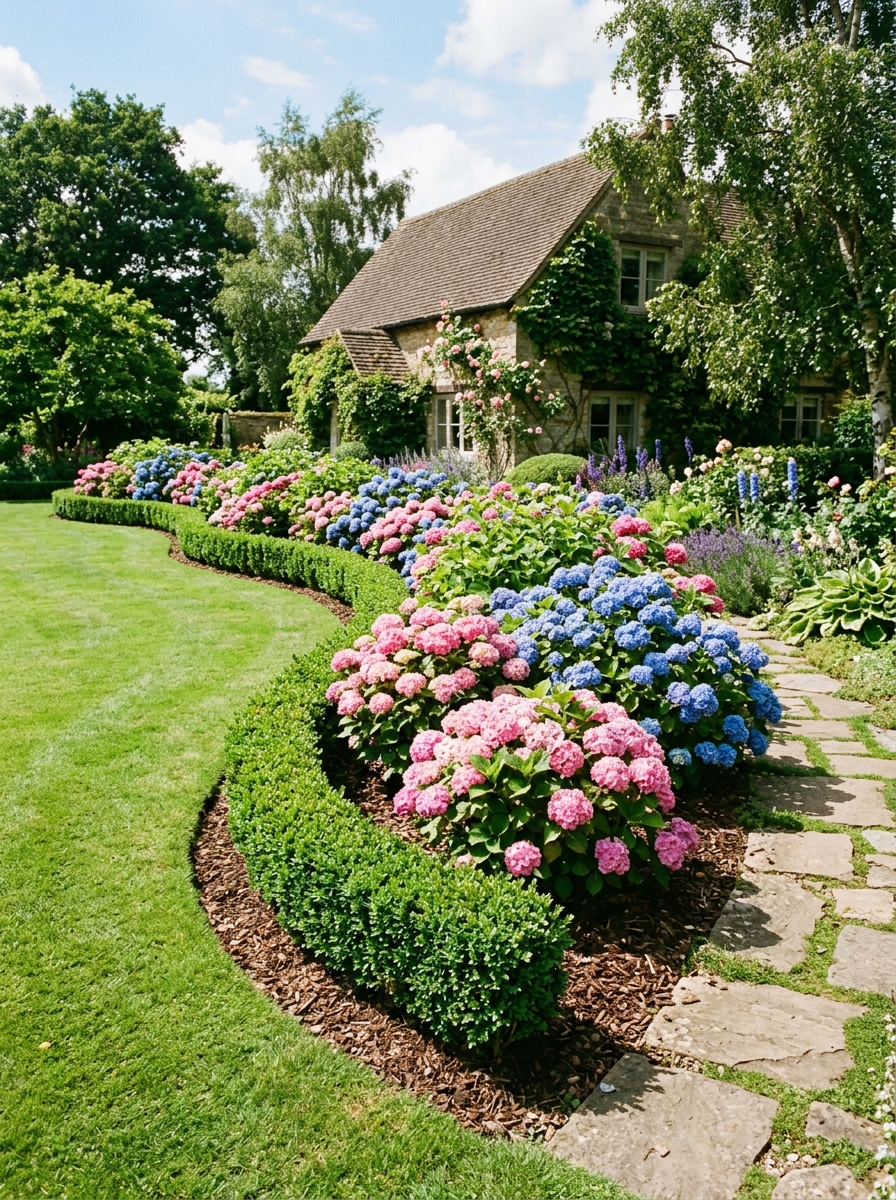
- A curved border creates a softer transition between lawn and planting beds.
- Boxwoods define the edge while hydrangeas provide height behind them.
- The design works well around lawns, patios, and winding walkways.
- Mulch helps emphasize the graceful shape of the planting area..
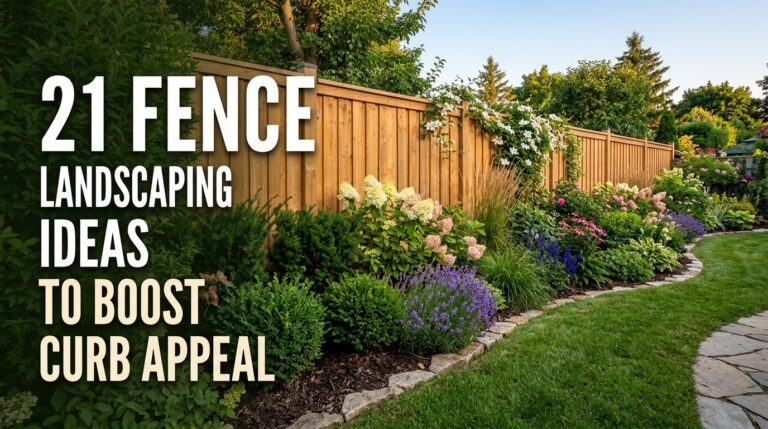
A curved planting border can make an ordinary yard feel more thoughtfully designed without adding complicated features. Use compact boxwoods along the outside edge, then position hydrangeas behind them to create a second layer of height and color. The gentle curve guides the eye naturally through the garden and softens the straight lines often created by sidewalks or rectangular lawns. This arrangement is especially useful for foundation beds or large open areas that need definition. I’ve noticed that even a subtle curve can make a planting area feel more custom when the plants follow the same flowing shape.
Give the hydrangeas enough space to develop naturally rather than squeezing them into the curve. White blooms create a classic appearance, while pink and blue flowers give the border a more relaxed cottage-garden character. Keep the boxwoods slightly lower so they act as a visual frame instead of competing with the larger blooms. Dark mulch can fill empty spaces while the plants mature and also make the foliage appear richer. The result is a garden border with clear structure, seasonal interest, and a smooth transition between lawn, walkway, and planting area.
3. Entryway Foundation
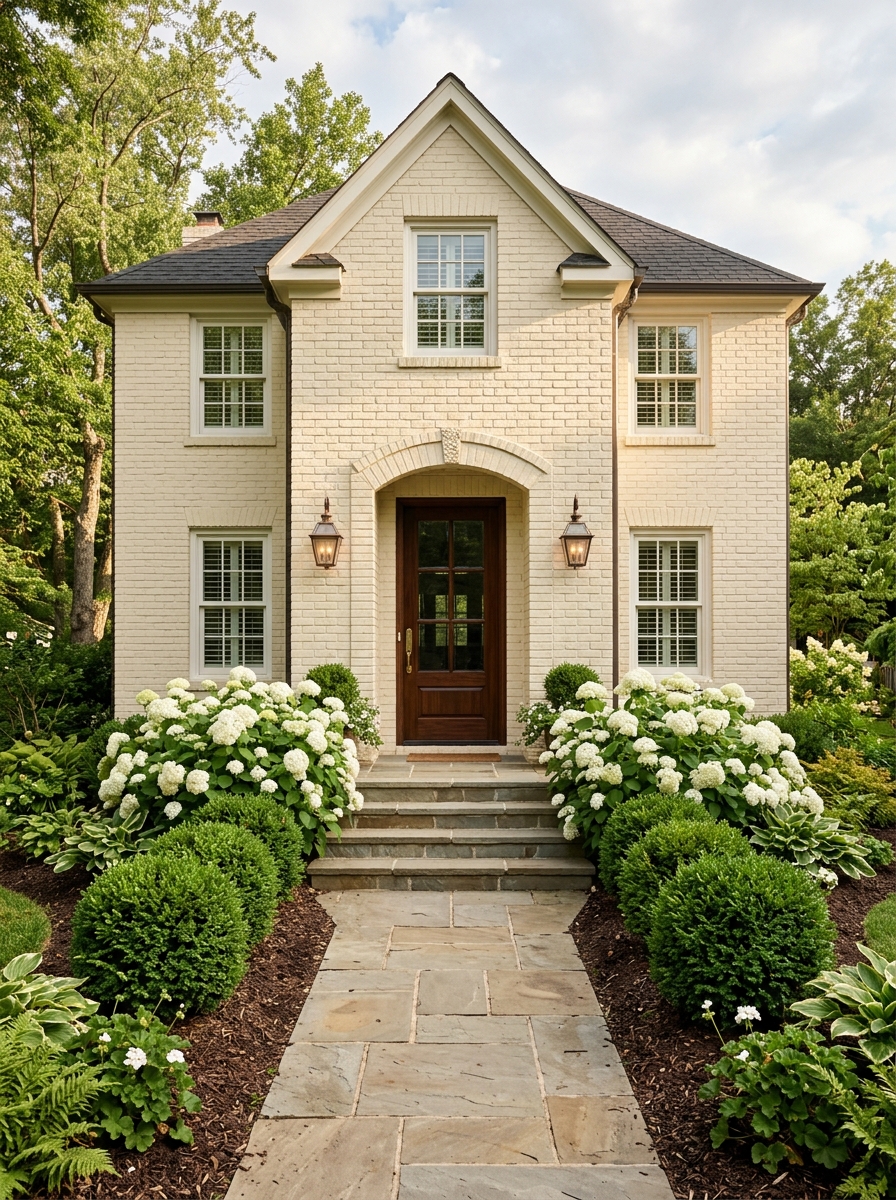
- Boxwoods provide dependable evergreen structure around the entrance.
- Hydrangeas soften the hard architectural lines of the home.
- Matching plants on both sides create a balanced appearance.
- Leave enough space around doors, windows, and pathways for easy movement.
A welcoming entrance becomes even more attractive when evergreen structure meets generous seasonal blooms. Place rounded boxwoods near the foundation or pathway, then layer hydrangeas behind or between them to soften the home’s harder architectural lines. This approach creates a polished first impression without requiring an elaborate garden design. White hydrangeas provide a timeless look, while pink or blue varieties can add more personality. Keep the plants away from door swings and narrow paths so the finished arrangement remains practical. The goal is a landscape that looks beautiful from the street while still functioning comfortably every day.
Symmetry works especially well when the front door sits near the center of the facade. Repeat similar boxwood shapes on each side, then use hydrangeas to add fullness and seasonal color. Before planting, consider mature dimensions so shrubs do not eventually block windows, vents, steps, or walkways. A simple mulch layer can finish the bed neatly and reduce visible gaps. In my experience, repeating just two or three plant forms often creates a more expensive-looking entrance than using many unrelated varieties. The result feels intentional, welcoming, and easy to maintain throughout changing seasons.
4. White Bloom Contrast
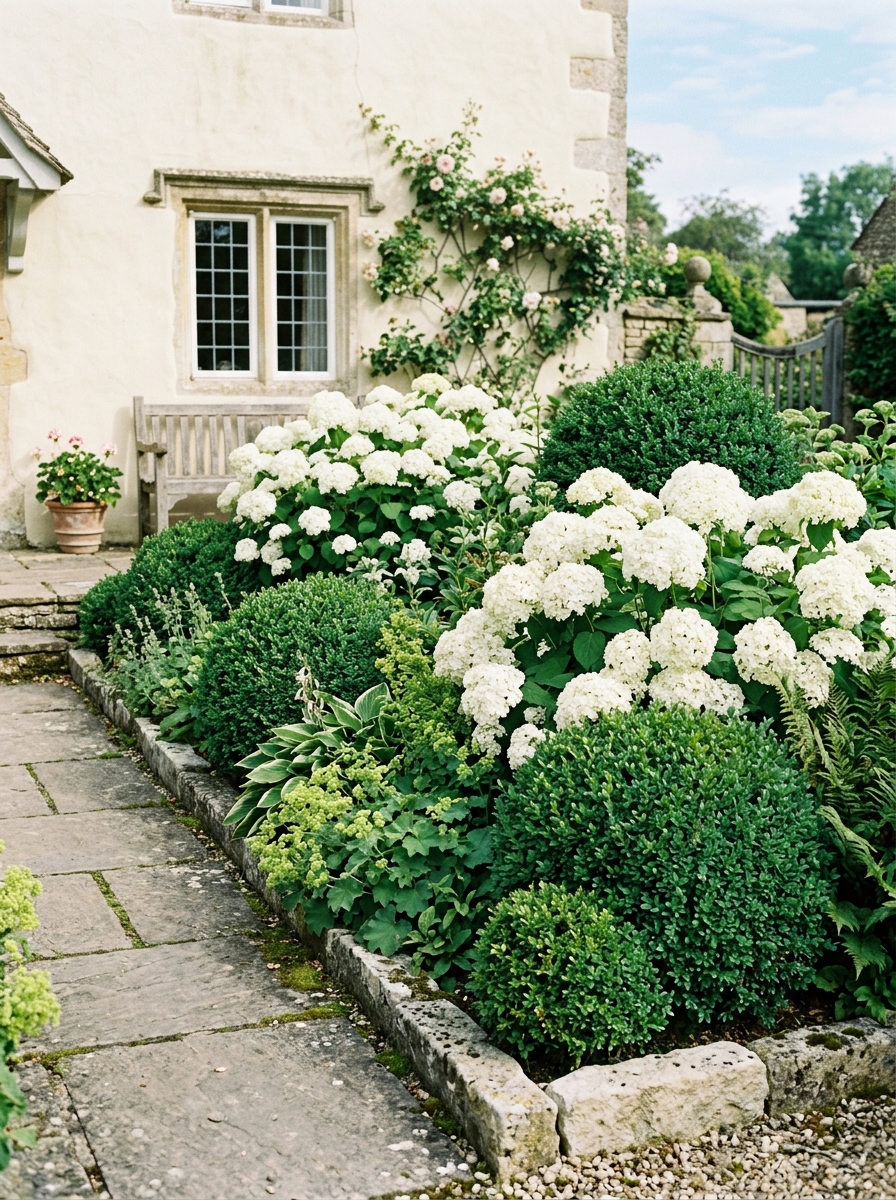
- White hydrangeas create a clean contrast against dark boxwood foliage.
- The limited color palette gives the landscape a calm, elegant appearance.
- Pale blooms remain visually noticeable in shaded garden areas.
- Light-colored mulch or stone can reinforce the fresh color scheme.
White blooms and deep green foliage create one of the easiest color combinations to make visually striking. The flowers appear brighter because the boxwood provides a dark, consistent background around them. Use rounded hydrangeas between or behind neatly shaped boxwoods to create layers without introducing too many colors. This palette works beautifully with cream brick, gray stone, white siding, or natural wood. It also photographs well, which makes it particularly appealing for Pinterest-inspired garden planning. I’ve seen this combination work in both formal and relaxed landscapes because the color contrast remains strong without looking overly decorated.
Keep the surrounding materials quiet so the flowers remain the main feature. Pale stone edging, neutral mulch, or a simple gravel path can complement the white and green palette without competing with it. If the area receives less direct light, bright blooms can help prevent the garden from feeling visually heavy. Avoid overcrowding the plants, because white flowers look most elegant when individual clusters have room to breathe. With consistent boxwood shapes and repeated hydrangea spacing, the entire bed can feel cohesive, fresh, and carefully maintained.
5. Layered Border Beds
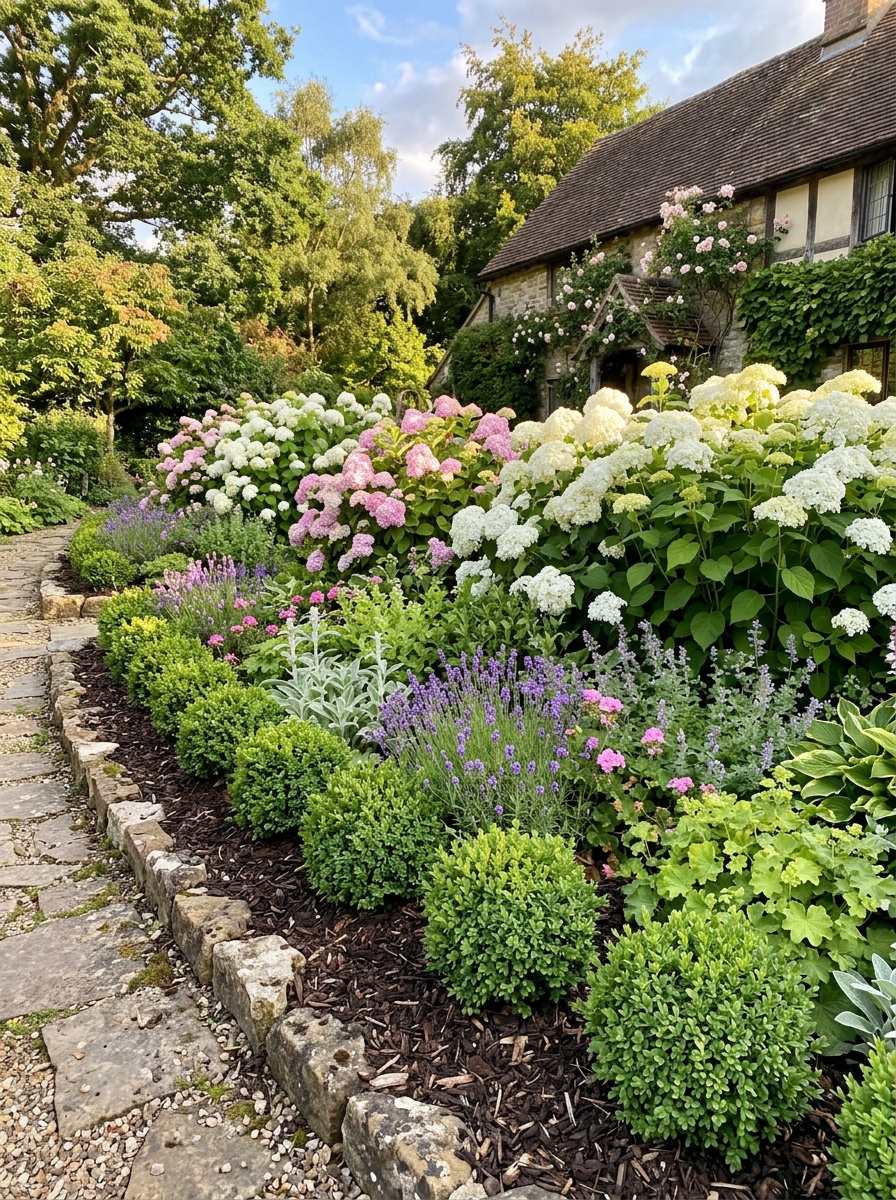
- Three planting heights create depth without making the garden feel crowded.
- Low boxwoods work well in front of taller hydrangeas.
- A middle layer of small perennials can fill seasonal gaps.
- Repeated plant shapes keep the arrangement visually connected.
Layering different plant heights makes a garden look fuller while keeping every plant visible. Start with low boxwoods along the front edge, place smaller flowering plants through the middle, and position taller hydrangeas toward the back. This creates a gradual rise that adds depth instead of producing a flat row of shrubs. The technique is particularly helpful beside blank foundation walls or wide beds that need more visual dimension. Rather than adding many unrelated plants, repeat a few dependable shapes and colors. That simple approach keeps the planting scheme organized while still giving the garden a lush, established appearance.
Think about the view from both inside and outside the house before deciding plant heights. Taller hydrangeas should not block important windows, while front boxwoods can remain low enough to preserve clear sightlines. A contrasting middle layer of lavender, hostas, or low flowering perennials can connect the two larger plant forms. Use mulch to visually separate each layer while the garden fills in. In my experience, this method is especially useful for new landscapes because the bed can look intentional early on and become increasingly full as each plant reaches its mature size.
6. Stone Path Framing
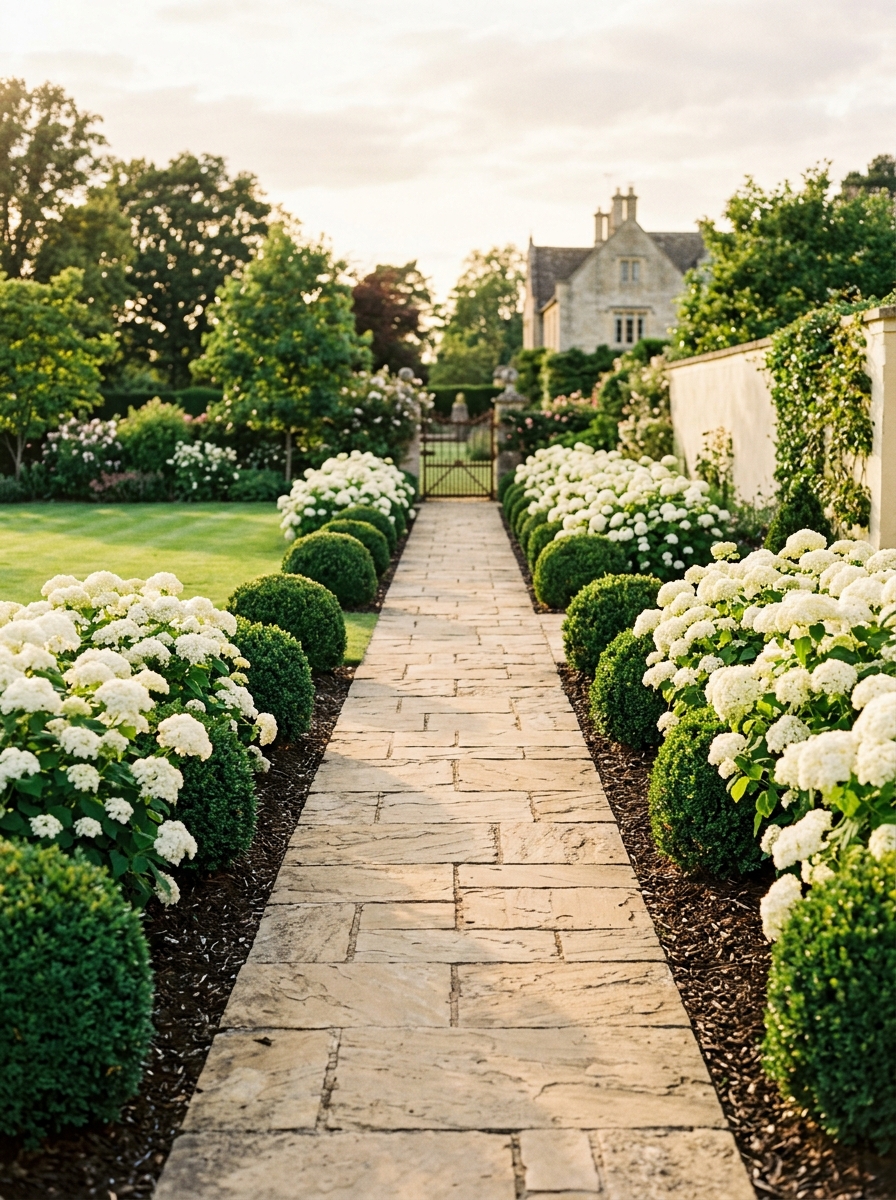
- Boxwoods can create a neat green frame around a garden walkway.
- Hydrangeas soften the stone’s harder edges with rounded foliage and blooms.
- Repeating plants along both sides makes the path feel intentional.
- Keep mature growth away from walking space for easier maintenance.
A stone pathway becomes much more inviting when greenery frames both sides without overwhelming the walking space. Use compact boxwoods close to the path to create a defined edge, then plant hydrangeas slightly farther back for height and seasonal color. The contrast between hard stone and soft rounded foliage gives the walkway a balanced appearance. This arrangement works particularly well leading toward a front door, patio, garden gate, or backyard seating area. Keep the boxwoods trimmed below the walking line and allow hydrangeas enough room to spread naturally without brushing against people as they pass.
Choose paving materials that complement the planting colors rather than competing with them. Warm beige stone pairs beautifully with green foliage and white or blush hydrangeas, while gray stone creates a cooler, more contemporary appearance. Repeat the same boxwood spacing along the pathway to create rhythm and visual direction. A narrow mulch strip can separate plants from the stone and make maintenance easier. That’s why many designers use evergreen edging beside seasonal flowers: the path remains visually defined even after the hydrangeas finish blooming and the garden enters its quieter season.
7. Patio Privacy Screen
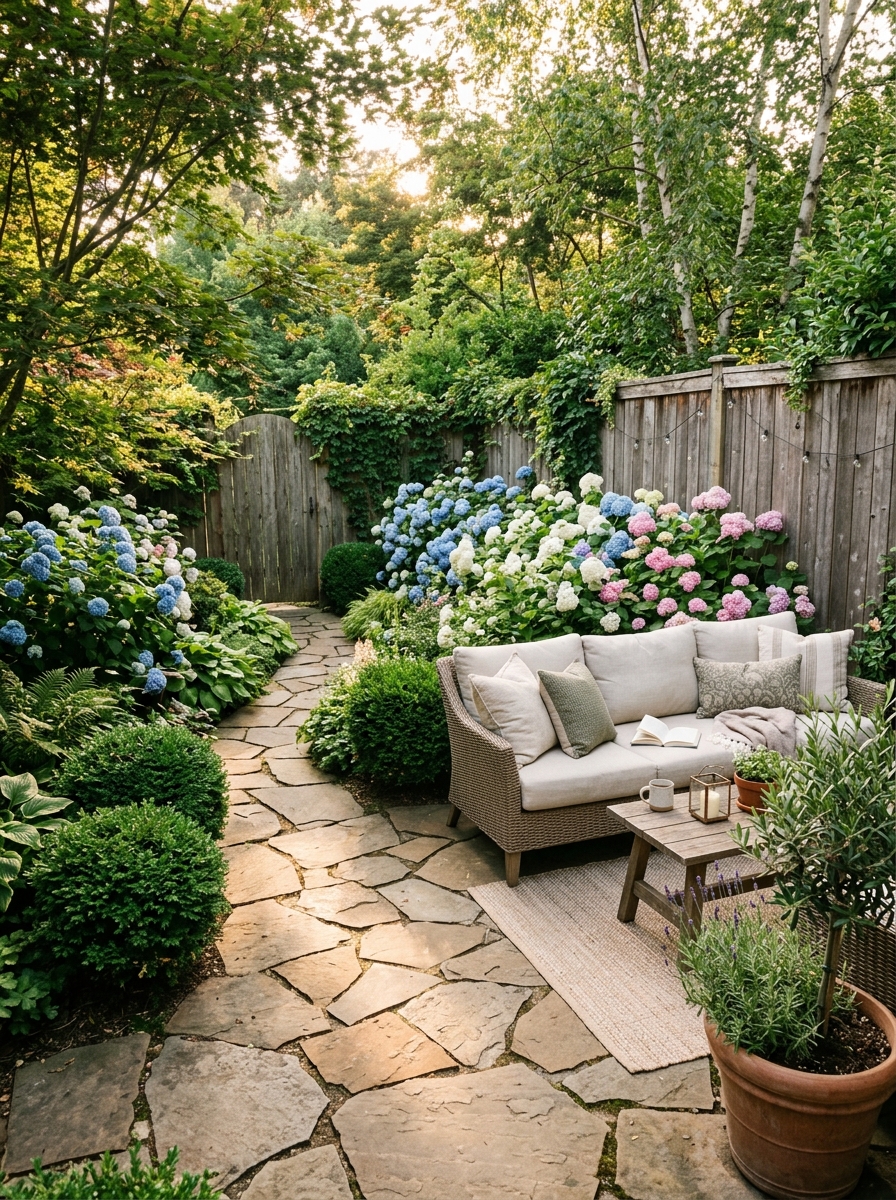
- Taller hydrangeas can soften the edges of an outdoor seating area.
- Boxwoods provide lower evergreen structure beneath the flowering shrubs.
- The layered planting creates privacy without a solid wall.
- Choose varieties suited to the available light and mature space.
A patio can feel more private and comfortable when plants create a soft living screen around the seating area. Position taller hydrangeas behind lower boxwoods so the planting rises gradually from the patio edge. The large blooms add seasonal color while the evergreen shrubs keep the space visually grounded outside the flowering season. This setup is especially useful when a solid fence feels too harsh or when you want privacy without completely closing off the garden. Leave enough clearance around furniture so mature plants do not eventually crowd seating areas or interfere with movement.
Use the hydrangeas where you want the greatest height, then place boxwoods closer to the patio as a neat lower layer. Neutral furniture, natural stone, and wooden fencing pair easily with green foliage and soft-colored flowers. In my experience, repeating the same plant combination around a patio makes the entire outdoor area feel like one connected room. Consider adding simple pathway lighting along the planting edge for evening use. The finished space feels sheltered but not enclosed, giving you a comfortable outdoor retreat while preserving an open view of the surrounding garden.
8. Formal Symmetrical Beds
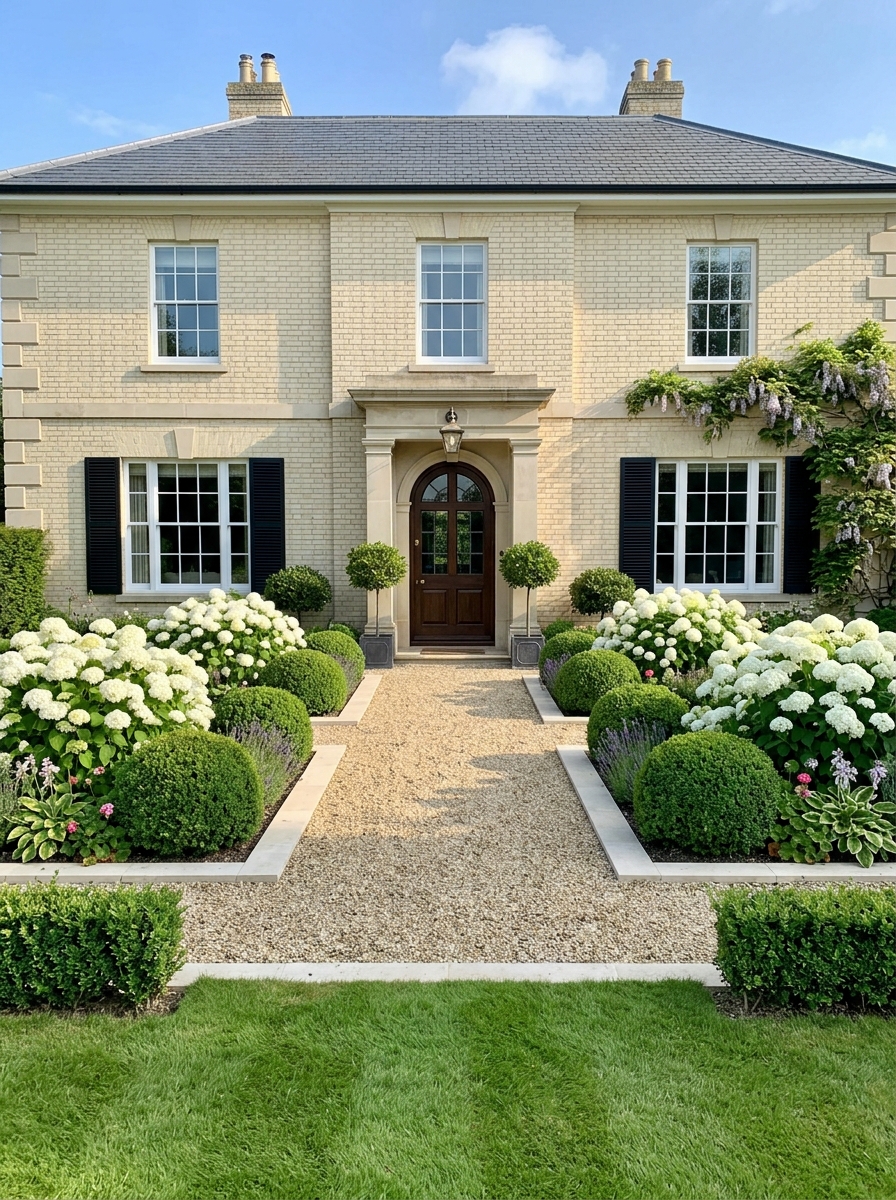
- Matching boxwood shapes create a structured foundation for the planting design.
- Hydrangeas add softness without losing the formal appearance.
- Symmetry works especially well around centered doors and windows.
- Keep plant sizes consistent for a polished finished look.
Symmetrical planting can give a home an instantly polished appearance, especially when the architecture already has balanced lines. Mirror similar boxwood shapes on each side of an entrance, then place matching hydrangeas behind them for seasonal softness. The repetition creates a strong visual rhythm that looks organized from the street and photographs beautifully. This is one of the simplest ways to make a landscape feel intentional without relying on many different plants. Choose varieties with similar mature sizes and keep the spacing consistent so one side does not eventually look heavier than the other.
Formal does not have to mean stiff or overly complicated. Rounded boxwoods can soften the geometry, while full hydrangea blooms introduce movement and texture during the growing season. Keep lawn edges clean and use a narrow stone border if the planting bed needs extra definition. Avoid placing too many decorative objects inside the beds because they can interrupt the symmetry. I’ve noticed that simple repetition often creates the strongest result in formal gardens. A restrained palette of green, white, and neutral stone can make the entire front landscape feel elegant without becoming difficult to manage.
9. Cottage Garden Edge
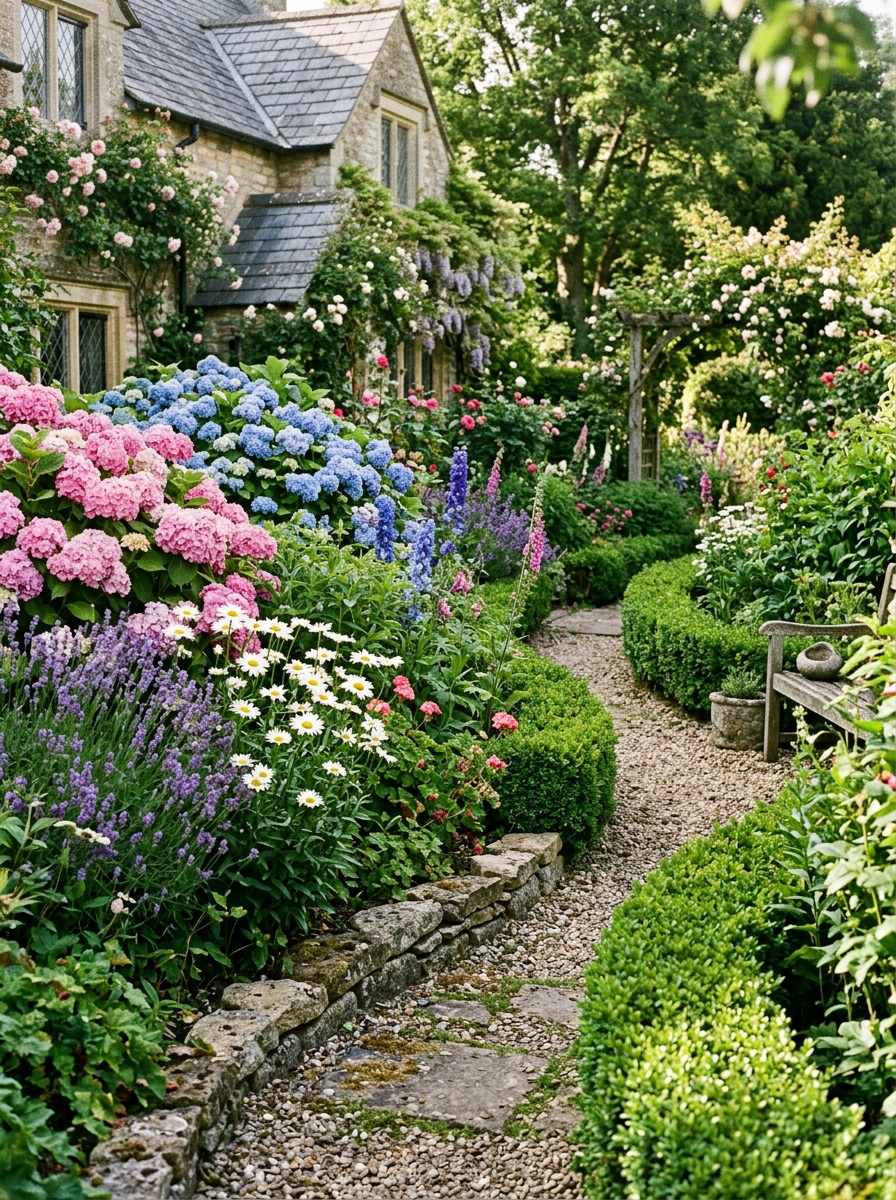
- Soft hydrangea blooms balance the neat shape of boxwood edging.
- Mixed flowers can add a relaxed cottage character around the main shrubs.
- Boxwoods prevent the planting from looking too loose or unstructured.
- Use repeated colors to keep a diverse garden visually cohesive.
A cottage garden feels more intentional when a simple evergreen edge gives the softer planting some structure. Use low boxwoods along the front of the bed, then surround hydrangeas with a small mix of flowering perennials such as lavender, daisies, or salvia. The boxwood acts like a visual frame while the flowers create a relaxed, abundant appearance behind it. This balance prevents the garden from looking either too rigid or completely untamed. Choose two or three repeating flower colors so the varied planting still feels connected rather than becoming a collection of unrelated plants.
Hydrangeas can serve as the larger anchor plants while smaller flowers fill the spaces around them. Keep the boxwood edge slightly rounded instead of heavily clipped if you want a softer cottage effect. Natural stone, gravel paths, and weathered wood complement the informal planting style beautifully. I’ve seen this approach work particularly well in older homes because it blends traditional garden structure with a more relaxed planting style. As the flowers mature, the bed becomes fuller and more textured, while the evergreen edging continues to provide a clean visual boundary throughout the year.
10. Raised Stone Planter
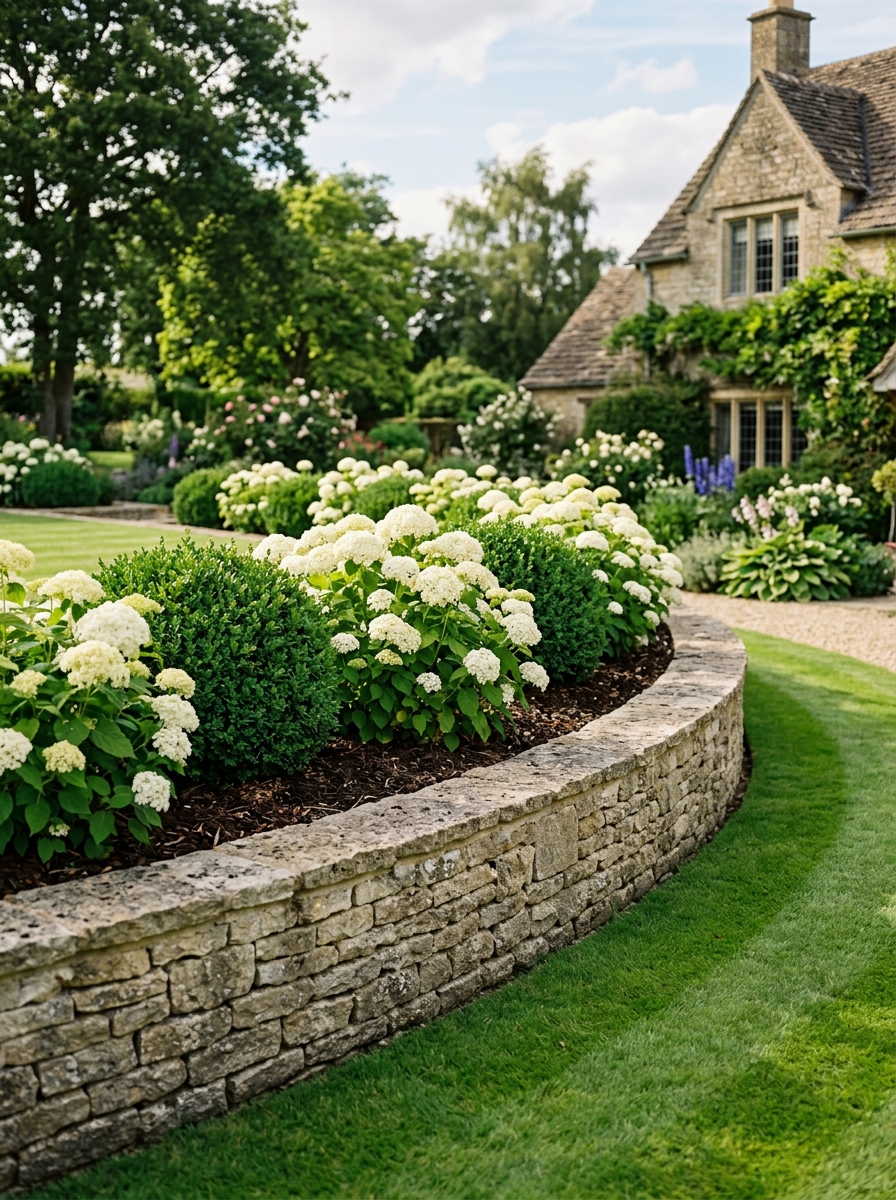
- Raised stone beds give the planting area a defined architectural shape.
- Boxwoods provide neat evergreen forms along the planter edge.
- Hydrangeas bring volume and color above the stone structure.
- The elevated design can improve visual separation from nearby lawn areas.
A raised stone planter gives this plant combination a stronger architectural presence. Use compact boxwoods near the front edge of the raised bed and position hydrangeas slightly behind them so the blooms rise above the stone wall. The elevation naturally separates the planting from surrounding lawn and creates a clear focal point. Natural limestone, warm sandstone, or gray fieldstone can all work depending on the home’s exterior. Keep the planting palette restrained so the stone and foliage remain visually connected. This setup is especially useful when a flat garden bed needs more height and definition.
Make sure the planter provides enough growing space for mature roots and has appropriate drainage before filling it with plants. A dark mulch layer can emphasize the contrast between green foliage, colorful blooms, and textured stone. Avoid packing the bed too tightly at installation because hydrangeas can become significantly larger over time. In my experience, raised beds look best when the plants have room to develop into natural rounded forms. The finished design feels substantial and established while still using a relatively simple combination of evergreen shrubs, flowering plants, stone, and mulch.
11. Window Garden Frame
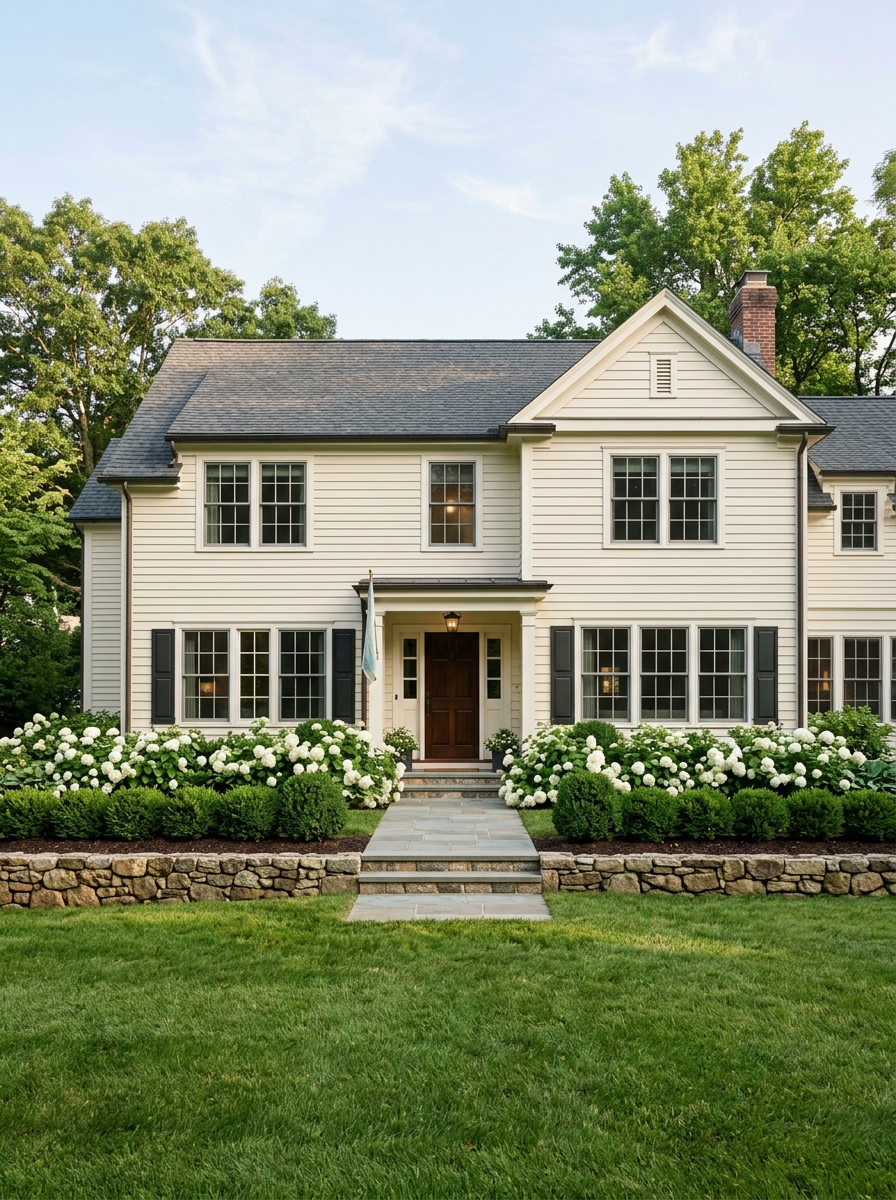
- Boxwoods can create a low, tidy frame beneath windows.
- Hydrangeas add height and color without dominating the entire facade.
- Keep mature plant height below important windows when necessary.
- Repeated spacing gives the foundation bed a clean appearance.
Windows can become natural focal points when planting beds frame them rather than compete with them. Place low boxwoods beneath or between windows, then position hydrangeas where their mature height will complement the architecture. This creates a layered foundation bed that adds color without making the home feel hidden behind shrubs. White blooms work particularly well with neutral siding, while blue or pink varieties can add contrast to darker exteriors. Before planting, check the mature size carefully. A beautiful arrangement can quickly become inconvenient if large shrubs eventually block natural light, views, or access to windows.
Keep the planting pattern consistent across the facade, especially when several windows sit in a row. Low evergreen shapes can visually connect separate sections, while hydrangeas provide seasonal variation and height. A clean mulch bed or narrow stone edge can finish the foundation area without adding unnecessary decoration. If the house has strong horizontal lines, repeat those lines through evenly spaced plants. I’ve noticed that this simple approach makes the exterior look more finished while preserving the home’s original architecture. The garden supports the building rather than overwhelming it.
12. Poolside Greenery
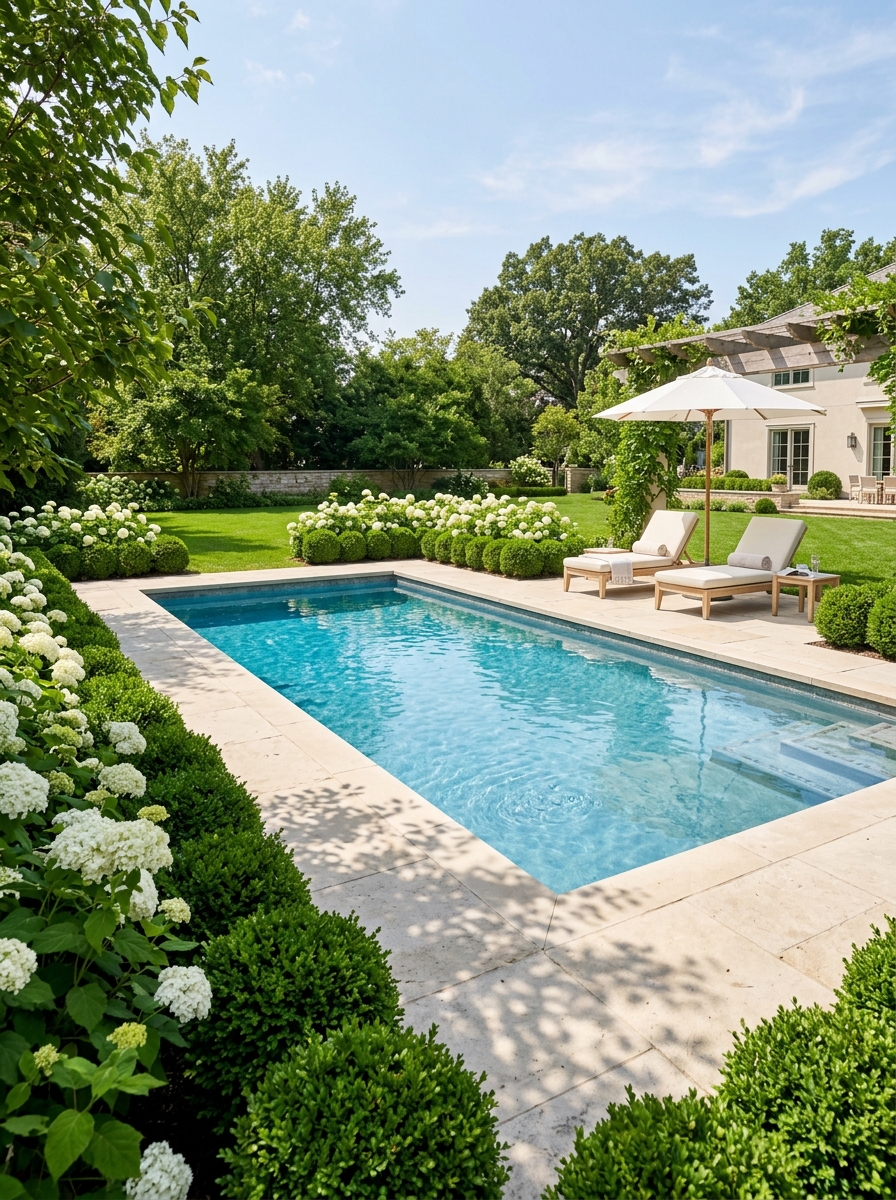
- Boxwoods provide clean evergreen shapes around a pool landscape.
- Hydrangeas add softness and color beside hard pool surfaces.
- Keep planting areas away from busy walking zones and pool equipment.
- Neutral stone helps connect greenery with the surrounding outdoor space.
Pool areas often contain plenty of hard surfaces, so rounded greenery can make the space feel softer and more inviting. Place boxwoods along wider planting zones near the pool deck, then use hydrangeas behind them to introduce larger foliage and seasonal blooms. Pale stone or concrete provides a clean contrast against the green planting. Keep shrubs away from narrow circulation paths, pool equipment, and areas that need frequent access. The goal is to frame the pool without creating obstacles. This arrangement can make a backyard feel more like a landscaped retreat rather than a simple recreation area.
Choose plants according to the site’s light, drainage, and maintenance needs before copying the look exactly. A restrained palette of green, white, and pale stone creates a calm resort-style appearance, while pink or blue flowers add more personality. Use mulch in planting beds rather than allowing soil to remain exposed around the shrubs. In my experience, greenery looks most luxurious around a pool when the planting is simple and repeated rather than crowded with too many species. Clean edges, consistent spacing, and generous breathing room allow the water and flowers to remain the main visual features.
13. Circular Courtyard Bed
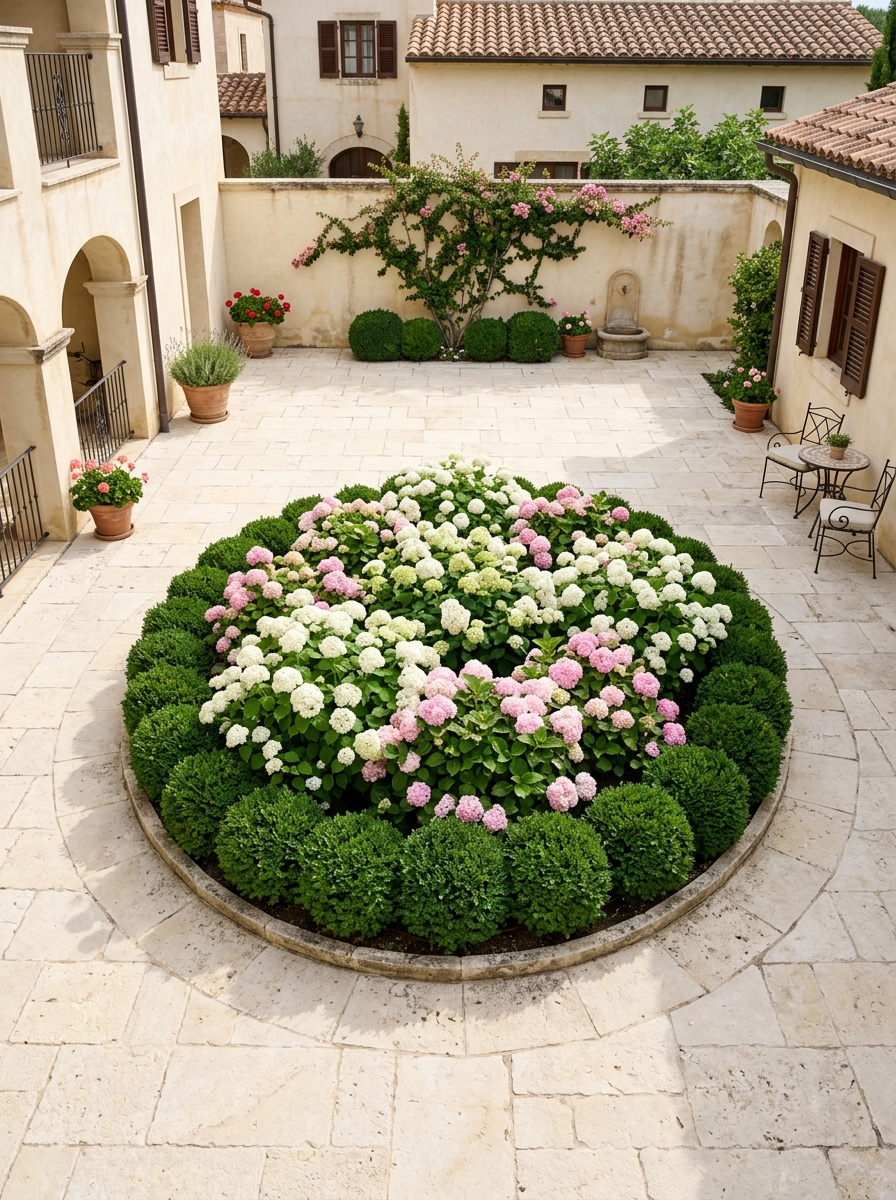
- A circular planting bed creates a strong focal point in an open courtyard.
- Boxwoods can form the outer ring around fuller hydrangeas.
- The repeated shape works beautifully with round patios and seating areas.
- Keep the center visually open enough to highlight the flowers.
A circular garden bed can become an attractive focal point when the planting follows the shape of the surrounding space. Create an outer ring of compact boxwoods, then fill the center with hydrangeas for height, fullness, and seasonal color. The repeated curves soften hard courtyard materials and create a strong sense of order. This design works especially well in the middle of a lawn, beside a circular patio, or within a large entry courtyard. Keep the central planting slightly open so the hydrangea blooms remain visible rather than disappearing into an overcrowded mass.
Choose a simple color palette to keep the circular form easy to read from a distance. White flowers create a classic appearance, while blush pink or blue blooms can make the design feel more relaxed. Use stone, gravel, or lawn around the outer edge to provide contrast with the planting. The boxwood ring should remain low enough to preserve the visual shape of the bed. That’s why rounded planting forms work so well in courtyards: they create a natural focal point while echoing the geometry of surrounding paths, patios, and architectural features.
14. Driveway Border
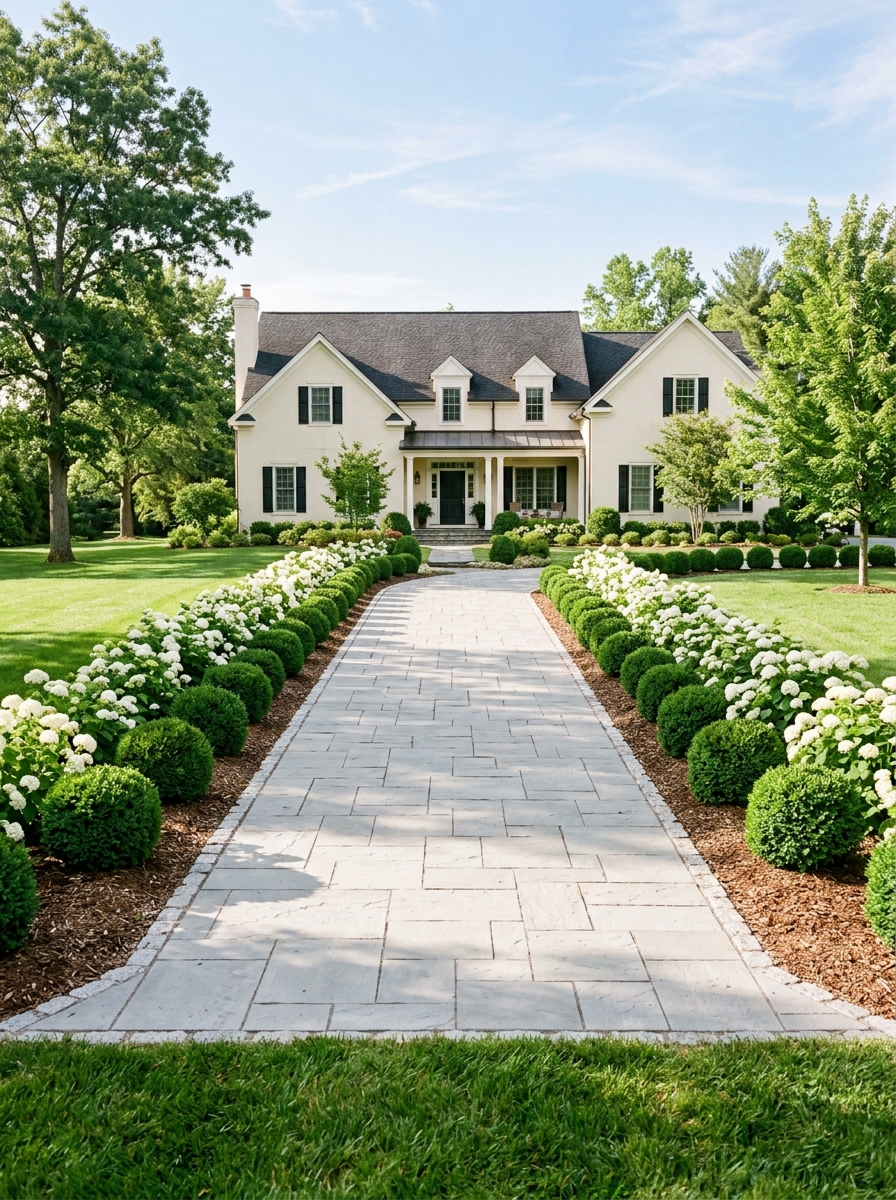
- Boxwoods create a dependable green edge along the driveway.
- Hydrangeas add color without requiring a complicated planting pattern.
- Keep plants far enough from vehicles for comfortable daily use.
- Repeated spacing makes a long driveway look more intentional.
A driveway can look surprisingly polished when a simple planting border gives it a clear visual edge. Use evenly spaced boxwoods closest to the driveway, then place hydrangeas farther into the bed where their mature size will not interfere with vehicles. The evergreen shrubs create a continuous line while the flowers introduce seasonal variation. This works especially well on long driveways that otherwise feel visually empty. Avoid planting directly beside areas where car doors open or where drivers need a clear turning radius. Practical spacing will keep the beautiful design functional.
Choose repeated plant groupings instead of creating a different arrangement at every section of the driveway. This creates rhythm and makes the entire property feel more cohesive. Dark mulch can define the bed while helping the foliage and blooms stand out against pale pavement. If the driveway curves, follow its shape rather than forcing the planting into straight rows. I’ve noticed that long landscape borders often look best when the plant palette is simple and repeated. The result feels organized from a distance while still offering enough seasonal interest to keep the approach visually engaging.
15. Backyard Corner Retreat
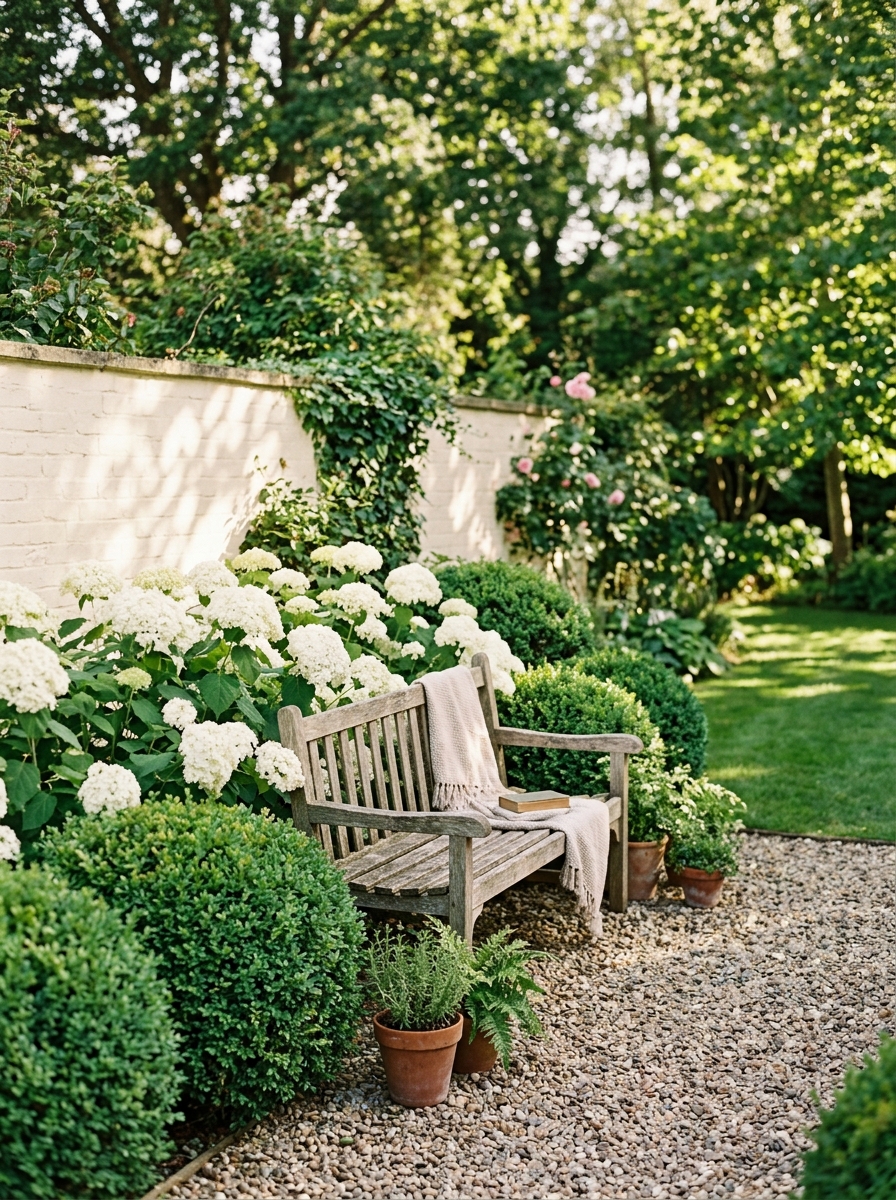
- A planted corner can turn an overlooked yard area into a focal point.
- Boxwoods provide low structure around larger hydrangeas.
- A small bench or chair can make the space feel purposeful.
- Use mulch or gravel to visually separate the retreat from the lawn.
An empty backyard corner can become one of the most attractive areas of the garden with a simple layered planting arrangement. Place rounded boxwoods around the base of hydrangeas, then add a small wooden bench or chair nearby. The evergreen shapes create structure while the large flowers make the corner feel lush and established. Use gravel or mulch beneath the planting to visually separate the area from the lawn. This approach does not require a large garden feature. A carefully positioned seat and a few repeated plants can turn an unused corner into a quiet outdoor destination.
Keep the furniture simple so the plants remain the main attraction. A weathered wood bench works naturally with cottage-style planting, while a black metal chair can create a more traditional appearance. Choose hydrangea colors that complement nearby flowers or the home’s exterior rather than introducing another unrelated shade. In my experience, corners often look better when plants are grouped rather than scattered individually across the lawn. Give the hydrangeas room to develop naturally and use boxwoods to establish the lower boundary. The result feels intentional, comfortable, and connected to the rest of the landscape.
16. White Brick Border
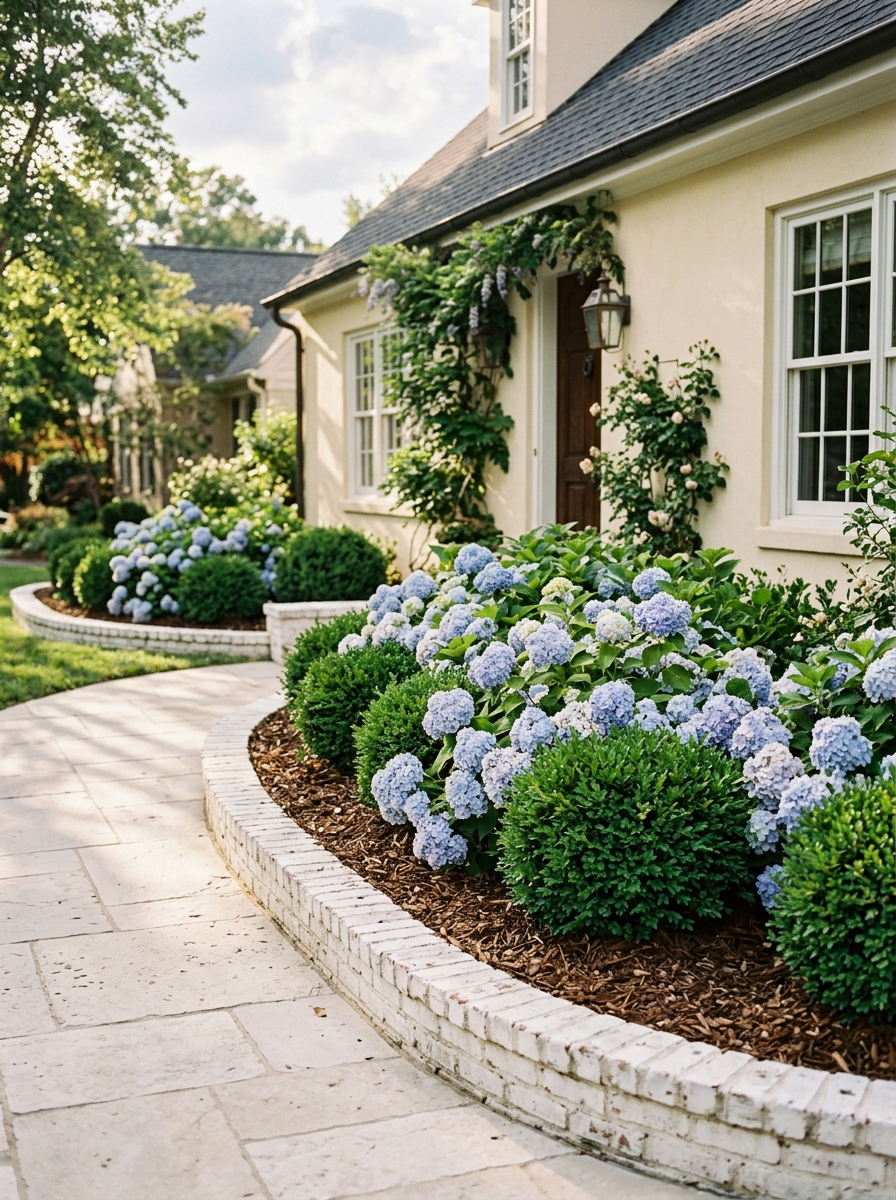
- White brick creates a bright foundation for green foliage and colorful blooms.
- Boxwoods add strong contrast against pale masonry.
- Hydrangeas soften the straight edges of the brick border.
- This palette suits traditional, cottage, and transitional homes.
A white brick border creates a bright foundation for dark greenery and soft hydrangea blooms. Place rounded boxwoods near the front of the bed so their deep green foliage contrasts clearly with the pale masonry. Hydrangeas can sit behind them, adding volume and color while softening the straight architectural lines. Blue blooms create a cool, refined palette, while pink flowers add warmth. This arrangement works especially well around traditional homes where brick, stone, and structured planting already play an important role. Keep the planting spacing generous enough that the brick remains visible rather than disappearing beneath foliage.
Use neutral mulch to connect the plants with the masonry without introducing another strong color. If the home has white or cream walls, darker foliage can prevent the exterior from looking washed out. Trim boxwoods into soft rounded shapes rather than severe geometric forms if you prefer a relaxed appearance. Hydrangeas should remain the taller visual layer, especially when the brick border is low. I’ve noticed that light masonry makes this plant combination especially photogenic because the bright background reflects natural light and helps every leaf and bloom appear more defined.
17. Gravel Garden Walk
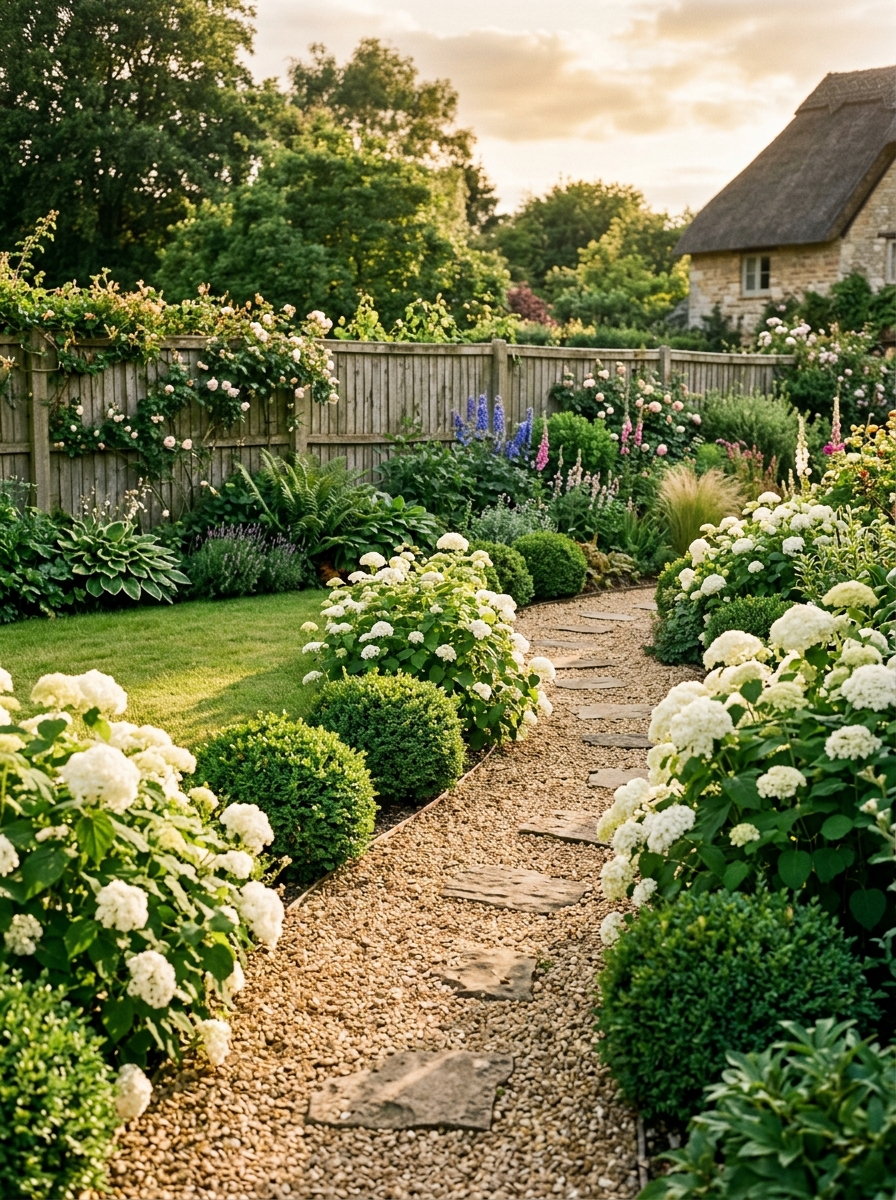
- Gravel creates a relaxed surface between structured shrubs and flowering plants.
- Boxwoods keep the garden edge visually organized.
- Hydrangeas bring softness and height beside the walking path.
- Choose gravel that complements the home’s exterior and stonework.
A gravel path becomes much more inviting when lush planting frames its edges without making the route feel narrow. Place low boxwoods closest to the gravel and position hydrangeas slightly farther back to create a layered border. The contrast between loose gravel texture, clipped evergreen foliage, and rounded blooms creates visual interest without requiring elaborate decoration. This setup works beautifully through side gardens, backyard paths, or informal entrances. Keep the boxwoods low enough to preserve the width of the path and allow enough space around hydrangeas for mature growth and comfortable movement.
Choose warm beige gravel for a softer cottage appearance or cooler gray gravel for a more contemporary garden. Natural stepping stones can break up the surface while connecting the planting areas visually. A wooden fence or simple stone wall makes a natural background for the greenery. In my experience, informal paths benefit from repeating just a few plant forms because the gravel already provides texture. The finished space feels relaxed and established while maintaining enough structure to guide visitors naturally through the garden without looking overly formal.
18. Evergreen Accent Row
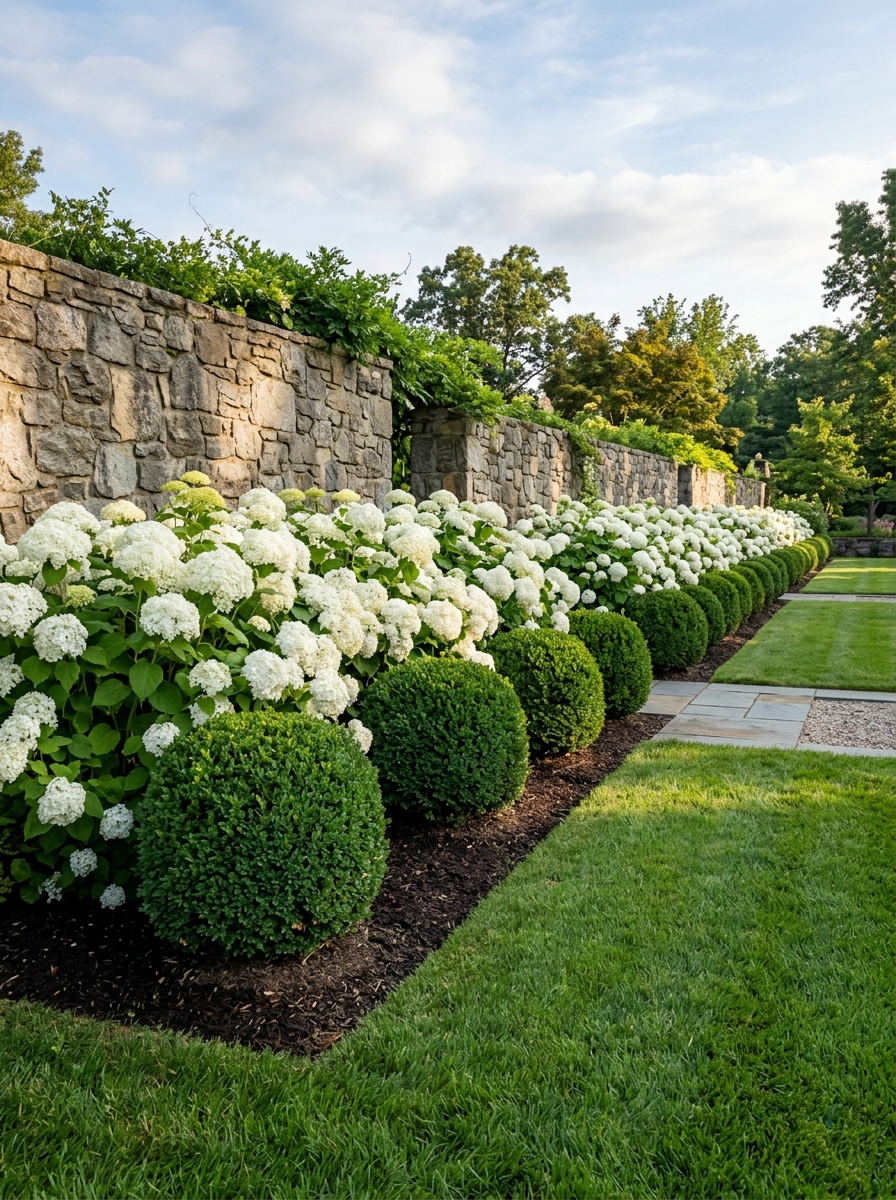
- A repeating boxwood row gives the garden dependable year-round structure.
- Hydrangeas add seasonal height and color behind the evergreen line.
- The design works well along walls, fences, and broad foundation beds.
- Consistent spacing creates a clean visual rhythm.
A repeating row of boxwoods creates a strong foundation for hydrangeas when you want a landscape that looks organized from a distance. Space the evergreen shrubs evenly along the front of the bed, then position hydrangeas behind them to create a taller flowering layer. The repeated pattern gives long walls, fences, and foundation beds a sense of rhythm. It also makes the planting easier to understand visually because the same forms appear throughout the space. Choose mature plant sizes carefully so the row remains balanced rather than becoming crowded after several growing seasons.
Keep the background relatively simple so the repeating foliage and flowers remain the focus. A stone wall, wood fence, or neutral exterior can provide enough contrast without distracting from the plants. Use mulch to unify the entire bed and hide exposed soil between shrubs. If you prefer a softer look, allow the boxwoods to develop naturally rounded forms rather than clipping them into exact shapes. That simple difference can make the same plant combination feel either formal or relaxed. The evergreen row continues providing structure after hydrangea blooms fade, making the design useful year-round.
19. Woodland Garden Mix
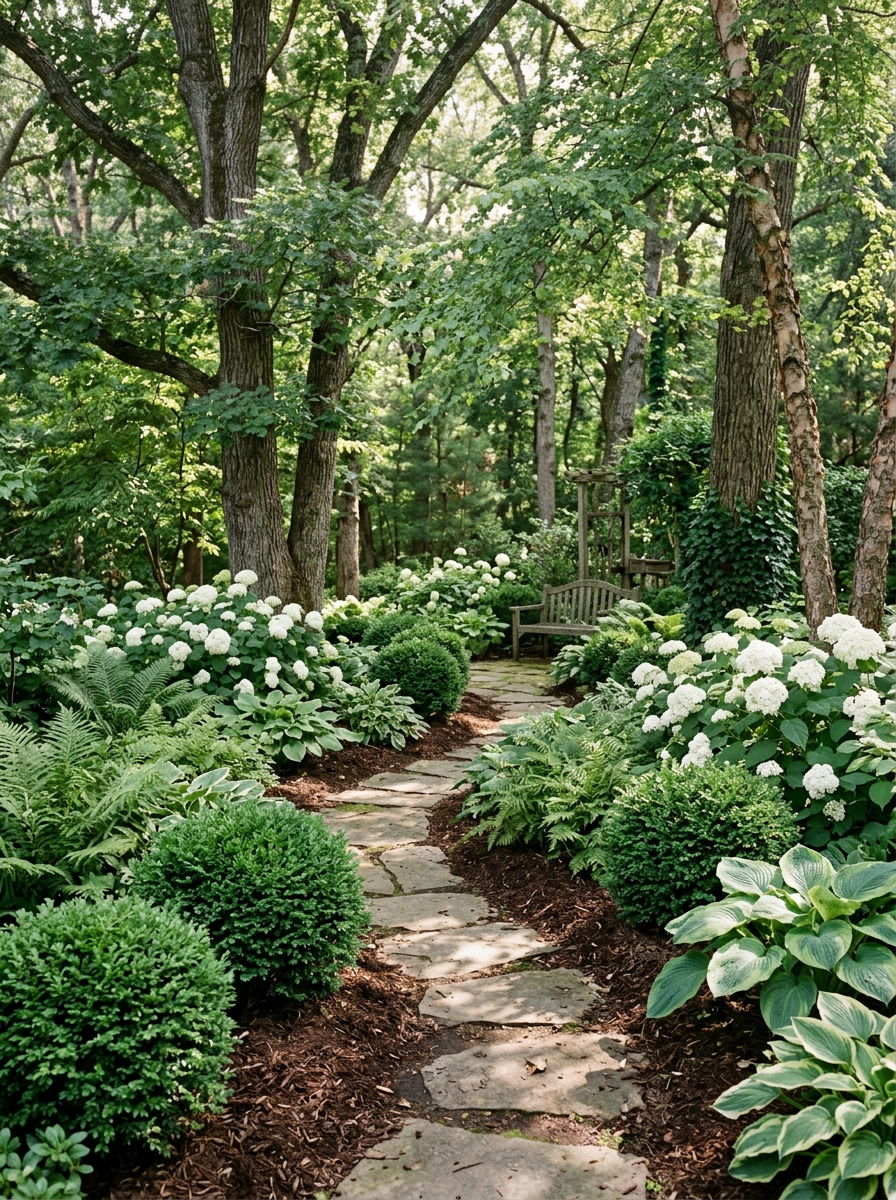
- Natural shade can create a softer setting for hydrangeas and boxwoods.
- Layered foliage makes the garden feel established and organic.
- Stone accents can strengthen the woodland character.
- Keep the planting relaxed rather than forcing perfect symmetry.
A woodland setting gives this classic plant combination a more natural and relaxed personality. Place boxwoods beneath or near mature trees where conditions suit them, then layer hydrangeas with shade-friendly foliage such as ferns or hostas. Natural stone paths and irregular mulch edges can reinforce the organic appearance. Instead of creating strict rows, group plants in gentle clusters that follow the shape of the existing landscape. The goal is to make the planting feel like it belongs there rather than looking newly installed. Always check each plant’s light and soil requirements before choosing a specific location.
Use repeated colors instead of repeated geometric shapes to maintain cohesion in a woodland garden. White hydrangeas can brighten shaded areas, while deep green boxwoods connect visually with surrounding trees and foliage. Leave some open space between groups so the garden does not become visually heavy. Fallen leaves, textured bark, and natural stone can provide additional interest without adding decorative objects. I’ve noticed that informal planting looks most convincing when the edges are slightly softened and the plants are allowed to develop natural shapes. The result feels peaceful, mature, and connected to its surroundings.
20. Layered Front Walk
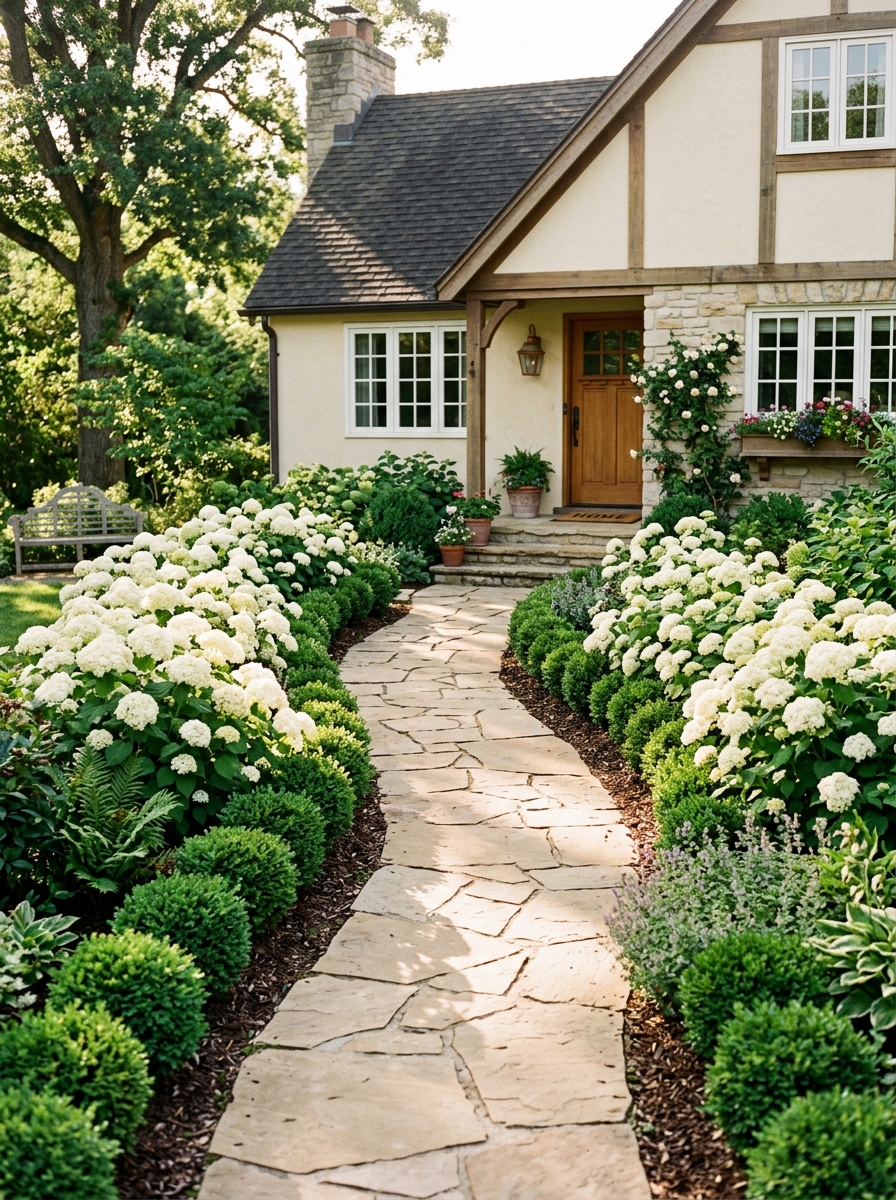
- A layered planting scheme makes a front walkway feel more inviting.
- Boxwoods create a low evergreen frame along the path.
- Hydrangeas provide larger blooms farther from the walking surface.
- Repeated planting groups make the entire entrance feel cohesive.
A front walkway becomes more inviting when plants create a gradual transition from pavement to the home. Start with low boxwoods along the path, then place hydrangeas slightly farther back so their rounded blooms rise above the evergreen edge. This layered arrangement adds depth while keeping the walking route visually clear. Repeat similar plant groups along both sides rather than changing the design at every section. The result is especially effective around traditional homes because the greenery echoes the architectural structure while the flowers add softness. Keep mature plant width in mind so the walkway remains comfortable throughout the season.
Use a consistent mulch or stone material throughout the planting bed to connect each section visually. White hydrangeas create a timeless appearance, while blush or blue blooms can introduce a more personalized color scheme. If the path curves, allow the planting to follow the same direction so the landscape feels naturally connected. In my experience, a front walk looks most polished when the plants are repeated at predictable intervals but not clipped into overly rigid shapes. The finished design feels welcoming, organized, and lush while remaining practical for everyday movement and routine garden maintenance.
Create Your Dream Landscape
The right planting combination can turn an ordinary yard into a space that feels polished, welcoming, and full of life. These hydrangea and boxwood landscaping ideas offer simple ways to add structure, seasonal color, privacy, and visual depth while keeping your garden cohesive. Start with one area, such as an entryway, walkway, patio, or foundation bed, and build from there. I’ve seen how small changes in plant placement can completely transform an outdoor space. Save this post on Pinterest for your next landscaping project, try your favorite idea at home, and share it with someone who needs fresh garden inspiration. Your dream landscape can start with one beautiful planting bed.